 0
0
 0
0
LONDON — Health authorities in England have confirmed the detection of a newly-evolved “hybrid” mpox virus in a traveler returning from Asia. The discovery, reported by the UK Health Security Agency (UKHSA) and documented by the World Health Organization (WHO) in late 2024, marks a significant milestone in the virus’s evolution as it continues to adapt and spread globally.
While the patient—who is currently recovering under specialist care—is the only known case of this specific hybrid strain, the finding coincides with a concerning rise in local transmission of other mpox variants across Europe and the United States. Scientists are now racing to determine if this genetic “mash-up” could change how the virus behaves or responds to current vaccines.
Understanding the ‘Hybrid’ Virus
The new strain is what scientists call a recombinant. This occurs when a single individual is infected with two different versions of the mpox virus at the same time. Inside the patient’s cells, the two viruses “swap” genetic material, essentially creating a third, hybrid version of the virus.
In this specific case, the virus contains genetic elements from both Clade I and Clade II.
-
Clade I: Historically associated with more severe illness and higher fatality rates in Central Africa.
-
Clade II: The milder version responsible for the 2022 global outbreak that primarily affected men who have sex with men (MSM).
“The detection of a recombinant virus is a testament to our robust genomic surveillance,” said Katy Sinka, MSc, Head of Sexually Transmitted Infections at UKHSA. “While it is normal for viruses to evolve, this hybrid shows that the virus has more opportunities to change as different clades circulate simultaneously in the same regions.”
Local Spread: A Quiet Shift in Transmission
The hybrid discovery is unfolding against a backdrop of shifting transmission patterns. In a recent situation report, the WHO highlighted that Clade Ib—a newer, more transmissible branch of Clade I—is no longer just a “traveler’s disease.”
Countries including Italy, the United States, Spain, and Portugal have recently reported Clade Ib cases in individuals with no recent travel history. This suggests that the virus is spreading quietly within local communities.
| Mpox Clade | Primary Region | Known Severity | Recent Trends |
| Clade Ia | Central Africa | Higher (up to 10% fatality) | Mostly zoonotic (animal-to-human) |
| Clade Ib | East/Central Africa | Moderate (approx. 1% fatality) | Significant human-to-human spread |
| Clade IIb | Global | Low (under 1% fatality) | Sustained spread since 2022 |
“We are seeing a diversification of the groups being affected,” notes the WHO update. While the risk remains highest for MSM with multiple partners, recent clusters have included household contacts and, in some instances, children, particularly in regions where Clade Ib has become established.
Is the New Hybrid More Dangerous?
Current evidence suggests there is no reason for immediate alarm regarding the hybrid’s severity. “To date, there is no evidence that this recombinant strain causes more severe illness than the clades it originated from,” says the UKHSA.
However, the scientific community is keeping a close watch. Laboratory experiments have shown that Clade I viruses generally cause more extensive skin lesions and more severe respiratory symptoms in animal models than Clade II. The concern is that a hybrid could potentially combine the high transmissibility of Clade II with the increased virulence of Clade I.
Who Is at Risk?
The public health risk is currently categorized by the WHO as moderate for men who have sex with men and low for the general public. However, certain groups remain at higher risk for complications:
-
Immunocompromised individuals: Those with untreated or advanced HIV are at a significantly higher risk of severe disease.
-
Children and Pregnant People: Historically, these groups have shown higher rates of complications.
-
The Unvaccinated: Those who have not received the two-dose Jynneos vaccine (or equivalent) lack the primary defense against the virus.
How to Stay Protected
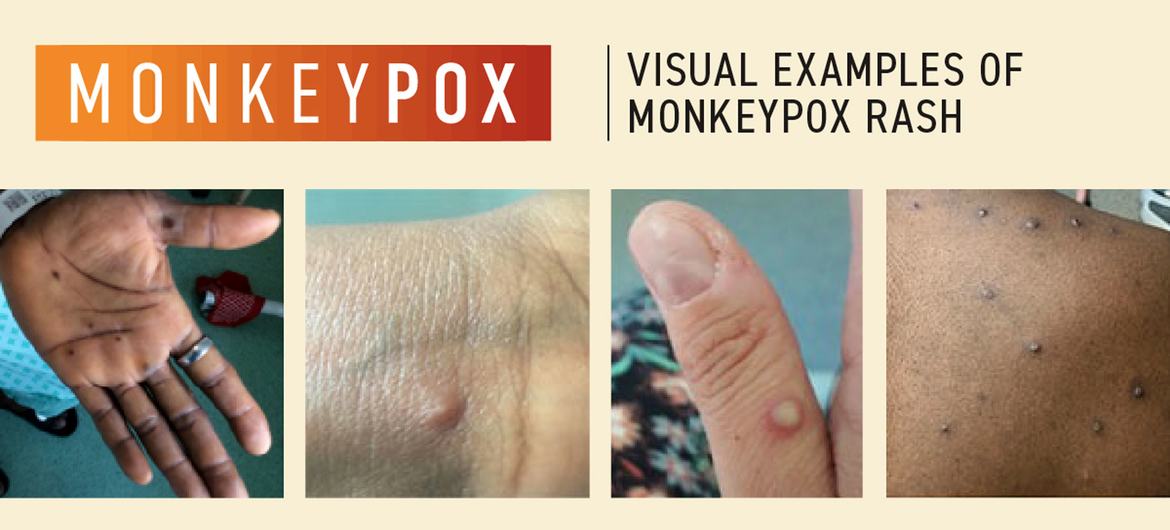
Doctors emphasize that mpox is not just a “skin rash.” Early symptoms often include fever, headache, muscle aches, and swollen lymph nodes, followed by the characteristic sores or blisters.
1. Vaccination: The current vaccine is estimated to be 75–80% effective against Clade II. Experts believe it will offer significant cross-protection against Clade I and hybrid strains.
2. Symptom Awareness: If you develop an unusual rash or sores, especially on the genitals or around the anus, isolate immediately and contact a healthcare provider.
3. Open Communication: Talk to sexual partners about any recent symptoms or exposures.
The emergence of a hybrid strain is a reminder that the global mpox situation is evolving. “Mpox is adapting to humans,” says a report from the European Centre for Disease Prevention and Control (ECDC). “Breaking the chains of transmission now—through testing, vaccination, and awareness—is critical to preventing these new variants from taking hold.”
References
- https://www.earth.com/news/traveler-brings-home-a-newly-evolved-hybrid-mpox-virus/
Medical Disclaimer: This article is for informational purposes only and should not be considered medical advice. Always consult with qualified healthcare professionals before making any health-related decisions or changes to your treatment plan. The information presented here is based on current research and expert opinions, which may evolve as new evidence emerges.