 0
0
 0
0
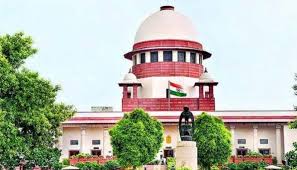
The Supreme Court of India is currently examining a crucial question that has stirred significant debate in the medical education community: does the publication of answer keys for NEET PG 2025—the postgraduate medical entrance examination—compromise the integrity of the exam? This issue has become the focal point of several petitions advocating for greater transparency in this high-stakes national exam that determines medical career trajectories for thousands of aspiring doctors.
Key Developments and Court Proceedings
On November 6, 2025, a bench comprising Justices P.S. Narasimha and Vipul M. Pancholi heard multiple petitions raising concerns about transparency and fairness in the conduct of NEET PG 2025. Petitioners demanded the National Board of Examinations (NBE), which administers the exam, disclose its policy on publishing detailed answer keys and candidate response sheets. The Supreme Court emphasized transparency’s importance yet expressed willingness to scrutinize whether releasing such materials might threaten exam integrity. However, the Court clarified it would not delve into specific allegations regarding discrepancies in the current exam iteration.
The petitioners’ concerns stem partially from NBE’s revised approach to answer key disclosure. Instead of publishing complete question papers alongside answer keys, NBE released answer keys and responses indexed only by “Question ID Numbers” from a master question set. Because individual exams are shuffled versions of this master set, many candidates assert they cannot accurately cross-check their responses or contest discrepancies. Critics argue this limits transparency and contradicts the very objective of publishing answer keys—to enable verification and ensure a fair evaluation process.
Context and Background Information
NEET PG is India’s pivotal exam for medical graduates seeking postgraduate specialization courses. With hundreds of thousands of candidates annually, the exam’s credibility and transparency are imperative to public trust and the medical profession’s meritocracy. Historically, many competitive exams in India publish detailed answer keys post-exam as part of transparency protocols—allowing candidates to assess performance and challenge questionable questions or answers.
The controversy here involves balancing transparency with exam security. Authorities argue that releasing full question papers and detailed keys may risk question leakage or unfair advantages in future exam cycles. Conversely, candidates and experts stress that transparency in answer disclosure is vital to deter errors, address grievances, and maintain trust in the examination system.
Expert Perspectives
Dr. Meera Sharma, a senior medical educator unaffiliated with the petitions, observes, “In high-stakes exams like NEET PG, fairness is paramount not only for the candidates but for the integrity of medical education at large. Transparency through comprehensive answer key disclosure strengthens trust and allows correction of genuine errors that can impact candidate rankings.”
Conversely, Mr. Rajiv Menon, an examination security consultant, highlights the risks: “Publishing full question papers publicly could expose the exam to potential security breaches, enabling malpractice or leakage that undermine exam validity. A carefully designed balance between transparency and security is essential.”
Implications for Public Health and Medical Education
NEET PG results directly influence which candidates access specialized medical training and future healthcare roles. Any perception of unfairness or compromised integrity could undermine confidence in the system, potentially influencing candidate morale and public trust in healthcare professionals chosen through this route.
Meaningful transparency reforms, such as clear answer key policies and accessible verification mechanisms, would empower candidates, mitigate disputes, and reinforce exam credibility. This process also holds educational value, helping candidates understand their performance in depth and preparing better for future assessments.
Potential Limitations and Counterarguments
Despite valid calls for transparency, some argue that the nature of question paper randomization and the volume of candidates complicate detailed disclosure without jeopardizing exam standards. There is also the challenge of balancing rapid result processing with thorough answer key validation.
The Supreme Court’s cautious approach in refraining from addressing individual discrepancy allegations underscores the need for systemic solutions rather than case-by-case interventions.
Conclusion
The Supreme Court’s ongoing deliberations over the NEET PG 2025 answer key publication embody a key moment in India’s medical education governance. The verdict will likely set precedent for transparency norms in national competitive exams while addressing the delicate equilibrium between openness and exam integrity.
This case exemplifies broader discussions about transparency, fairness, and trust in high-stakes testing that resonate far beyond NEET PG, influencing national examination policies and public confidence in professional selection processes.
Medical Disclaimer: This article is for informational purposes only and should not be considered medical advice. Always consult with qualified healthcare professionals before making any health-related decisions or changes to your treatment plan. The information presented here is based on current research and expert opinions, which may evolve as new evidence emerges.
References
- https://www.livelaw.in/amp/top-stories/neet-pg-2025-disclose-your-policy-on-publishing-answer-keys-supreme-court-asks-nbe-309100
- https://medicaldialogues.in/news/education/neet-pg-does-publishing-answer-keys-compromise-exam-integrity-supreme-court-to-decide-158263