 0
0
 0
0
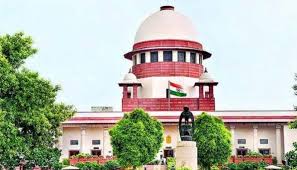
New Delhi, May 17, 2025 – Concerns over the transparency and fairness of the National Eligibility-cum-Entrance Test for Postgraduate (NEET-PG) have once again reached the Supreme Court, with a fresh writ petition filed on April 29, 2025. The petition, titled Dr Aditi v National Board of Examination in Medical Sciences (NBEMS), seeks urgent judicial intervention ahead of the NEET-PG 2025 examination, scheduled for June 15.
Petition Highlights Ongoing Issues
The petition, filed by Dr Aditi and six other aspirants, is being represented by Supreme Court Advocate Abhisht Hela and Advocate on Record Sukrirti Bhatnagar. It reiterates longstanding concerns about the examination’s two-shift format, echoing grievances raised during NEET-PG 2024. Petitioners argue that the double-shift system leads to discrepancies in question difficulty and distribution, potentially violating Article 14 (Right to Equality) and Article 21 (Right to Life and Personal Liberty) of the Indian Constitution.
According to the petition, the 2024 NEET-PG exam saw uneven question allocation-such as 14 Pathology questions in the first shift versus 19 in the second-raising doubts about the fairness of the process. Advocate Hela stated, “In an examination such as NEET PG, where even one mark would define your career, conducting the examination in two shifts and then carrying out normalisation to equate and balance out the result… is a bit unfair on the part of the NBE.”
Transparency and Security Concerns
The petition also highlights the lack of transparency in the moderation and normalisation of marks, as well as the NBEMS’s failure to release question papers, answer keys, and candidate responses. Petitioners warn that the three-hour gap between shifts could allow for potential question leaks, further undermining the exam’s integrity.
“Until and unless the questions are released, question papers are released, how will we even ascertain that the question paper in shift one and in shift two are different? They are not releasing the answer keys as well. So all these things give a very colourful picture… colourful use of authority by the administrative body,” said Advocate Hela.
Demands and Legal Proceedings
The petitioners are demanding:
-
A single-shift examination for all candidates
-
Release of question papers and answer keys
-
An end to the normalisation of scores
-
Determination of ranks based on percentile marks
-
Use of raw scores to determine merit
An ex parte stay application has also been filed, seeking an interim halt to the exam until these issues are addressed. The case was first heard on May 5, 2025, alongside a related petition by the United Doctors’ Front (UDF). Due to procedural delays, an urgent mention letter was submitted, and the matter is now scheduled to be heard before the Chief Justice of India on May 20.
Advocate Hela expressed concern that if the National Board of Examination in Medical Sciences (NBEMS), National Medical Commission (NMC), and Ministry of Health and Family Welfare (MoHFW) are granted four weeks to respond, the exam may proceed as planned on June 15 without any changes, potentially rendering the petitions ineffective.
Background: A Recurring Issue
This is not the first time the NEET-PG examination has come under judicial scrutiny. In September 2024, Dr Ishika Jain and other aspirants filed a similar petition, highlighting the opaque nature of the postgraduate medical entrance exam. With both the 2024 and 2025 cases now before the Supreme Court, the outcome could have significant implications for thousands of medical graduates across India.
“The outcome has the ability to significantly impact these students’ futures, and we can only hope for the best until justice is served,” said Advocate Hela.
Disclaimer:
This article is based on information reported by EdexLive as of May 15, 2025. The legal proceedings are ongoing, and the final outcome may differ from what is described here. For official updates and further developments, please refer to the Supreme Court of India and the National Board of Examination in Medical Sciences.
Citations: