 0
0
 0
0
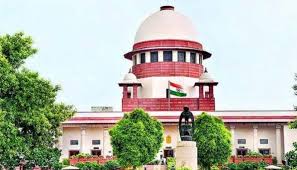
New Delhi: A sharp reduction in NEET-PG 2025 qualifying cut-offs, allowing even zero and negative scores to be considered for postgraduate medical admissions, has triggered a major controversy and a legal challenge in the Supreme Court. A doctors’ body led by the United Doctors Front (UDF) has filed a public interest litigation (PIL) seeking to quash the National Board of Examinations in Medical Sciences (NBEMS) notification, arguing that the move “dilutes merit” and endangers public health.
What Has Changed In NEET-PG 2025?
NBEMS, following directions from the Union Health Ministry, issued a notification on 13 January 2026 revising the NEET-PG 2025–26 qualifying percentiles for Round 3 counselling.
-
For General/EWS candidates, the cut-off has been reduced from the 50th percentile (276 marks) to the 7th percentile, corresponding to a score of 103.
-
For General PwBD candidates, the cut-off has been lowered from the 45th percentile (255 marks) to the 5th percentile, or 90 marks.
-
For SC/ST/OBC (including PwBD in these categories), the qualifying percentile is now the 0th percentile, with scores as low as −40 deemed eligible for counselling.
Officials say the step aims to fill a large number of vacant MD/MS and other postgraduate seats, estimated at around 18,000, despite an acknowledged shortage of specialist doctors in many parts of India.
Why Doctors’ Bodies Are Protesting
The United Doctors Front (UDF), led by National President Dr Lakshya Mittal, has approached the Supreme Court under Article 32 of the Constitution, challenging what it calls an “arbitrary and unprecedented” reduction in qualifying standards, including acceptance of zero and negative scores. The PIL argues that postgraduate medical education requires strong academic foundations and that such low thresholds “make a mockery” of the national entrance system introduced to curb donation-based admissions and promote merit.
-
The petition contends that the decision violates the National Medical Commission (NMC) Act, 2019, which mandates maintenance of minimum standards in medical education and training.
-
It also alleges that lowering the bar to near-zero undermines Articles 14 and 21 of the Constitution by compromising equality, the right to health, and patient safety.
A section of the medical fraternity has publicly warned that candidates with extremely low scores could gain entry into high-demand clinical specialities, potentially eroding public trust in the profession.
Government And NBEMS Rationale
NBEMS has maintained that the notification was issued in line with instructions from the Ministry of Health and Family Welfare to ensure “optimal seat utilisation” and continuation of the counselling process. Health authorities have repeatedly highlighted that thousands of postgraduate seats remain vacant every year, particularly in certain specialities and peripheral institutions, even as the healthcare system faces chronic workforce gaps.
-
The reduction is framed as a pragmatic measure to avoid wastage of expensive training capacity built over years through public investment.
-
Officials also argue that NEET-PG scores are only one part of the training journey; institutional assessments, logbooks, and final exams continue to filter out candidates who do not meet competency standards.
In earlier years, courts have upheld moderate cut-off relaxations where the government demonstrated systemic needs. For example, a 2022 Supreme Court bench declined to order a further reduction after an across-the-board 15 percentile relaxation had already been granted, cautioning against overuse of judicial intervention in policy matters.
Legal Questions Before The Supreme Court
The current PIL raises broader questions about how far regulators can go in relaxing merit thresholds, especially in a profession directly linked to life and health.
Key legal issues highlighted in the petition include:
-
Whether reducing cut-offs to levels that include negative scores is “arbitrary” and thus violates Article 14 (equality before law).
-
Whether the move infringes Article 21 by potentially exposing patients to inadequately prepared specialists, affecting the right to health and safe care.
-
Whether NBEMS and counselling bodies have acted contrary to the spirit and mandate of the NMC Act, which emphasises quality and minimum standards in medical education.
The matter has been recently filed and is expected to be listed before a Supreme Court bench in the coming days, with possible implications for ongoing and upcoming counselling rounds.
Expert Reactions From The Medical Community
Many clinicians and medical education experts not party to the litigation have expressed concern, even while acknowledging the challenge of unfilled seats.
-
Some senior doctors argue that NEET-PG is meant to be a national competency filter, and that lowering the cut-off to the 7th, 5th, and 0th percentile effectively strips the exam of its gatekeeping role.
-
Others point out that low-entry scores at the postgraduate level could translate into longer learning curves, greater pressure on teaching faculty, and uneven quality of care during residency postings.
At the same time, a smaller but vocal group of aspirants and educators supports calibrated relaxations in specific contexts, noting that a single test score may not fully reflect a candidate’s potential. They argue that structured residency training, robust supervision, and competency-based assessments can still ensure that only capable doctors qualify as specialists, regardless of entry scores.
Implications For Patients And Public Health
For patients and the broader health system, the debate sits at the intersection of access and quality.
-
On one hand, filling vacant seats can help address local shortages of specialists, strengthen services in tier-2 and tier-3 cities, and improve availability of care in government and teaching hospitals.
-
On the other, critics warn that if underprepared candidates enter postgraduate training in large numbers, it may strain already overburdened teaching departments and could, in the absence of strong supervision, translate into variable standards of patient care.
Public health experts stress that quality in postgraduate training is critical because these residents will later lead departments, manage complex cases, and train the next generation of doctors. For the public, the controversy underscores the importance of strong regulatory oversight and transparent, merit-based systems in safeguarding trust in healthcare.
What This Means For NEET-PG Aspirants
For current NEET-PG aspirants, the revised cut-offs substantially widen the pool of candidates eligible for Round 3 counselling and potentially later rounds.
Practical points for candidates include:
-
Candidates who previously fell short of earlier cut-offs should recheck their eligibility using the latest percentile and score thresholds published by NBEMS and counselling authorities.
-
Aspirants should track Supreme Court proceedings closely, as any interim order or final judgment could impact counselling timelines, eligibility, or seat allocation.
Experts also advise students to look beyond the bare minimum cut-off and assess their readiness for the demands of postgraduate training, particularly in high-workload clinical branches. Consistent academic effort, clinical exposure, and mentorship during residency will remain decisive for long-term career success, regardless of entry score.
Limitations, Unanswered Questions, And The Road Ahead
The current debate is happening in the absence of robust, long-term data on how cut-off relaxations affect postgraduate outcomes, clinical competence, or patient safety. Most arguments, on both sides, rely on logical reasoning and professional experience rather than large-scale empirical studies comparing cohorts selected at different percentile thresholds.
-
There is limited publicly available data linking NEET-PG scores with later performance as a specialist, which makes it difficult to define an “evidence-based” cut-off that balances access and quality.
-
The impact of repeated last-minute changes to cut-offs on student mental health, exam preparation strategies, and perceptions of fairness is also underexplored.
The Supreme Court’s eventual stance could prompt a broader policy rethink—ranging from fixed minimum qualifying thresholds embedded in regulation, to multi-parameter selection models that combine entrance scores with academic record, structured interviews, or other assessments.
Medical Disclaimer: This article is for informational purposes only and should not be considered medical advice. Always consult with qualified healthcare professionals before making any health-related decisions or changes to your treatment plan. The information presented here is based on current research and expert opinions, which may evolve as new evidence emerges.
References
-
Medical Dialogues. Doctors’ body files plea in Supreme Court challenging NEET PG 2025 reduced cutoff percentile. Published 16 January 2026.[medicaldialogues]