 0
0
 0
0
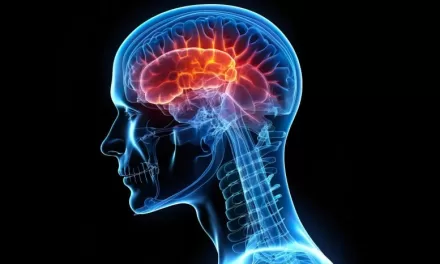
In a pioneering collaboration, NASA and Google have developed the Crew Medical Officer Digital Assistant (CMO-DA), an artificial intelligence-powered medical assistant designed to help astronauts independently diagnose and manage health issues during extended missions to the Moon, Mars, and beyond. This breakthrough technology aims to overcome the critical challenge of communication delays—up to 20 minutes each way—between astronauts and Earth-based medical teams, which make immediate remote medical support impractical on deep space missions.
The CMO-DA operates on Google Cloud’s Vertex AI platform, utilizing natural language processing, speech, text, and image inputs to provide multimodal interactive assistance. Initial tests involved simulated medical scenarios including ankle injuries, flank pain, and ear pain, demonstrating diagnostic accuracy rates ranging from 74% to 88%. The system is trained on spaceflight medical literature and validated through rigorous clinical educational frameworks to ensure safety and reliability under mission conditions.
Historically, astronauts aboard the International Space Station have relied on continuous medical support from Earth, regular medicine resupply, and the potential for rapid evacuation when necessary. However, with future commercial and NASA crewed missions venturing further into space where such support becomes impractical, the CMO-DA represents an important shift toward autonomous, Earth-independent medical care.
This collaboration merges Google’s cloud computing and AI expertise with NASA’s decades of space medical research and operational experience. Beyond its application in space, experts note the potential for this AI assistant to enhance healthcare delivery in remote or underserved areas on Earth where medical resources are limited.
NASA plans to evolve the system by integrating more data streams from onboard medical devices and training the AI to become context-aware of unique space health challenges like microgravity effects. While the system currently serves as a clinical decision support tool for astronauts, future updates may broaden its capabilities and possibly lead to terrestrial regulatory approval.
This milestone marks a significant step in ensuring astronaut health and safety for humanity’s push into deep space exploration, while also offering promising innovations for global healthcare accessibility.
Disclaimer: This article is for informational purposes only and does not constitute medical advice. The AI medical assistant described is a NASA-Google proof-of-concept tool currently under development and testing for space missions. Its use and effectiveness are subject to ongoing validation. Individuals facing medical issues should consult qualified healthcare professionals. The content herein should not be relied upon for self-diagnosis or treatment.