 0
0
 0
0
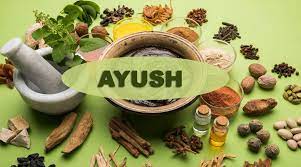
New Delhi, July 29, 2025 – The Ministry of Ayush is actively advancing India’s traditional medicine systems, such as Ayurveda, Unani, Siddha, and Yoga, onto the world stage through a series of strategic international initiatives and high-impact collaborations. In its latest move, the Ministry has formalized an agreement with the World Health Organization (WHO), marking the establishment of the WHO Global Traditional Medicine Centre (GTMC) in Jamnagar, Gujarat—a major milestone in promoting and expanding evidence-based traditional, complementary, and integrative medicine (TCIM) worldwide.
The GTMC, envisioned as a global hub for knowledge and research, is designed to assist member states in policy formulation and capacity building, supporting the WHO’s strategy on traditional medicine and expanding its contributions to universal health coverage.
Expanding International Cooperation
As part of its Central Sector Scheme for International Cooperation in Ayush (IC Scheme), the Ministry of Ayush offers wide-ranging support to Indian Ayush drug manufacturers and service providers. This initiative boosts the export and international recognition of Ayush practices and products, accelerates global academic & market development, and fosters greater stakeholder engagement abroad.
In pursuit of these goals, the Ministry has achieved numerous breakthroughs:
-
Signed 25 inter-governmental Memoranda of Understanding (MoUs) for collaboration in traditional medicine and homeopathy, including recent partnerships with Malaysia (August 2024) and Angola (May 2025).
-
Forged 15 MoUs with leading international institutes to establish AYUSH Academic Chairs globally.
-
Created 52 institute-level MoUs for collaborative research and academic exchanges, spanning nations such as Peru, Thailand, Brazil, the USA, Czech Republic, Iran, Indonesia, and Ghana throughout 2023, 2024, and 2025.
-
Set up 43 Ayush Information Cells in 39 countries to provide authoritative resources on Indian traditional medicine.
-
Launched international fellowship programs, offering scholarships to foreign nationals to study Ayush disciplines in India’s premier institutions.
Collaboration with WHO: Building Global Benchmarks
The Ministry’s ongoing collaboration with WHO continues to bear fruit. Key achievements include:
-
Benchmark documents for the training and practice of Ayurveda and Unani, released in 2022 as part of a project agreement dating back to 2016.
-
WHO-published terminology documents in Ayurveda, Unani, and Siddha to standardize and integrate these systems into global health care frameworks.
-
A new agreement with WHO (May 2025) to develop a Traditional Medicine module under the International Classification of Health Interventions (ICHI), further aligning Indian traditional medicine with international health standards.
India’s Global Leadership in Traditional Medicine
Through these initiatives, India is positioning itself as a world leader in the promotion, research, and integration of traditional medicine practices. The establishment of the WHO-GTMC is set to enhance India’s role as a strategic knowledge partner, ushering in a new era of science-driven, evidence-based alternative medicine that addresses global health challenges.
This information was provided in a written reply by Union Minister of State (I/C) of the Ministry of Ayush, Shri Prataprao Jadhav, to the Rajya Sabha.
Disclaimer:
This article is based on official information released by the Ministry of Ayush. Details such as dates and MoU specifics are accurate as per government statements as of July 29, 2025. For ongoing updates and the latest developments, readers should refer to official releases from the Ministry of Ayush and the World Health Organization.