 0
0
 0
0
Published: February 18, 2026
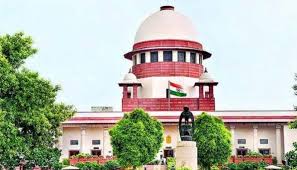
NEW DELHI — The National Board of Examinations in Medical Sciences (NBEMS) has formally distanced itself from the controversial decision to lower qualifying cut-offs for the NEET-PG 2025–26 session, telling the Supreme Court that its role is strictly administrative. In an affidavit filed Tuesday, the Board asserted it merely executed orders from the Union Health Ministry to reduce eligibility thresholds—which in some categories reached as low as the 0th percentile—to fill vacant postgraduate medical seats across the country.
The legal standoff centers on a January 13 notification that revised the qualifying criteria after two rounds of counseling were already complete. The move, which rendered an additional 95,913 candidates eligible for specialist training, has sparked a fierce national debate among medical educators, public health advocates, and prospective residents regarding the balance between “merit” and “seat utilization.”
The Core of the Contention: Numbers and Percentiles
The technical heart of the dispute lies in the dramatic shift of the “qualifying line.” Traditionally, the National Eligibility cum Entrance Test for Postgraduates (NEET-PG) acts as a high-stakes filter to ensure only those with a demonstrated baseline of medical knowledge enter specialized fields like surgery, pediatrics, or radiology.
Under the revised criteria:
-
General Category (UR): Cut-off dropped to the 7th percentile (103 out of 800 marks).
-
Reserved Categories (SC/ST/OBC): Cut-off dropped to the 0th percentile, which numerically corresponds to a score of minus 40.
The NBEMS, through Law Officer Mohd. Sameen, argued that the Board is effectively the “messenger.” “The role of NBEMS is strictly limited to conducting the examination… and handing over the final results to the concerned Counseling Authority,” the affidavit stated. The Board maintains that the policy decision falls exclusively under the jurisdiction of the Ministry of Health and Family Welfare (MoHFW) and the National Medical Commission (NMC).
The “Rules of the Game” Argument
The Public Interest Litigation (PIL), filed by advocate Satyam Singh Rajput, argues that changing eligibility criteria mid-stream is unconstitutional. A primary legal tenet cited is that the “rules of the game” cannot be changed after the process has started.
More importantly, the petition raises a grave public health concern: Does lowering the bar to zero or negative marks compromise the quality of future specialists?
The petition characterizes the move as “unprecedented and extreme,” suggesting it converts a screening mechanism meant to ensure competence into an “instrument certifying failure as eligibility.”
Expert Perspectives: A Divided Medical Community
The medical community is currently split between those prioritizing the filling of infrastructure and those guarding the sanctity of specialized education.
The Case for Merit
“Postgraduate training is not basic medical education; it is where a doctor learns the nuances of life-saving interventions,” says Dr. Aranya Gupta, a senior medical education consultant (not involved in the litigation). “When you allow a candidate with a zero or negative score to enter a residency, you are essentially saying that the entrance test has no diagnostic value for competence. It creates a slippery slope for the standard of healthcare delivery.”
The Case for Seat Utilization
Conversely, the Delhi High Court recently dismissed a similar challenge, ruling that the “apprehensions regarding patient safety were unfounded.” The court’s logic—and the government’s likely defense—is that the NEET-PG score is merely an eligibility filter for counseling. The actual training and rigorous exit exams (like the proposed NEXT) serve as the ultimate safeguard for patient safety.
Furthermore, proponents argue that leaving thousands of PG seats vacant is a waste of national resources, especially in a country with a chronic shortage of specialist doctors in rural and semi-urban areas.
Public Health Implications
The outcome of this Supreme Court case will likely set a massive precedent for how medical “merit” is defined in India.
-
Specialist Availability: If the reduction stands, more seats in less “popular” branches (like Anatomy, Physiology, or Community Medicine) may be filled, potentially strengthening the academic foundations of medical colleges.
-
Quality of Care: Critics argue that if the entry barrier is removed, the burden of “filtering” falls entirely on the residency program. If those programs are not robust, the quality of specialists entering the workforce three years from now could be inconsistent.
-
Educational Integrity: There are concerns that lowering cut-offs to zero primarily benefits private medical colleges with high fees, allowing them to fill seats that would otherwise remain vacant due to a lack of qualified candidates willing to pay the tuition.
What This Means for Candidates
For the nearly 96,000 candidates newly eligible, the situation remains in a state of “judicial flux.” While the NBEMS argues that these candidates’ interests must be protected as they are not parties to the suit, the Supreme Court has the power to stay the counseling process or restore original standards if it finds the reduction “arbitrary.”
For now, the Ministry of Health maintains that “merit” is not diluted because the relative ranking (the merit list) remains the same; only the pool of those allowed to apply has expanded.
Key Statistics at a Glance
| Category | Original Cut-off (Approx) | Revised Cut-off | Additional Eligible Candidates |
| Unreserved (UR) | 50th Percentile | 7th Percentile | ~45,000 |
| SC/ST/OBC | 40th Percentile | 0th Percentile | ~50,000+ |
| Total Impact | – | – | 95,913 |
References
-
Legal Document: Affidavit of NBEMS Law Officer Mohd. Sameen, Satyam Singh Rajput vs. Union of India & Ors, Supreme Court of India, Feb 2026.
Medical Disclaimer: This article is for informational purposes only and should not be considered medical advice. Always consult with qualified healthcare professionals before making any health-related decisions or changes to your treatment plan. The information presented here is based on current research and expert opinions, which may evolve as new evidence emerges.