 0
0
 0
0
Kirsty Dixon, a learning and development adviser from York, recalls the moment menopause changed her life. At 49, while working at her desk, she was suddenly gripped by an intense brain fog so severe she could not remember her own name. “I just asked myself, ‘What is my name?’, and I couldn’t even remember my own name. I felt like I was going mad, I thought it was only me,” she said.
Initially, Kirsty feared the worst, suspecting a brain tumour or dementia. Her confusion deepened as she struggled to find support. “I wondered, why isn’t anyone taking me seriously? I have something genuinely serious happening, yet I can’t find anyone who will listen,” she explained. It was only after consulting a doctor that she learned her symptoms were linked to menopause—a stage of life affecting an estimated one in three women in the UK at any given time.
Before menopause, Kirsty described herself as bubbly and sociable. The onset of symptoms, however, left her feeling isolated and unrecognisable, both to herself and her family. “Menopause came along and just put a big thunder cloud over my head. I lost myself. The number of times my husband said, ‘I want my Kirsty back’ while he was cuddling me and I was in floods of tears,” she remembered.
For four years, Kirsty struggled to accept that menopause could be responsible for such profound changes. It was only during the COVID-19 lockdown, while researching menopause for her work, that she found an article describing symptoms identical to her own. “I got that lightbulb moment that what I was experiencing was perfectly normal, I needed to understand it and know what I could do to help myself. I went from having this constant cloud and feeling useless, to actually owning my journey,” she said.
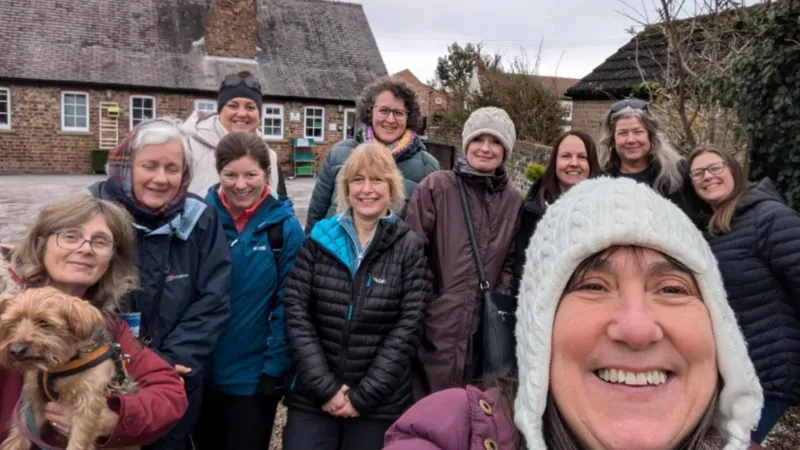
Now 58, Kirsty leads two non-profit support groups in York: a nature walking group and a pop-up menopause café in Acomb. These groups welcome everyone, regardless of age or gender, and aim to break the silence around lesser-known menopause symptoms. “When you’re going through it, it can feel so lonely. You feel like it’s only you, and you think you’re going mad. One of the most important things I say to people is get your support network around you, and that’s family, friends, and groups like this,” Kirsty advised.
Sarah Mortimer, 54, who attends the group, described experiencing burning mouth syndrome—an uncommon menopause symptom. “It can be really isolating, so to find groups like this is amazing. It makes a huge difference, knowing there’s other people going through the same rubbish that you’re going through. It’s that strength in numbers thing, and there’s strength in the power of talking about the menopause,” she said.
Attendees travel from as far as Leeds, Sheffield, and Beverley, highlighting the lack of local support. Kirsty is calling for more groups to be established so women don’t have to travel long distances for help. Reflecting on her journey, she said, “As a post-menopausal woman, I am the most confident, the strongest, most creative person. If someone said to me you can have your life again, without your menopause experience, actually, I’d say no, because it’s what’s made me the person I am today. If I can get through that, I can get through anything”.
Disclaimer: This article is based on personal experiences and anecdotal evidence. Menopause symptoms can vary widely. Anyone experiencing severe or unusual symptoms should seek advice from a qualified healthcare professional.