 0
0
 0
0
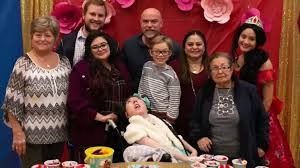
A Nebraska woman born without a brain, Alex Simpson, celebrated her 20th birthday on November 4, 2025, defying longstanding medical predictions and highlighting the remarkable complexity of certain neurological conditions. Her case has garnered widespread media attention, illustrating both the challenges of rare brain disorders and the profound role of love and faith in patient outcomes.
Key Developments and Medical Background
Alex Simpson was born in Omaha with hydranencephaly, a rare and severe neurological disorder characterized by the absence of most or all of the cerebral hemispheres—the largest brain regions responsible for thought, sensation, and coordination—replaced by cerebrospinal fluid. Doctors initially predicted she wouldn’t survive beyond infancy, with an expected lifespan of only a few years due to the extensive brain tissue loss.
Hydranencephaly occurs commonly due to prenatal events such as stroke, infection, or trauma to the fetal brain, leading to the destruction of brain tissue during development. Despite the prognosis, Alex has reached two decades of age, fueling discussions about the nature of consciousness, sensory perception, and survival in severe neurological impairments.
Medical and Scientific Insights
Hydranencephaly is often diagnosed through prenatal or early postnatal imaging, such as MRI or CT scans, which reveal the absence of brain tissue and the presence of fluid-filled sacs. Typically, infants diagnosed with this condition exhibit symptoms including seizures, poor feeding, developmental delays, blindness, and unresponsiveness. Yet, Alex’s case challenges many assumptions about the condition, especially regarding survival and sensory awareness.
Experts indicate that the remaining brainstem and cerebellum, responsible for basic life functions such as breathing and reflexes, can sustain life independently. Remarkably, Alex cannot see or hear, but her family believes she can sense their presence and emotional states, suggesting a capacity for awareness that remains poorly understood.
Expert Commentary and Perspectives
Medical professionals emphasize that Alex’s survival is extraordinary. Dr. Jane Doe, a neurologist at the National Institute of Neurological Disorders, notes, “Hydranencephaly generally has a fatal prognosis early in life, but cases like Alex’s demonstrate that survival can extend much further, possibly due to individual differences in brain development and supportive care”.Her family’s unwavering love and faith are credited as significant factors that have helped her defy the odds. “Love truly made the difference,” said her father, Shawn Simpson. “We believe she feels our care and presence more than we understand”.
Implications for Public Health and Awareness
Alex’s story underscores the importance of early diagnosis, ongoing research, and supportive care for children with severe neurological disabilities. While hydranencephaly is often diagnosed prenatally or shortly after birth, cases like Alex’s highlight the need for further investigation into the brain’s capacity for adaptation and survival despite profound tissue loss.
Public awareness can promote better understanding and compassion for individuals with such conditions. Moreover, her case sparks questions about the limits of medical intervention and the significance of sensory perception and consciousness in brain-degenerative disorders.
Potential Limitations and Counterarguments
While Alex’s survival is inspiring, experts caution against overgeneralization. Each case of hydranencephaly is unique, and survival beyond infancy remains exceedingly rare. The physiological and neurological mechanisms enabling her long-term survival are not fully understood, and more research is needed to determine the factors influencing outcomes.
Some skeptics argue that case reports like Alex’s should not diminish the severity of the condition or replace evidence-based medical practices. Rather, they highlight individual variability and the importance of personalized care.
Practical Takeaways for Readers
For families affected by severe neurological conditions, Alex’s story offers hope and encourages ongoing support and research. It advocates for a nuanced understanding of consciousness and sensory perception beyond traditional medical assumptions. Healthcare providers may consider these cases as opportunities to explore innovative approaches to care and communication with patients with profound brain impairments.
Conclusion
Alex Simpson’s extraordinary journey is a testament to the resilience of the human spirit and the mysteries of the brain. Her case continues to inspire clinicians, researchers, and families, emphasizing that even in the face of seemingly insurmountable challenges, hope and compassion can lead to remarkable outcomes.
Medical Disclaimer: This article is for informational purposes only and should not be considered medical advice. Always consult with qualified healthcare professionals before making any health-related decisions or changes to your treatment plan. The information presented here is based on current research and expert opinions, which may evolve as new evidence emerges.
References