 0
0
 0
0
ALAPPUZHA, KERALA — In a case that has reignited a national conversation regarding surgical safety and patient advocacy, the Kerala Health Department has launched a high-level investigation into a “retained surgical item” (RSI) discovered inside a patient five years after her initial procedure.
The incident involves Usha Joseph, a resident of Punnapra, who discovered a pair of surgical scissors lodged in her abdomen earlier this week. The discovery came after years of chronic, debilitating pain that Ms. Joseph claims began immediately following a 2021 surgery at the Alappuzha Vandanam Medical College.
Kerala Health Minister Veena George confirmed on Friday that a preliminary report has been filed and an expert panel of specialists has been convened to determine how the instrument remained undetected for half a decade.
A Five-Year Struggle for Answers
On May 5, 2021, Usha Joseph underwent a procedure at the state-run Vandanam Medical College to remove a uterine tumor. According to Ms. Joseph, her recovery was marked not by healing, but by persistent, sharp abdominal pain and urinary complications.
“I managed the discomfort with medication for years,” Joseph told local reporters. “I was repeatedly told the symptoms were likely due to kidney stones. No one suspected the surgery itself.”
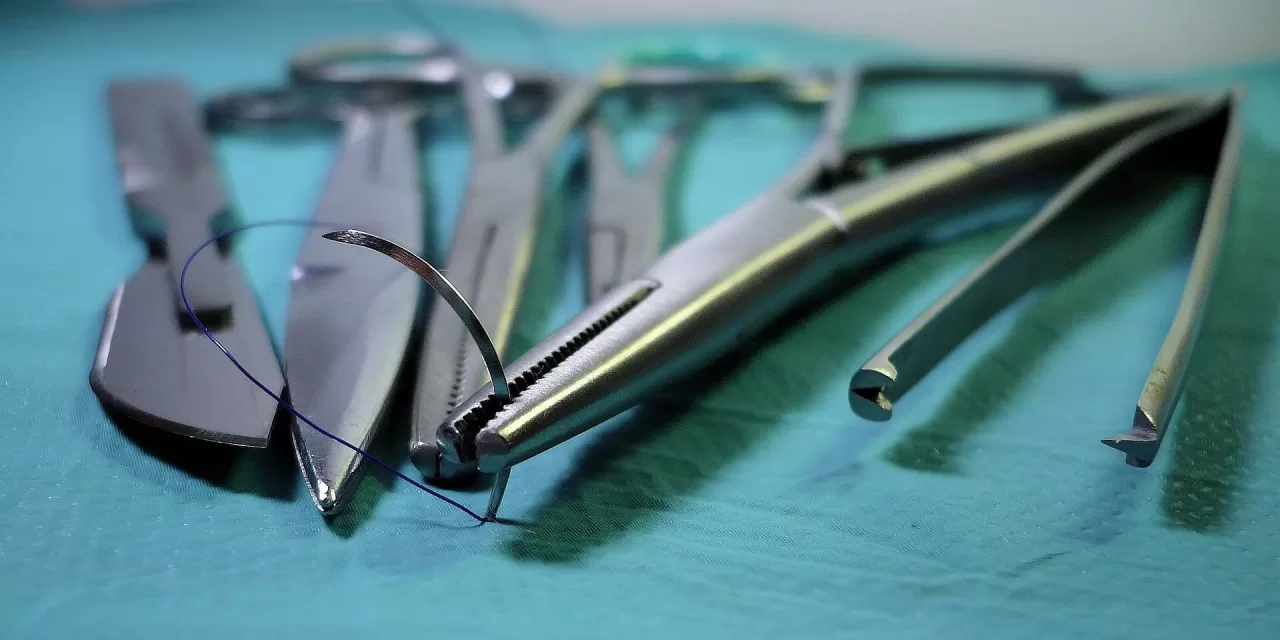
The breakthrough finally came this week when an X-ray, performed due to escalating pain, revealed the distinct silhouette of surgical scissors—often referred to in medical terms as an artery forceps or hemostat—nestled within her pelvic cavity.
Conflicting Timelines
The case has already hit a wall of conflicting testimonies:
-
The Patient’s Stance: Ms. Joseph maintains that the 2021 procedure was her only major abdominal surgery.
-
The Surgeon’s Defense: Dr. Lalithambika, the surgeon linked to the 2021 operation, has denied personal responsibility. She suggested the instrument might have been left during surgeries performed as far back as 20 years ago, citing “systemic lapses” rather than individual negligence.
Minister Veena George emphasized that the probe would focus on surgical logs and “count protocols” from all institutions where the patient received care to establish a definitive timeline.
The Science of “Retained Surgical Items” (RSIs)
While the discovery of a foreign object inside a body sounds like a rare horror story, medical literature classifies these as Retained Surgical Items (RSIs)—a recognized “Never Event” in healthcare. A “Never Event” is a medical error that is clearly identifiable, preventable, and serious in its consequences.
How Common are RSIs?
According to research published in the Journal of the American College of Surgeons, RSIs occur in approximately 1 out of every 5,500 to 18,760 operations. While sponges are the most common item left behind (roughly 70% of cases), metal instruments like scissors or needles account for a significant minority.
“The human abdomen is a complex, three-dimensional space,” says Dr. Aranya Sen, a surgical safety consultant not involved in the case. “During a long or emergency procedure, blood and tissue can easily obscure small instruments. If a standardized counting protocol isn’t followed to the letter, errors happen.”
The “Normalization” of Pain
One of the most concerning aspects of Ms. Joseph’s case is the five-year delay in diagnosis. Medical experts note that patients who complain of post-operative pain are often dismissed with “psychosomatic” labels or misdiagnosed with common issues like kidney stones or adhesions.
“A patient’s intuition regarding their own recovery is a vital diagnostic tool,” says Dr. Sen. “Persistent, localized pain after surgery should always trigger a low threshold for imaging, such as an X-ray or CT scan.”
Public Health Implications and Protocol
This incident has raised urgent questions about the WHO Surgical Safety Checklist, a global standard introduced in 2008 to prevent such errors. The checklist requires a “Time Out” before and after surgery where the nursing staff and surgeons must verbally confirm:
-
The completion of instrument, sponge, and needle counts.
-
The correct labeling of specimens.
-
Any equipment problems that need to be addressed.
Systemic vs. Individual Error
Dr. Lalithambika’s defense points toward a “systemic lapse.” In high-volume government hospitals, fatigue and understaffing can lead to shortcuts in the counting process. However, the health minister’s probe will examine whether the “sign-out” portion of the checklist was falsified or simply ignored.
Looking Ahead: Legal and Medical Recourse
Usha Joseph’s family has confirmed they are initiating legal proceedings against the hospital. Beyond the physical trauma, the family cites significant financial strain from years of “ineffective” treatments and Ms. Joseph’s inability to work.
For the general public, this case serves as a stark reminder of the importance of patient self-advocacy. If you or a loved one experiences the following after surgery, seek a second opinion or request imaging:
-
Chronic, localized pain that does not respond to standard recovery timelines.
-
Unexplained fever or signs of internal infection.
-
Sensation of a “lump” or “pulling” within the surgical site.
As the expert panel in Kerala begins its review, the medical community waits to see if this will lead to stricter digital tracking of surgical instruments, such as radio-frequency identification (RFID) tags, which are increasingly used in modern theaters to ensure no patient leaves the table with more than they arrived with.
References
Medical Disclaimer: This article is for informational purposes only and should not be considered medical advice. Always consult with qualified healthcare professionals before making any health-related decisions or changes to your treatment plan. The information presented here is based on current research and expert opinions, which may evolve as new evidence emerges.