 0
0
 0
0
New Delhi — In a landmark development for Indian healthcare, the All India Institute of Medical Sciences (AIIMS), New Delhi, has successfully concluded the first domestic clinical trial of the “Supernova” stent retriever system. The trial, known as GRASSROOT, demonstrated that the indigenously developed device achieves world-class outcomes in treating acute ischemic stroke, offering a safe, effective, and potentially more affordable alternative to imported devices.
The findings, published this month in the prestigious Journal of NeuroInterventional Surgery (JNIS), mark a turning point for stroke management in India, where approximately 1.7 million people suffer from strokes annually.
Breaking the Clot: A New Standard of Care
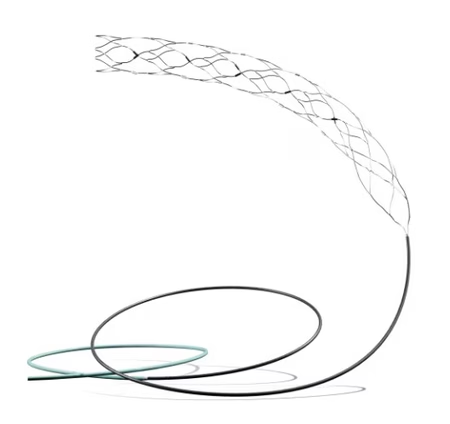
The GRASSROOT trial (Gravity Stent-Retriever System for Reperfusion of Large Vessel Occlusion Stroke Trial) evaluated the efficacy of the Supernova stent retriever—a device designed to physically capture and remove blood clots blocking the brain’s large arteries. This procedure, known as mechanical thrombectomy, is the gold standard for treating severe strokes but has historically been limited in India due to the high cost of imported devices.
“This trial is a turning point for stroke treatment in India,” stated Dr. Shailesh B. Gaikwad, Professor and Head of the Department of Neuroimaging and Interventional Neuroradiology at AIIMS Delhi, who served as the National Principal Investigator. “The Supernova stent has shown excellent safety and efficacy outcomes… proving that India can generate world-class clinical evidence entirely within the country rather than relying solely on imported technologies.”
Trial by the Numbers: Safety and Efficacy
The multi-center prospective trial enrolled 32 patients across eight leading stroke centers in India between August 2024 and June 2025. The results were compelling:
-
94% Reperfusion Rate: Doctors successfully restored blood flow to the brain in nearly 94% of patients, a rate comparable to or exceeding global standards.
-
Rapid Action: Most patients arrived within a critical 6-hour window, and the device effectively reopened vessels—often on the first attempt.
-
Positive Outcomes: At the 90-day follow-up, 50% of patients achieved functional independence, meaning they could return to their daily lives without significant disability.
-
High Safety Profile: The trial reported a low mortality rate of 9.4% and a symptomatic intracranial hemorrhage (brain bleed) rate of just 3.1%, significantly minimizing the risks often associated with such invasive procedures.
Engineered for Indian Needs
Developed by Gravity Medical Technology, the Supernova system was designed with the specific anatomical and demographic challenges of the Indian population in mind. Unlike in the West, strokes in India often strike younger individuals and can present with different vascular characteristics.
Dr. Dileep Yavagal, Professor of Neurology and Neurosurgery at the University of Miami and the trial’s Global Principal Investigator, highlighted the device’s broader impact: “The device has already treated more than 300 patients in Southeast Asia. It will now be manufactured and made available in India at affordable prices, offering new hope to millions.”
Industry experts estimate the device could cost roughly one-third of the price of current international products, drastically lowering the financial barrier for patients in low-to-middle-income settings.
From Clinical Trial to Routine Use
Following the trial’s success, the Central Drugs Standard Control Organisation (CDSCO) has approved the Supernova stent retriever for routine clinical use. This makes it the first stroke device to be cleared exclusively based on domestic clinical trial data—a significant victory for the “Make in India” initiative in the high-tech medical device sector.
Dr. Deepti Vibha, Professor of Neurology at AIIMS, emphasized the human element of this scientific achievement: “The participation of patients and families in this trial will help bring faster, more affordable stroke therapies to millions of others.”
Implications for Public Health
For the general public, this development translates to better access to life-saving care. In a stroke, “time is brain”—every minute a large vessel is blocked, nearly 2 million brain cells die. The availability of a high-quality, cost-effective mechanical thrombectomy device means that more hospitals across Tier-2 and Tier-3 cities may eventually be able to offer this advanced treatment, reducing death and long-term paralysis.
However, experts caution that technology is only one part of the solution. “While the device is a breakthrough, the infrastructure to transport patients to hospitals within the ‘golden window’ remains a critical challenge,” noted an independent neurologist not involved in the study. “Public awareness of stroke symptoms and rapid transport protocols are equally vital.”
Conclusion
The success of the AIIMS-led GRASSROOT trial is more than a medical statistic; it is a declaration of self-reliance in advanced medical care. By validating the Supernova stent retriever, Indian medical science has bridged a critical gap between cost and quality, promising a future where advanced stroke recovery is a possibility for the many, not just the few.
Medical Disclaimer:
This article is for informational purposes only and should not be considered medical advice. Always consult with qualified healthcare professionals before making any health-related decisions or changes to your treatment plan. The information presented here is based on current research and expert opinions, which may evolve as new evidence emerges.
References
AIIMS-led trial on most advanced brain stent shows promise for stroke patients