 0
0
 0
0
December 8, 2025
SAO PAULO — In a historic victory for public health, Brazil’s health regulatory agency, ANVISA, has approved the registration of Butantan-DV, the world’s first single-dose vaccine against dengue fever. The decision, announced late last month, marks a pivotal shift in the fight against the mosquito-borne virus that has infected millions worldwide this year alone.
The new vaccine, developed entirely in Brazil by the prestigious Butantan Institute, offers a significant logistical advantage over existing options: it requires only one injection to provide robust protection. This “major gain” is expected to revolutionize vaccination campaigns in hard-to-reach regions, such as the Amazon, where patient follow-up for multi-dose regimens has historically proven difficult.
Key Findings: A “Powerful Weapon”
The approval is based on rigorous data from a Phase 3 clinical trial involving over 16,000 volunteers across 14 Brazilian states. The study, which followed participants for five years, demonstrated that Butantan-DV is 74.7% effective at preventing symptomatic dengue cases.
More critically for public health systems, the vaccine showed:
-
91.6% efficacy against severe dengue and hemorrhagic forms.
-
100% efficacy in preventing dengue-related hospitalizations during the trial period.
“This is a historic achievement for science and health,” said Dr. Esper Kallás, Director of the Butantan Institute, in a press statement. “A disease that has afflicted us for decades can now be confronted with a very powerful weapon… ensuring autonomy in protecting our population.”
Addressing a Global Crisis
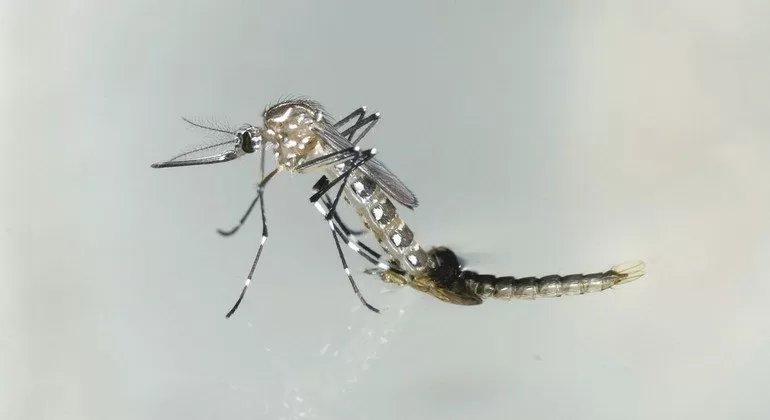
The approval comes as the world grapples with a record-breaking year for dengue. In 2024, Brazil alone registered over 6.5 million probable cases—a fourfold increase from the previous year. The virus, transmitted by the Aedes aegypti mosquito, causes high fever, severe body aches, and in some cases, fatal complications.
Until now, the primary global tool has been Qdenga (TAK-003), manufactured by Japanese pharmaceutical giant Takeda. While effective—recent seven-year data from Takeda showed sustained protection—Qdenga requires two doses administered three months apart.
“The single-dose regimen changes the game for adherence,” explains Dr. Rosilane de Aquino, Director of Regulatory Affairs at Butantan. “In remote areas or among vulnerable populations, getting people to return for a second shot months later is a massive challenge. A ‘one-and-done’ shot ensures immediate, complete coverage.”
Production and Rollout
The Butantan Institute has confirmed that 1 million doses are already produced and ready for immediate distribution to Brazil’s Unified Health System (SUS). Through an international partnership with WuXi Vaccines, the Institute plans to scale up production to deliver 30 million doses by the second half of 2026.
Expert Perspectives and Limitations
While the approval is cause for celebration, experts urge a balanced view. The vaccine is currently approved for individuals aged 12 to 59 years. Clinical trials to expand this indication to children (ages 2-11) and older adults (60-79) are ongoing.
Additionally, while the vaccine targets all four dengue serotypes (DENV-1, 2, 3, and 4), the Phase 3 trial primarily observed efficacy against types 1 and 2, as types 3 and 4 were not widely circulating during the study period. However, researchers are confident in the vaccine’s broad protection based on strong immunological data.
Infectious disease specialists also remind the public that vaccines are part of a broader toolkit. “The vaccine is a breakthrough, but it does not replace the need for vector control,” notes Dr. Carlos Magno Fortaleza, an infectologist at UNESP. “We must continue to eliminate mosquito breeding sites to control transmission effectively.”
Implications for Public Health
The rollout of Butantan-DV represents a shift toward “health sovereignty” for nations in the Global South. By developing and manufacturing the vaccine locally, Brazil reduces its dependence on imported pharmaceuticals and lowers costs for its public health system. This model could serve as a blueprint for other nations facing endemic tropical diseases often neglected by major global pharmaceutical companies.
Medical Disclaimer: This article is for informational purposes only and should not be considered medical advice. Always consult with qualified healthcare professionals before making any health-related decisions or changes to your treatment plan. The information presented here is based on current research and expert opinions, which may evolve as new evidence emerges.
Reference Section
-
Primary Study: Efficacy and Safety of Butantan-DV in Participants Aged 2–59 Years. ClinicalTrials.gov Identifier: NCT02406729. (Data presented to ANVISA, Nov 2025).