 0
0
 0
0
Health Policy & Medical Education Correspondent
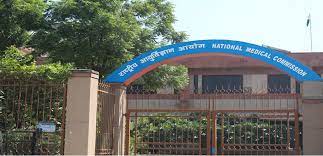
NEW DELHI – The National Medical Commission (NMC), India’s apex regulatory body for medical education and practice, is operating with significant leadership gaps, the Union Ministry of Health and Family Welfare admitted in Parliament on Saturday.
In a written reply to the Lok Sabha, Minister of State for Health and Family Welfare, Smt. Anupriya Patel, confirmed that five out of the 33 sanctioned posts at the Commission are currently vacant. Most critically, these vacancies include the Presidents of two of the NMC’s four autonomous boards: the Undergraduate Medical Education Board (UGMEB) and the Ethics and Medical Registration Board (EMRB).
The admission comes at a time when the Indian medical fraternity is grappling with pivotal policy shifts, including the deferment of the National Exit Test (NExT) and rising concerns over the regulation of professional ethics.
The Vacancy Breakdown
According to the data presented in Parliament on December 6, 2025, the Commission is functioning without full-time leadership in areas that directly impact the quality of medical education and the ethical conduct of doctors.
“Thirty-three member posts of the National Medical Commission are notified under the NMC Act, 2019. Details of twenty-eight members in position and five vacant posts are [acknowledged],” Minister Patel stated.
The specific vacancies are:
-
President, Undergraduate Medical Education Board (UGMEB): Vacant since September 2024.
-
President, Ethics and Medical Registration Board (EMRB): Vacant since June 2022.
-
Part-time Members: Three posts are lying vacant, with one seat empty since September 2020.
While the government emphasized that advertisements to fill these posts were published in August and October of this year, the prolonged vacancy at the Ethics Board—spanning over three years—has raised eyebrows among public health experts and patient rights advocates.
A Governance Bottleneck?
The NMC, established to replace the Medical Council of India (MCI), was envisioned as a lean, efficient regulator. However, experts argue that these high-level vacancies threaten to replicate the very bureaucratic lethargy it was designed to eliminate.
The Undergraduate Board (UGMEB) is responsible for setting the curriculum and standards for the country’s 700+ medical colleges. With its Presidency vacant, crucial decisions regarding the Competency-Based Medical Education (CBME) curriculum and the approval of new medical colleges risk being delayed or implemented without adequate oversight.
“The UGMEB is the engine room of medical education,” explains Dr. R.K. Sharma, a former medical superintendent and health policy analyst (name changed for anonymity). “Without a functional head, you inevitably see a slowdown in policy reforms. The recent confusion and eventual deferment of the NExT exam can be partly attributed to a lack of stable, decisive leadership at the board level.”
The Ethics Board (EMRB) vacancy is perhaps even more contentious. This board acts as the primary disciplinarian for the medical profession.
“A headless Ethics Board is a toothless watchdog,” says a senior member of a patient advocacy group based in Delhi. “We have seen delays in hearing appeals filed by patients against medical negligence. When the top post is empty for three years, it sends a signal that medical ethics is not a priority.”
Ripple Effects on the Profession
The operational gaps are already being felt on the ground. Recent reports indicate that disciplinary actions against doctors accused of unethical practices—such as accepting unauthorized gifts from pharmaceutical companies—have stalled.
In October 2025, it was reported that the NMC had yet to act on Department of Pharmaceuticals recommendations regarding doctors involved in a “pharma freebies” case, a delay directly linked to the lack of quorum and leadership in the EMRB.
Furthermore, the Federation of All India Medical Association (FAIMA) recently met with NMC Chairman Dr. Abhijat Sheth to discuss the mental health of resident doctors and the NExT exam. While Dr. Sheth has been proactive—assuring that NExT would be deferred to ensure a smooth transition—the burden of managing multiple autonomous boards often falls on the remaining leadership, potentially stretching the Commission’s bandwidth.
Dr. Sheth, in a recent address, emphasized that the NMC’s focus remains on “ensuring quality with quantity.” However, he also acknowledged the challenges of managing India’s massive medical education network, which has seen an explosion in the number of MBBS seats to over 1.23 lakh for the 2025-26 academic session.
Government’s Remedial Actions
Minister Patel assured Parliament that the government is moving to plug these gaps. “To fill up the vacant posts, advertisements have been published in English and Hindi national daily newspapers on 31/08/2024 and 11/10/2024 inviting applications from eligible professionals,” she noted.
She also highlighted that the selection of 19 part-time members was successfully completed in July 2025 via a draw of lots, a transparency measure mandated by the NMC Act.
Implications for Public Health
For the general public, these administrative details translate into real-world consequences.
-
For Patients: The paralysis in the Ethics Board means that grievances regarding medical negligence may face indefinite delays, denying timely justice.
-
For Students: Uncertainty at the UGMEB level can lead to confusion regarding exam patterns, internship rules, and college recognitions.
-
For Healthcare: A robust regulator is essential to check the proliferation of substandard medical colleges, ensuring that the doctors treating the public are well-trained and competent.
As the Indian healthcare sector expands, the NMC cannot afford to have empty chairs at the top. The swift appointment of qualified Presidents to the UGMEB and EMRB is not just a bureaucratic necessity but a public health imperative.
Medical Disclaimer: This article is for informational purposes only and should not be considered medical advice. Always consult with qualified healthcare professionals before making any health-related decisions or changes to your treatment plan. The information presented here is based on current research and expert opinions, which may evolve as new evidence emerges.
References
-
Parliamentary Statement: Misra, B. (2025, December 6). “5 of 33 NMC posts vacant: Health Minister tells Parliament.” Medical Dialogues.