 0
0
 0
0
Kerala is confronting a significant health challenge in 2025 with 80 confirmed cases and 21 deaths attributed to amoebic meningoencephalitis, a rare and often fatal brain infection caused by the amoeba Naegleria fowleri, colloquially known as the “brain-eating amoeba.” This surge in infections across the southern Indian state has sparked public health alerts and intensified efforts on early detection, treatment, and prevention to reduce mortality from this rapidly progressing central nervous system infection.
Key Developments and Statistics
Kerala’s Health Minister Veena George disclosed that the state has reported 80 cases and 21 deaths due to Primary Amoebic Meningoencephalitis (PAM) as of September 2025. These numbers reflect a higher detection rate due in part to the state’s insistence since 2023 on rigorous reporting and testing of every encephalitis case to identify its cause. Advanced diagnostic capabilities, including polymerase chain reaction (PCR) testing, have been established in microbiology laboratories statewide, enabling faster and more accurate identification of Naegleria fowleri infections.
Dr. Veena George highlighted that early detection combined with instituted technical guidelines for treatment since 2024 has contributed to saving lives amid this deadly outbreak.
Understanding Amoebic Meningoencephalitis and Naegleria Fowleri
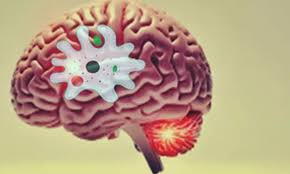
Naegleria fowleri is a free-living microscopic amoeba predominantly found in warm freshwater bodies such as lakes, rivers, and unchlorinated pools. This amoeba becomes lethal when contaminated water enters the human nasal cavity, allowing the pathogen to travel rapidly to the brain and cause Primary Amoebic Meningoencephalitis (PAM). PAM is a rare but critical infection that destroys brain tissue, leading patients to develop symptoms that resemble bacterial meningitis, including severe headache, fever, nausea, vomiting, and neck stiffness. Without prompt treatment, the disease progresses swiftly to confusion, seizures, coma, and often death within 3 to 7 days.
Unlike many infectious diseases, PAM is not contagious between people and cannot be transmitted by swallowing contaminated water; nasal exposure is the critical route of infection. The amoeba cannot survive in saltwater, thus marine swimming presents no risk.
Expert Commentary and Public Health Implications
Experts emphasize that the rarity and rapid progression of PAM complicate diagnosis and treatment. Dr. Anil Kumar, an infectious disease specialist not involved in the Kerala outbreak response, explains, “Due to the non-specific early symptoms and rapid deterioration, PAM often goes undiagnosed until too late. Public awareness and clinician vigilance are key to suspecting this infection and initiating timely treatment.” He also notes that the reported survival rate in Kerala, boosted by early use of miltefosine—a drug with antiparasitic properties—is about 24%, significantly higher than the global average survival rate of under 3% for PAM.
Kerala’s health authorities are aggressively campaigning for public awareness, urging residents to avoid swimming or diving in stagnant freshwater and to use preventive measures such as nose clips. The state has embarked on chlorination drives for wells, public tanks, and bathing spots to reduce amoeba contamination.
According to Health Minister George, the absence of new clusters linked to common water sources in 2025 (unlike in 2024) presents epidemiological challenges, as the infections now appear as isolated cases, making containment difficult.
Potential Limitations and Conflicting Perspectives
While the increased number of cases has alarmed public health authorities, some experts caution that improved detection through PCR testing and mandated reporting requirements since 2023 partially explain the surge, rather than an actual dramatic increase in infection rates. This underscores the importance of interpreting epidemiological data within the context of enhanced surveillance systems. Additionally, not all patients with symptoms consistent with PAM undergo comprehensive testing, potentially underestimating cases in less resourced areas. There also remains limited understanding of environmental factors contributing to Naegleria fowleri proliferation in Kerala’s context, warranting further research.
Practical Advice for Residents and At-Risk Populations
For individuals in Kerala and similar tropical regions, the most effective preventive strategies include avoiding freshwater-related nasal exposure activities such as diving or submerging the head underwater in natural freshwater bodies, especially warm stagnant water. Practicing nasal safety by using nose plugs during swimming or refraining from swimming in poorly maintained water sources is crucial. Public health officials encourage people to rely on treated, chlorinated water for all bathing and recreational activities. In healthcare settings, heightened awareness among physicians to suspect PAM in patients with encephalitis symptoms is essential for timely diagnosis and management.
Conclusion
Kerala’s surge in amoebic meningoencephalitis cases highlights an urgent public health issue with potentially devastating consequences. However, the state’s proactive approach to enhanced case detection, public education, water treatment, and early medical intervention offers a model for managing this rare but fatal brain infection. Continued research, surveillance, and community engagement remain imperative to reduce morbidity and mortality caused by Naegleria fowleri and to better understand this elusive pathogen.
Medical Disclaimer: This article is for informational purposes only and should not be considered medical advice. Always consult with qualified healthcare professionals before making any health-related decisions or changes to your treatment plan. The information presented here is based on current research and expert opinions, which may evolve as new evidence emerges.
References
-
“Brain-eating amoeba: Kerala reports 80 cases; 21 dead.” Times of India, September 22, 2025.