 0
0
 0
0
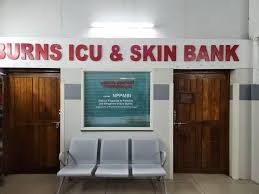
THIRUVANANTHAPURAM — In a move set to revolutionize the treatment of severe burn injuries and chronic wounds in Southern India, Kerala has officially operationalized its first-ever skin bank. Located at the Government Medical College Hospital (GMCH) in Thiruvananthapuram, the facility marks a critical advancement in the state’s tertiary healthcare infrastructure, offering a lifeline to patients who previously faced grueling recovery periods and high mortality rates.
The facility, which began full-scale operations this month, allows for the harvesting, processing, and preservation of donor skin. Much like an organ bank, the skin bank functions as a repository for biological tissue that can be used as a “biological bandage” for patients with extensive burns, potentially reducing recovery time and preventing life-threatening infections.
The Science of Survival: Why Skin Banking Matters
Human skin is the body’s largest organ and its primary defense against the environment. When a patient suffers “major burns”—typically defined as involving more than 30% to 40% of the body—the loss of this protective barrier leads to rapid fluid loss and an extremely high risk of sepsis, a leading cause of death in burn units.
“When we treat severe burns, the immediate goal is to cover the wound to prevent infection and dehydration,” explains Dr. Sunil Kumar, a senior plastic surgeon (unaffiliated with the project). “In the absence of a skin bank, surgeons often have to rely on ‘autografts,’ where skin is taken from an unburned part of the patient’s own body. However, in cases of 50% or 60% burns, there simply isn’t enough healthy skin left to harvest. This is where ‘allografts’—processed skin from a deceased donor—become a literal lifesaver.”
The new facility at Thiruvananthapuram uses specialized equipment to process donor skin, which is then stored in a glycerol solution at temperatures between 4°C and 8°C. In this state, the skin can remain viable for up to five years.
A Turning Point for Public Health in Kerala
The establishment of the bank addresses a long-standing gap in Kerala’s healthcare system. According to data from the National Programme for Prevention and Management of Burn Injuries (NPPMBI), India witnesses approximately 7 million burn injuries annually, with nearly 1.4 lakh deaths recorded each year.
Until now, hospitals in Kerala often had to source synthetic dressings or look to skin banks in neighboring states like Tamil Nadu or Maharashtra, a process that was often plagued by logistical delays and high costs.
The Thiruvananthapuram facility was established with the support of the Kerala State Organ and Tissue Transplant Organization (K-SOTTO) and funded through a combination of government grants and Corporate Social Responsibility (CSR) initiatives. The project underscores the state’s commitment to providing high-tech medical care through the public sector, ensuring that life-saving treatments are not restricted to those who can afford private healthcare.
How the Process Works: Donation to Recovery
The process of skin donation is significantly less invasive than organ donation but requires a strict timeline. Skin must be harvested within six hours of a donor’s death.
-
Harvesting: Only the uppermost layer of the skin (the epidermis and a part of the dermis) is taken, usually from the legs, thighs, and back.
-
Processing: The tissue is treated with various concentrations of glycerol over several weeks to ensure it is sterile and free of bacteria or fungi.
-
Application: When a burn victim arrives, the processed donor skin is applied to the wound. While the body eventually rejects this donor skin (unlike a kidney or heart), the allograft provides a critical window of 2 to 3 weeks during which the patient’s own skin can begin to regenerate underneath, and their clinical condition can stabilize.
Addressing the Stigma: The Challenge of Awareness
Despite the clinical benefits, the success of the skin bank hinges on a steady supply of donors. Medical professionals acknowledge that while organ donation awareness (kidney, liver, heart) has grown in Kerala, skin donation remains a sensitive topic.
“There is often a misconception that skin donation will disfigure the body of the deceased,” says a spokesperson for the Thiruvananthapuram Medical College. “We want the public to understand that skin is harvested only from specific areas, and it does not cause any visible mutilation or bleeding. It is a noble act that can save a child or an adult from a lifetime of pain and scarring.”
The state government plans to launch an awareness campaign through K-SOTTO to encourage families to consider skin donation alongside other forms of tissue donation.
Limitations and Future Outlook
While the opening of the bank is a triumph, experts caution that it is only one piece of the puzzle. Burn care requires multidisciplinary teams, including specialized nurses, nutritionists, and physical therapists. Furthermore, the Thiruvananthapuram bank is currently the only one in the state; patients in Northern Kerala may still face challenges in accessing these resources quickly.
However, health officials have indicated that if the Thiruvananthapuram model proves successful, similar units may be considered for the medical colleges in Kozhikode and Ernakulam.
Practical Implications for the Public
For the residents of Kerala and surrounding regions, this development means that the gold standard of burn care is now locally accessible.
-
Who can donate? Almost anyone over the age of 18, regardless of blood group, can be a skin donor. Unlike organs, the donor’s age is not a strict barrier, provided the skin is healthy and free of certain diseases like HIV, Hepatitis, or skin cancer.
-
What should families do? If a loved one has expressed a wish to be a donor, families should contact the hospital’s transplant coordinator immediately after death occurs.
The operationalization of this skin bank is more than just a medical achievement; it is a testament to Kerala’s evolving healthcare landscape, ensuring that even in the most tragic circumstances, there is a mechanism to offer hope and healing.
Medical Disclaimer
This article is for informational purposes only and should not be considered medical advice. Always consult with qualified healthcare professionals before making any health-related decisions or changes to your treatment plan. The information presented here is based on current research and expert opinions, which may evolve as new evidence emerges.
Reference Section
Source Citations:
-
Mathrubhumi News: “Kerala’s first skin bank becomes operational in Thiruvananthapuram.” (Dec 2024).