 0
0
 0
0
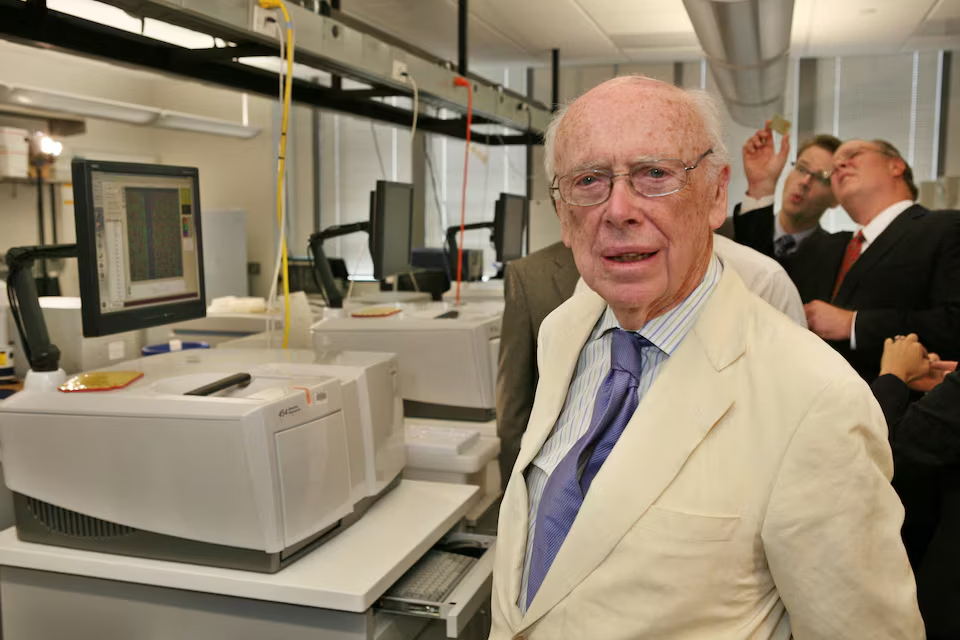
James Watson, the American biologist who co-discovered the double helix structure of DNA, has died at the age of 97. His groundbreaking work in 1953, alongside Francis Crick, revolutionized biology and medicine, laying the foundation for modern genetics and biotechnology. Yet, Watson’s legacy is deeply complex, marked by both monumental scientific achievement and persistent controversy over his later statements on race and intelligence.
The Discovery That Changed Science
In 1953, Watson and Crick published their model of DNA’s double helix in the journal Nature, describing the molecule’s twisted-ladder structure and its role in storing and transmitting genetic information. This discovery provided the first visual and conceptual understanding of how hereditary traits are passed from one generation to the next. The implications were immediate and far-reaching: the double helix model explained the mechanism of DNA replication and set the stage for advances in genetic engineering, disease diagnosis, and personalized medicine.
The Nobel Prize in Physiology or Medicine was awarded to Watson, Crick, and Maurice Wilkins in 1962 for their work, cementing their place in scientific history. Watson’s role in the Human Genome Project, which began in 1990, further expanded the reach of genetic research, enabling scientists to map the entire human genome and identify the genetic basis of thousands of diseases.
Impact on Medicine and Public Health
The discovery of DNA’s structure has had a profound impact on medicine. It enabled the development of genetic testing, which can identify inherited conditions such as cystic fibrosis and Huntington’s disease, and has led to targeted therapies for cancers and other genetic disorders. DNA analysis is now routinely used in forensic science, ancestry tracing, and even in the development of vaccines and biologic drugs.
Dr. Eric Topol, a leading geneticist and researcher, noted, “Watson’s discovery was the spark that ignited the entire field of molecular medicine. Without it, we wouldn’t have the tools to diagnose, treat, or prevent many of today’s most devastating diseases.”
Ethical and Social Implications
The power of genetic knowledge has also raised significant ethical questions. Issues such as genetic privacy, consent, and the potential for discrimination based on genetic information have become central to public health policy. The ability to edit genes, as seen in technologies like CRISPR, brings both hope for curing genetic diseases and concerns about “designer babies” and unintended consequences.
Dr. Francis Collins, former director of the National Institutes of Health, commented, “The double helix opened a Pandora’s box of ethical dilemmas. We must ensure that genetic advances are used responsibly and equitably, with strong safeguards for privacy and consent.”
Watson’s Controversial Legacy
Despite his scientific achievements, Watson’s reputation was tarnished by his repeated public statements linking race and intelligence, which were widely condemned by the scientific community as lacking evidence and promoting harmful stereotypes. In 2007, he was stripped of his position as chancellor of Cold Spring Harbor Laboratory following remarks that sparked international outrage. These controversies have led to ongoing debates about how to separate scientific contributions from the personal views of their creators.
Practical Implications for the Public
For the general public, the legacy of Watson’s discovery means greater access to genetic information and personalized healthcare. Genetic testing can help individuals understand their risk for certain diseases and make informed decisions about their health. However, it also underscores the importance of ethical guidelines and public education to ensure that genetic technologies are used responsibly and without discrimination.
Limitations and Counterarguments
Some critics argue that the focus on genetics can overshadow the role of environmental and social factors in health and disease. Others caution against over-reliance on genetic testing, noting that not all genetic risks are deterministic and that psychological and social support remain crucial for patients.
Conclusion
James Watson’s co-discovery of DNA’s double helix remains one of the most significant scientific breakthroughs of the 20th century, transforming medicine and our understanding of life itself. Yet, his legacy is a reminder that scientific progress must be accompanied by ethical responsibility and a commitment to equity and justice in health.
Medical Disclaimer: This article is for informational purposes only and should not be considered medical advice. Always consult with qualified healthcare professionals before making any health-related decisions or changes to your treatment plan. The information presented here is based on current research and expert opinions, which may evolve as new evidence emerges.
References