 0
0
 0
0
January 30, 2026
NEW DELHI — Marking National Leprosy Day on the anniversary of Mahatma Gandhi’s martyrdom, the Government of India reaffirmed its commitment this Friday to achieving a “Leprosy-Free India.” Through the National Leprosy Eradication Programme (NLEP), the Ministry of Health and Family Welfare is scaling up its “Zero Transmission” strategy, offering free multi-drug therapy (MDT), advanced diagnostics, and surgical rehabilitation across all public health facilities to eliminate the disease as a public health threat by 2027.
While India officially achieved the World Health Organization (WHO) definition of leprosy elimination—less than one case per 10,000 people—in 2005, the journey toward total eradication continues. As of March 2025, 31 states and Union Territories have maintained this status, with a national prevalence rate currently sitting at 0.57 per 10,000 population.
Understanding the “Ancient” Disease in a Modern Context
Leprosy, scientifically known as Hansen’s disease, is often misunderstood due to historical stigma. It is a chronic infectious disease caused by the slow-growing bacteria Mycobacterium leprae. Contrary to common myths, leprosy is not highly contagious; it is transmitted via droplets from the nose and mouth during close, frequent contact with untreated individuals.
The bacteria primarily attack the skin, peripheral nerves, the mucosa of the upper respiratory tract, and the eyes. “The tragedy of leprosy isn’t just the infection; it’s the delay in diagnosis,” says Dr. Ananya Raj, an infectious disease specialist not affiliated with the government program. “When caught early, it is 100% curable with a standard regimen of antibiotics. The permanent disabilities we associate with the disease only occur when it goes untreated for years.”
The NLEP Strategy: Beyond Just Medicine
The government’s “Zero Transmission, Zero Leprosy” goal by 2027 relies on a multi-pronged approach that addresses both the clinical and social aspects of the disease. Key components of the NLEP include:
-
Universal Free Treatment: Multi-Drug Therapy (MDT), the gold standard for treatment, is available free of charge at every government health facility.
-
Rehabilitative Care: For patients with Grade 2 deformities, the government provides free reconstructive surgery along with a welfare allowance of ₹12,000 to support recovery.
-
Supportive Gear: Distribution of microcellular rubber (MCR) footwear and self-care kits for patients with ulcers prevents further nerve damage and secondary infections.
-
Early Detection: Active case-finding campaigns are being conducted to identify asymptomatic or early-stage cases before they can transmit the bacteria to others.
The Challenge of Stigma and “Hidden” Cases
Despite the clinical successes, experts warn that the final mile of eradication is the hardest. Leprosy remains a Neglected Tropical Disease (NTD) globally, with roughly 200,000 new cases reported annually. In India, the social stigma often prevents individuals from seeking help at the first sign of a skin patch or numbness.
“We have the tools to kill the bacteria, but we are still fighting the social isolation,” the Health Ministry stated in a social media announcement. “Let us work together to eliminate stigma and ensure dignity and care for all.”
Independent health advocates point out that while the national prevalence rate is low, localized “hotspots” remain in certain districts. “The 0.57 prevalence rate is an average,” notes public health analyst Arvinder Singh. “In some rural pockets, the transmission persists. The focus on ‘Zero Transmission’ by 2027 is ambitious and requires aggressive door-to-door screening to find the ‘hidden’ cases that the 2005 elimination goal might have overlooked.”
What This Means for the Public
For the general consumer, the government’s message is clear: Leprosy is curable, and the treatment is free. Early signs to watch for include:
-
Pale or reddish patches on the skin that do not itch or hurt.
-
Loss of sensation (numbness) in the hands, feet, or patches.
-
Weakness in the muscles of the hands or feet.
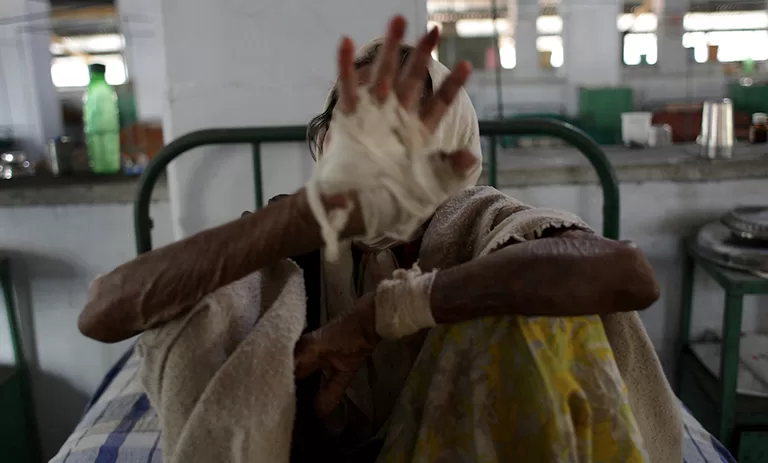
Health officials urge citizens not to ignore these symptoms. Early intervention not only stops the spread but prevents the physical deformities—such as clawed fingers or foot drop—that lead to lifelong disability.
The Road to 2027
As India moves toward its 2027 deadline, the emphasis is shifting from merely managing cases to breaking the chain of transmission entirely. This involves post-exposure prophylaxis (giving a single dose of an antibiotic to close contacts of a patient) and continuous public education.
By aligning the anniversary of Mahatma Gandhi’s death with National Leprosy Day, the government seeks to channel his legacy of compassion. Gandhi famously treated leprosy patients at a time when they were cast out of society, proving that human touch and medical care are the twin pillars of eradication.
References
- https://tennews.in/free-diagnosis-treatment-ensuring-a-leprosy-free-india-govt/
Medical Disclaimer: This article is for informational purposes only and should not be considered medical advice. Always consult with qualified healthcare professionals before making any health-related decisions or changes to your treatment plan. The information presented here is based on current research and expert opinions, which may evolve as new evidence emerges.