 0
0
 0
0
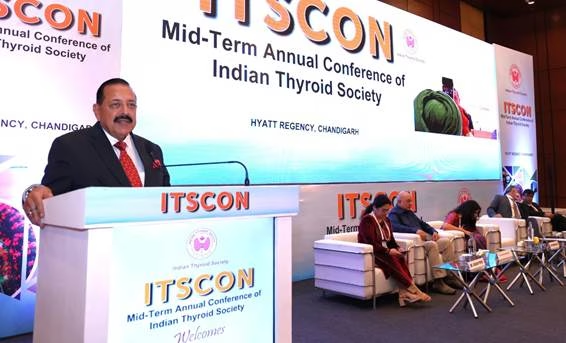
CHANDIGARH — In a move to pivot the national health conversation toward often-overlooked endocrine disorders, Union Minister Dr. Jitendra Singh issued a clarion call this week, framing thyroid health not just as a medical necessity, but as a critical pillar of India’s national productivity and economic future.
Speaking at the Mid-Term Annual Conference of the Indian Thyroid Society (ITSCON) in Chandigarh on February 9, 2026, Dr. Singh highlighted a staggering reality: an estimated 42 million Indians are currently living with thyroid disorders. With over 70% of the population under the age of 40, the Minister warned that undiagnosed hypothyroidism represents a silent threat to India’s “demographic dividend”—the economic growth potential resulting from a large working-age population.
“Thyroid disorders must be viewed as a national concern linked to human productivity,” Dr. Singh told a gathering of leading endocrinologists and researchers. “Every timely diagnosis and early screening contributes directly to shaping India’s future human capital.”
The Scale of the “Silent” Epidemic
Thyroid disorders, particularly hypothyroidism (an underactive thyroid), affect nearly 11% of the Indian adult population. Despite these numbers, the condition remains overshadowed by higher-profile non-communicable diseases (NCDs) like diabetes and hypertension.
The thyroid gland, a small butterfly-shaped organ in the neck, acts as the body’s “master controller” for metabolism. When it malfunctions, the ripple effects are systemic.
Key Concerns Highlighted at ITSCON:
-
Workforce Efficiency: Chronic fatigue, cognitive “fog,” and depression—common symptoms of hypothyroidism—can significantly reduce individual output in the workforce.
-
Maternal and Neonatal Health: Undetected hypothyroidism during pregnancy is a major concern. Experts at the conference noted that it can lead to congenital hypothyroidism, which, if left untreated, causes irreversible neurodevelopmental delays in children.
-
The Diagnostic Gap: A substantial portion of the 42 million cases remains undiagnosed, largely due to a lack of public awareness and routine screening protocols.
A Decade of Bio-Pharma Reform
The Minister’s address also served as a progress report on the “Biopharma Shakti Mission,” a central government initiative aimed at making India a global hub for affordable therapeutics and diagnostics.
Dr. Singh noted that the days of “silo-based functioning” are over. By integrating research institutions, academia, and private industry, India has seen a surge in indigenous medical breakthroughs. Recent successes include the development of India’s first indigenous antibiotic for resistant infections and successful gene therapy trials for hemophilia.
To sustain this momentum, the government has established the Anusandhan National Research Foundation (ANRF) and a ₹1-lakh-crore (approximately $12 billion USD) framework dedicated to Research, Development, and Innovation. This framework is designed to incentivize the private sector to move innovations from the lab to the pharmacy shelf more rapidly.
Expert Perspective: Why Awareness Lags
While the government focuses on infrastructure, medical experts at the conference emphasized the “mindset shift” required among the general public.
“Thyroid symptoms are often non-specific. People attribute their tiredness to a busy lifestyle or aging,” says Dr. Anjali Deshpande, a senior endocrinologist (not affiliated with the ITSCON organizing committee). “By the time they seek help, the condition may have impacted their cardiovascular health or metabolic rate significantly. Dr. Singh’s emphasis on ‘national productivity’ is apt—a sluggish thyroid often means a sluggish life.”
Practical Implications for the Public
For the average citizen, the government’s push for indigenous diagnostics translates to more affordable and accessible testing. Health officials are now urging a proactive approach to thyroid health:
-
Routine Screening: High-risk groups, including women of childbearing age and those with a family history of autoimmune disorders, should request a TSH (Thyroid Stimulating Hormone) test.
-
Newborn Screening: Ensuring that infants are screened within days of birth can prevent lifelong developmental issues.
-
Symptom Vigilance: Recognizing that persistent unexplained weight gain, cold intolerance, or extreme lethargy warrants medical investigation.
Balancing the Narrative: Challenges Ahead
Despite the optimistic outlook on indigenous biopharma, challenges remain. Skeptics point out that while “affordable therapeutics” are the goal, the “last-mile” delivery of healthcare in rural India remains a hurdle. Ensuring that a person in a remote village has the same access to a thyroid panel as someone in Chandigarh or Delhi is the next great logistical challenge for the Biopharma Shakti Mission.
Furthermore, some researchers caution that over-diagnosis can also be a risk. “We must find the balance between aggressive screening and unnecessary lifelong medication for subclinical cases that might not require intervention,” noted one researcher during a panel session.
Conclusion: Building a Self-Reliant Future
As the ITSCON conference concludes, the message is clear: India’s path to becoming a $5 trillion economy relies as much on the health of its citizens as it does on its industrial output. By tackling the thyroid burden through indigenous innovation and a “nation-building” mindset, India aims to safeguard its most valuable resource—its people.
“India is strengthening its indigenous ecosystem to tackle NCDs,” Dr. Singh concluded. “With scientific integration and collective resolve, we are moving toward a resilient and self-reliant future.”
Reference Section
- https://www.pib.gov.in/PressReleasePage.aspx?PRID=2225415®=3&lang=1
Medical Disclaimer: This article is for informational purposes only and should not be considered medical advice. Always consult with qualified healthcare professionals before making any health-related decisions or changes to your treatment plan. The information presented here is based on current research and expert opinions, which may evolve as new evidence emerges.