 0
0
 0
0
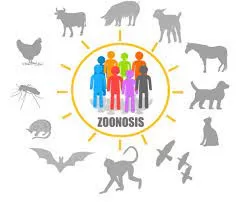
The Ministry of Health & Family Welfare, Government of India has launched Integrated Disease Surveillance Program (IDSP), to enhance early warning and prompt response to disease outbreaks across the country. Some of the common zoonotic diseases reported under IDSP are Scrub typhus, Leptospirosis, Human Rabies, Kyasanur Forest Disease (KFD), Crimean Congo Haemorrhagic Fever (CCHF), Nipah Virus Disease, and West Nile Fever.
The year wise details of KFD, Leptospirosis and Scrub Typhus cases reported by the States/UTs on L- form under IDSP-IHIP(Integrated Disease Surveillance Program – Integrated Health Information Platform) is annexed as Annexure-I.
State/UTs wise details of cases reported during outbreaks of West Nile Fever, Nipah Virus Disease, CCHF and Human Rabies since 2022 is annexed as Annexure-II.
Possible reasons for increase (if any) in animal- borne diseases in the country may be because of enhanced capacity building, better trained health workers, strengthened diagnostic facilities, and expanded awareness campaigns that have led to better detection and reporting of cases. Additionally, factors such as the expanding human–wildlife interfaces, rapid urbanization, and climate variability continue to drive these increasing trends.
The details of the efforts being made by the Government, for the development of vaccines in this regard is given below.
| Department/Ministry | Initiatives |
| Department of Biotechnology, Ministry of Science & Technology | 1. BRIC-Rajiv Gandhi Centre for Biotechnology (RGCB), Thiruvananthapuram is exploring the potency of the innate immune response to limit rabies virus and alongside exploring strategies to target rabies virus both from a vaccine angle and also from a therapeutic point.
2. BRIC-RGCB is also working on advanced multi-antigenic DNA and circular RNA (circRNA)-based vaccines for dengue and Zika viruses. 3. BRIC- Translational Health Science and Technology Institute (BRIC-THSTI) and BRIC- RGCB are jointly working on Monoclonal Antibodies Against Nipah Virus and have filed provisional patent in India (Application No.: 202411037094 filed on May 10, 2024) and Bangladesh (Application No. 167/2025 12 May, 2025). 4. The BRIC-National Institute of Immunology (BRIC-NII), is advancing the development of two next-generation, fully indigenous vaccine candidates for Japanese encephalitis and dengue. 5. The BRIC-National Institute of Immunology (BRIC-NII) is also working with EU research groups in a collaboration to develop two next-generation influenza vaccines: (i). Computationally optimised broadly reactive antigen (COBRA) vaccine, and (ii). Antigen-presenting cell targeting DNA (APC-mix) vaccine. These universal next-generation vaccines will be able to provide protection to humans from any emerging strains of the influenza virus, including strains emerging from pigs or birds. 6. BRIC-National Institute of Animal Biotechnology (BRIC-NIAB) is carrying out research towards the identification of potential vaccine candidates against animal-borne diseases such as brucellosis,leptospirosis, tuberculosis, paratuberculosis, toxoplasmosis, and rabies, primarily for use in animals. 7. BRIC-National Centre for Cell Science (BRIC-NCCS) along with IISER Bhopal has been working on Nipah vaccine candidate and testing its efficacy in murine models. Additionally they have also generated chimeric antibodies against Nipah proteins for diagnostic application |
| Council of Scientific & Industrial Research, Ministry of Science and Technology | The CSIR-Centre for Cellular and Molecular Biology (CSIR-CCMB) is working on highly pathogenic avian influenza. While these viruses cause high mortality in poultry and pose a zoonotic risk to humans, there have been no human outbreaks or spikes in cases reported over the past year.To strengthen public health preparedness, the institute has established standardized environmental surveillance protocols for detecting the virus in wastewater, lakes, poultry farm perimeters, and migratory bird habitats. These sustainable monitoring frameworks are designed to provide early warnings to government authorities, enabling proactive measures to prevent large-scale outbreaks. |
In addition to these efforts, the Department of Biotechnology (DBT) facilitates innovation-driven research through Biotechnology Industry Research Assistance Council (BIRAC), its non-profit Public Sector Enterprise. BIRAC provides critical funding for healthcare R&D, with a specific focus on animal-borne disease vaccines via the following mechanisms:
Biotechnology Ignition Grant (BIG): This program funds diverse biotechnology projects, including those focused on pathogens of animal origin.
List of BIG-supported projects related to vaccine development for animal-borne disease:
| S. No. | Start-up / Grantee Name | Project Title |
| 1 | GenironBiolabs Private Limited, Bengaluru, Karnataka, India | Bicistronic self-replicating DNA vaccine for rabies and immunocontraception in stray dogs |
| 2 | Pentavalent Bio Sciences Private Limited, Bengaluru, Karnataka | PentaFluVac: An indigenous replication-incompetent viral vaccine for avian, swine and human influenza |
| 3 | Amaterasu Lifesciences LLP, Mumbai, Maharashtra | Innovative single dose injection therapy for treatment of malaria- SiDMI Single Dose Anti-Malaria Injection |
| 4 | Dr. Swetha Raghavan, Bengaluru, Karnataka | Development of an mRNA-LNP based vaccine against Dengue |
| 5 | Muffin Health and Lifestyle Private Limited, Chandigarh | Chemo attenuated Blood Stage Malaria Vaccine |
| 6 | Mr. Arun Sankaradoss, Bengaluru, Karnataka | Novel AdjuvantedNanoplasmid based DNA vaccine development for dengue viruses: Opportunities to expand the platform for emerging infectious diseases and one health |
IND-Coalition for Epidemic Preparedness Innovations (CEPI)Tasked with developing vaccines for emerging infectious diseases (EIDs), Ind-CEPI operates in alignment with global CEPI priorities. Under a tripartite Engagement Strategy formalized in September 2025, the DBT, BIRAC, and CEPI have established a five-year cooperative framework to bolster India’s vaccine development competencies against potential outbreaks.
This information was given by the Minister of State (Independent charge) for the Ministry of Science and Technology & Earth Sciences Dr. Jitendra Singh in a written reply in the Lok Sabha today.
*****
NKR/MJ/NM
Annexure-I
| Cases of Selected Zoonotic diseases reported in India during 2022–2026* on the IDSP–IHIP portal, based on L form. | |||
| Year | Kyasanur Forest Disease | Leptospirosis | Scrub Typhus |
| Cases | Cases | Cases | |
| 2022 | 54 | 10191 | 32364 |
| 2023 | 23 | 14217 | 55077 |
| 2024 | 373 | 18997 | 70366 |
| 2025 | 197 | 19073 | 86895 |
| 2026* | 80 | 2306 | 10861 |
| Grand Total | 727 | 64784 | 255563 |
| Data extraction from IDSP -IHIP portal as on date 06/03/2026 at 3:25 PM | |||
| *For Year 2025, till 6th Mar 2026. | |||
Annexure-II
| Cases reported in Zoonotic Disease Outbreaks reported in IDSP during 2022-2026* | ||||||
| Name of Disease | State/UT | 2022 | 2023 | 2024 | 2025 | 2026* |
| West Nile Fever | Kerala | 2 | 9 | 5 | 6 | – |
| Nipah Virus Disease | Kerala | – | 6 | 2 | 4 | – |
| West Bengal | – | – | – | – | 2 | |
| CCHF | Gujarat | 4 | 6 | – | 3 | 2 |
| Rajasthan | – | – | 1 | – | – | |
| Human Rabies | Arunachal Pradesh | – | 2 | 4 | 3 | – |
| Assam | 1 | 12 | 14 | 6 | – | |
| Jammu & Kashmir | – | 1 | 3 | 6 | – | |
| Jharkhand | – | – | 2 | – | – | |
| Karnataka | 10 | 21 | 5 | – | – | |
| Madhya Pradesh | – | – | 1 | 7 | – | |
| Maharashtra | – | – | 1 | 1 | – | |
| Manipur | – | – | 4 | 3 | – | |
| Meghalaya | – | 9 | 13 | 10 | – | |
| Nagaland | – | – | 1 | 4 | – | |
| Tamil Nadu | – | – | 2 | 1 | – | |
| Uttar Pradesh | – | – | – | 3 | – | |
| West Bengal | – | – | – | 1 | – | |
| Note * 2026 till wk-3 ending on 18/01/2026. | ||||||
| Blank Cell shows no Outbreak reported in the respective year. | ||||||