 0
0
 0
0
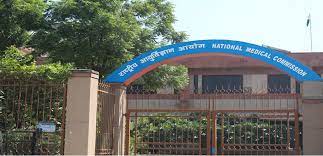
NEW DELHI — In a move that could fundamentally reshape the landscape of Indian healthcare, the National Medical Commission (NMC) has proposed landmark amendments to its regulatory framework, effectively ending a decades-old monopoly held by government bodies and non-profit organizations in medical education.
The draft notification, issued on February 17, 2026, seeks to amend the Establishment of New Medical Institutions, Assessment and Rating Regulations, 2023. If finalized, the new rules will allow state-registered trusts and any company incorporated under the Companies Act, 2013—regardless of their profit status—to establish and manage medical colleges across the country.
With a 30-day window currently open for public feedback, the proposal has ignited a fierce debate between those who see it as a necessary catalyst for expansion and critics who fear the “commercialization” of a sacred profession.
Expanding the Net: What the Amendments Change
Currently, the right to open a medical college is strictly reserved for state and central governments, universities, autonomous bodies, registered societies, and “Section 8” companies (entities specifically designated as non-profit).
The NMC’s proposed changes target Clause 6 of the 2023 regulations. The most significant shifts include:
-
Broadening Eligibility: Deleting the restrictive “Section 8” requirement for companies, thereby allowing for-profit corporate entities to enter the field.
-
Trust Integration: Adding a new clause, 6(h), to include trusts registered under state statutes.
-
Financial Streamlining: Revising solvency certificate requirements to reflect the most recent financial year and removing the mandatory “proof of corpus fund” previously required for applications.
By lowering the bureaucratic and financial barriers to entry, the NMC aims to spark a surge in private investment to address India’s chronic shortage of healthcare professionals.
The Numbers Game: Closing the 2030 Gap
India’s healthcare system is a study in contradictions. While the country has reached a doctor-to-population ratio of approximately 1:836—surpassing the World Health Organization’s (WHO) 1:1,000 benchmark—the reality on the ground is far bleaker.
According to data from the Ministry of Health and Family Welfare (MoHFW), rural Community Health Centres (CHCs) face a staggering 80% shortfall in specialists. Projections suggest that to provide a baseline standard of care for its 1.4 billion people, India needs an additional 160,000 doctors and 650,000 nurses by 2030.
“The core goal is to accelerate the setup of medical colleges and seat expansions,” says a representative from the NMC. “We cannot rely on the public sector alone to bridge a gap of this magnitude within this decade.”
Expert Perspectives: A Divided Medical Community
The proposal has drawn praise from infrastructure advocates but sharp warnings from veteran medical educators.
The Vision for Modernization
Dr. Abhijat Chandrakant Sheth, Chairman of the NMC, has defended the move, emphasizing that the Commission will maintain rigorous oversight. “NMC has its own accreditation process and Standard Operating Procedures (SOPs) to ensure standards while making education accessible,” Dr. Sheth noted in a recent statement. He highlighted that private involvement could lead to better integration of clinical research, AI, and digital health into modern curricula.
The Risk of “Profit Over Patients”
Conversely, many in the medical fraternity worry about the erosion of public accountability. Dr. Alladi Mohan, Dean at Sri Venkateswara Institute of Medical Sciences (SVIMS), warns that privatization may come at a high social cost. “Public health is fundamentally a government responsibility. Handing over the keys to medical education to for-profit companies risks prioritizing profit margins over service to the community,” Dr. Mohan said.
Historically, the Bombay High Court has upheld non-profit restrictions to prevent the commercialization of education—a legal precedent that these new regulations appear set to challenge.
Public Health Implications: The Cost of Care
For the general public, the implications are a double-edged sword. On one hand, an increase in medical colleges could lead to:
-
Increased Availability: More graduates entering the workforce, potentially shortening wait times for surgeries and specialist consultations.
-
Infrastructure Growth: New hospitals attached to these colleges, providing care in regions currently underserved.
However, the “for-profit” model raises concerns about fee structures. Currently, private medical college fees can range from ₹20 lakh to over ₹1 crore, compared to the highly subsidized rates at government institutions. Critics argue that allowing for-profit companies will further drive up costs, making a medical degree—and subsequently, the cost of private healthcare—unaffordable for the average Indian family.
| Metric | Current Status (Approx.) | 2030 Requirement |
| Doctor-Population Ratio | 1:836 | Maintain < 1:1,000 |
| Specialist Shortage (Rural) | 80% | < 20% |
| Annual PG Vacancies | 18,000+ | Minimize to < 5,000 |
Potential Limitations and “Ghost Faculty”
The history of private medical education in India has been marred by instances of “ghost faculty”—where colleges hire doctors temporarily only for inspections—and inadequate infrastructure. While the NMC’s Minimum Standard Requirements (MSR) are designed to prevent this, enforcement remains a challenge.
Furthermore, there is no guarantee that private companies will build colleges in the “medical deserts” of rural India. Most for-profit entities are likely to gravitate toward urban centers where the Return on Investment (ROI) is higher, potentially widening the urban-rural healthcare divide rather than closing it.
What This Means for You
For Aspiring Students and Parents
The availability of seats is likely to increase significantly. However, it is vital to research any new institution thoroughly. Use the NMC portal to verify accreditation and faculty credentials before committing to high tuition fees.
For Patients and Consumers
While more doctors are a net positive, the cost of care at hospitals associated with for-profit colleges may be higher. Patients should continue to advocate for transparent pricing and support government initiatives that mandate rural service for graduates.
For Healthcare Professionals
New colleges mean a surge in demand for qualified faculty. For doctors in clinical practice, this could offer new opportunities in academia and research, particularly in specialized fields.
The public has until mid-March to submit comments to the NMC. As India stands at this pedagogical crossroads, the final regulations will determine whether the country’s medical future is defined by corporate efficiency, public service, or a delicate balance of both.
Medical Disclaimer: This article is for informational purposes only and should not be considered medical advice. Always consult with qualified healthcare professionals before making any health-related decisions or changes to your treatment plan. The information presented here is based on current research and expert opinions, which may evolve as new evidence emerges.
References
-
Medical Dialogues. (2026, February 24). NMC draft amendment allows trusts, companies to set up medical colleges. https://medicaldialogues.in/health-news/nmc/nmc-draft-amendment-allows-trusts-companies-to-set-up-medical-colleges-165413