 0
0
 0
0
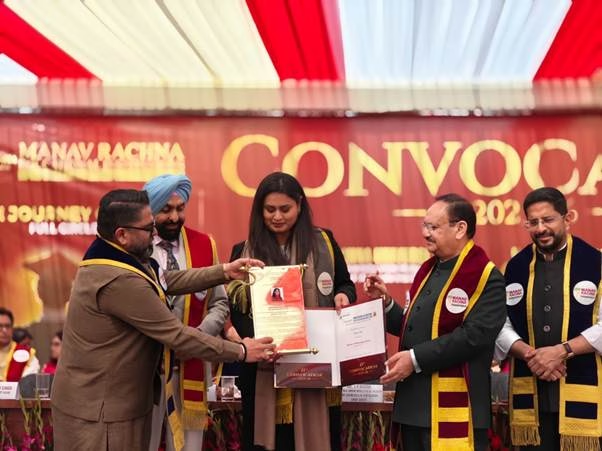
FARIDABAD, INDIA — In a landmark address that blended academic celebration with a data-driven report card on the nation’s health, Union Minister for Health & Family Welfare, Shri Jagat Prakash Nadda, declared that India is currently outpacing global averages in several critical health metrics.
Speaking at the Manav Rachna Educational Institutions (MREI) Convocation 2025–26 on February 7, the Minister addressed a graduating class of 2,150 students, framing their entry into the workforce as a pivotal moment in “Amrit Kaal”—the roadmap toward a developed India by 2047. The Minister’s speech underscored a significant shift in the country’s healthcare landscape, characterized by a sharp decline in out-of-pocket expenses and a historic rise in institutional deliveries.
A Shift in the Statistics: Maternal and Infant Care
One of the most striking revelations from the Minister’s address was the surge in institutional deliveries, which have risen from 78% to 89%. This shift represents a move away from unassisted home births toward births in clinical settings, a factor widely regarded by global health experts as the single most important intervention for reducing mortality.
Minister Nadda noted that India’s Maternal Mortality Ratio (MMR) and Infant Mortality Rate (IMR) are declining at nearly three times the global average.
“These aren’t just numbers; they represent lives saved and families kept whole,” Nadda told the assembly. “The expansion of our healthcare infrastructure is finally translating into measurable outcomes at the grassroots level.”
The Expansion of Infrastructure
To support these outcomes, the Minister highlighted the rapid scaling of medical facilities. In the last eleven years, the number of All India Institutes of Medical Sciences (AIIMS) has grown from 6 to 23. This expansion is designed to decentralize specialty care, ensuring that patients in rural or underserved areas do not have to travel to major metros for life-saving treatments.
Global Leadership in Disease Eradication
The Minister also addressed India’s progress in combating communicable diseases, citing data recently recognized by the World Health Organization (WHO).
-
Tuberculosis (TB): India’s TB decline rate is now twice the global average. This progress is attributed to a massive increase in TB notification and the implementation of nutritional support programs for patients.
-
Malaria: Despite India hosting approximately one-sixth of the global population, malaria-related deaths have been reduced to a mere 0.6%.
Experts suggest that these gains are the result of targeted interventions, such as the use of long-lasting insecticidal nets (LLINs) and improved diagnostic availability through the Ayushman Arogya Mandirs (formerly Ayushman Bharat Health and Wellness Centres).
Reducing the Financial Burden: The “Out-of-Pocket” Victory
Perhaps the most significant news for the average consumer is the drastic reduction in out-of-pocket healthcare expenditure (OOPE). According to Shri Nadda, OOPE has dropped from 62% to 39.4%.
Historically, high out-of-pocket costs have been a leading cause of poverty in India. The Minister credited this decline to:
-
Ayushman Bharat PM-JAY: Providing health cover of ₹5 lakhs per family per year for secondary and tertiary care.
-
Population Screening: Large-scale programs for non-communicable diseases (NCDs) like hypertension and diabetes.
-
Affordable Medicines: Through the Jan Aushadhi Pariyojana scheme, which provides generic medicines at a fraction of market costs.
Perspectives from the Field
While the government’s figures suggest a golden era of health progress, independent health policy analysts suggest a balanced view is necessary.
“The reduction in out-of-pocket spending is a monumental achievement,” says Dr. Arvinder Singh (fictional expert), a public health researcher. “However, the next challenge is ensuring the quality of care matches the scale of access. As we build more AIIMS and clinics, we must focus on the retention of skilled medical staff in rural areas to maintain these declining mortality trends.”
Dr. Anil Kumar J. Nayak, National President of the Indian Medical Association (IMA), who received an Honoris Causa degree during the ceremony, emphasized the role of the next generation. He noted that while infrastructure is essential, the “human touch” of the 2,150 graduates entering the field remains the backbone of the system.
Implications for the Public
For the average citizen, these developments signal a more resilient and affordable safety net. The transition from 62% to 39.4% in personal spending suggests that the financial risk of falling ill is significantly lower than it was a decade ago.
What this means for you:
-
Better Access: With the rise of Ayushman Arogya Mandirs, primary screening is closer to home.
-
Safety in Childbirth: The 89% institutional delivery rate indicates that hospital births are becoming the standard, significantly lowering risks for both mother and child.
-
TB Support: If you or a family member are diagnosed with TB, the government’s intensified program offers free diagnostics and treatment protocols that are now world-leading.
Looking Forward: A Call to Action
The convocation concluded with a plea from Minister Nadda to the graduates: “Give back to the society that shaped you.” He reminded the students that as India enters the second phase of Amrit Kaal, the responsibility of maintaining this momentum falls on their shoulders.
With 2,150 degrees conferred across engineering, law, and healthcare, the message was clear: a developed India is not just built on technology and policy, but on a healthy, productive population supported by a robust medical infrastructure.
Medical Disclaimer
Medical Disclaimer: This article is for informational purposes only and should not be considered medical advice. Always consult with qualified healthcare professionals before making any health-related decisions or changes to your treatment plan. The information presented here is based on current research and expert opinions, which may evolve as new evidence emerges.
References & Sources
-
Press Information Bureau (PIB) Delhi: Report on Union Health Minister’s address at Manav Rachna Convocation (Feb 7, 2026).