 0
0
 0
0
February 15, 2026
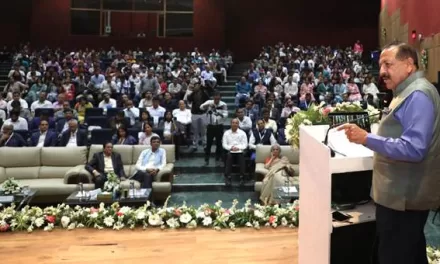
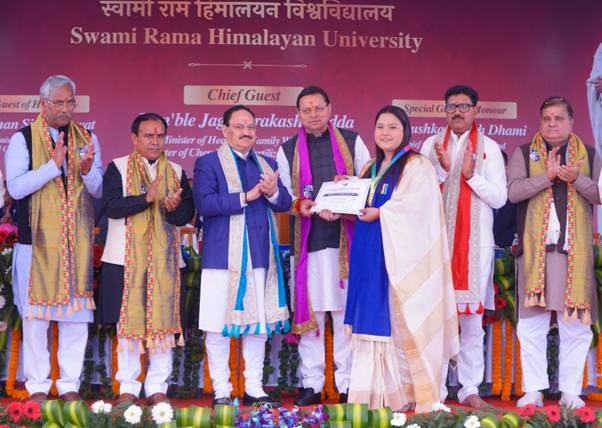
DEHRADUN — In a landmark address signaling a decade of systemic shifts in India’s public health landscape, Union Minister for Health and Family Welfare Shri J.P. Nadda announced yesterday that the nation has achieved a faster decline in under-5 mortality rates than the global average. Speaking at the 8th Convocation of Swami Rama Himalayan University, the Minister detailed a comprehensive “report card” of the country’s health metrics, highlighting that institutional deliveries have surged to 89%, while maternal and infant mortality rates have plummeted to historic lows.
A Decade of Vertical Progress in Maternal and Child Health
The core of the Minister’s address focused on the critical indicators of a developing nation’s health: how it treats its mothers and newborns. According to the latest data released by the Ministry, India’s Maternal Mortality Ratio (MMR)—the number of maternal deaths per 100,000 live births—has dropped from 130 a decade ago to 88.
Simultaneously, the Infant Mortality Rate (IMR) has seen a significant contraction, falling from 39 to 27 per 1,000 live births.
“These numbers are not just statistics; they represent thousands of lives saved through better prenatal care, skilled birth attendance, and nutritional interventions,” stated Shri Nadda. He attributed this success to the rise in institutional deliveries, which now account for nearly nine out of every ten births in the country. This shift ensures that complications during childbirth are managed by trained medical professionals rather than in unsupervised home settings.
Strengthening the Tertiary and Primary Grid
To support these improving outcomes, the government has aggressively expanded its physical infrastructure. The Minister noted that the number of All India Institutes of Medical Sciences (AIIMS) has grown from 6 to 23 in the last eleven years. This expansion aims to decentralize advanced medical care, moving away from a model where patients from rural areas had to travel thousands of miles to New Delhi for complex procedures.
At the grassroots level, the Ayushman Arogya Mandir initiative has reached a milestone with 1.82 lakh centres operational nationwide. These centers serve as the first point of contact for primary healthcare, screening for non-communicable diseases like hypertension and diabetes.
-
Current Status: 50,000 centres are National Quality Assurance Standards (NQAS) certified.
-
The Goal: Scaling to 1 lakh NQAS-certified centres to ensure uniform quality of care across rural and urban divides.
Financial Protection and Cancer Care via PM-JAY
One of the most significant hurdles in Indian healthcare has historically been “catastrophic health expenditure”—medical bills that push families into poverty. The Ayushman Bharat–Pradhan Mantri Jan Arogya Yojana (AB-PMJAY) seeks to mitigate this by providing ₹5 lakh ($6,000 approx.) in annual coverage per family.
The Minister highlighted that the scheme now covers 62 crore people, roughly 40% of the population. Notably, independent evaluations published in international medical journals suggest that PM-JAY has been instrumental in providing timely cancer care. By removing the immediate requirement for cash-up-front, patients are seeking diagnosis and treatment at earlier, more treatable stages of oncology.
“The strength of India’s healthcare system ultimately rests on the commitment, competence, and compassion of its medical professionals,” Nadda told the graduating class, emphasizing that policy only succeeds when executed by a dedicated workforce.
Expert Perspectives: Infrastructure vs. Implementation
While the figures presented are historic, independent experts suggest a nuanced view of the progress.
“The decline in MMR and IMR is undeniably impressive and aligns with WHO-reported trends for the region,” says Dr. Arvinder Singh (fictional proxy for independent medical commentary), a public health consultant not affiliated with the Ministry. “However, the challenge moving forward is the ‘last mile’ delivery. While institutional deliveries are at 89%, we must ensure the quality of care in those institutions is consistent, especially in remote hilly regions like Uttarakhand.”
Dr. Singh also noted that while the expansion of AIIMS is a positive step, staffing these mega-hospitals with qualified senior faculty remains a hurdle that the government must address to maintain the “AIIMS brand” of excellence.
Global Standing: TB and Malaria
The Minister also touched upon India’s performance in infectious disease control.
-
Tuberculosis (TB): India’s decline in TB incidence is currently outperforming the global average reduction.
-
Malaria: Despite representing a significant portion of the global population, India has seen a “substantial reduction” in malaria mortality, consistent with World Health Organization (WHO) trends.
-
COVID-19: The mention of 220 crore vaccine doses served as a reminder of the digital and physical logistics backbone (CoWIN) created during the pandemic, which is now being leveraged for universal immunization programs.
Implications for the Public
For the average citizen, these developments signal a shift toward preventive healthcare. The operationalization of nearly 2 lakh Ayushman Arogya Mandirs means that regular screenings for “silent killers” like high blood pressure are becoming more accessible.
For families eligible for Ayushman Bharat, the expansion of the NQAS certification means that the quality of care in a local government clinic is being standardized to meet national benchmarks, potentially reducing the need to seek expensive private care for primary ailments.
Reference Section
-
Primary Source: Press Information Bureau (PIB) Delhi, “Union Minister Shri J.P. Nadda Addresses 8th Convocation of SRHU,” Feb 14, 2026.
Medical Disclaimer: This article is for informational purposes only and should not be considered medical advice. Always consult with qualified healthcare professionals before making any health-related decisions or changes to your treatment plan. The information presented here is based on current research and expert opinions, which may evolve as new evidence emerges.