 0
0
 0
0
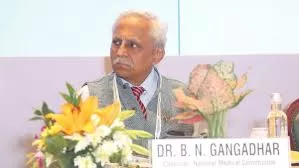
New Delhi: India’s healthcare system is under mounting pressure as the shortage of postgraduate (PG) medical seats threatens both the quality of medical training and patient care, according to Dr. B.N. Gangadhar, Chairman of the National Medical Commission (NMC).
Speaking at a policy dialogue hosted by the Centre for Social and Economic Progress (CSEP), Dr. Gangadhar outlined the urgent need for thoughtful, strategic, and equitable expansion in medical education. He revealed that the NMC received 95 applications this year to expand undergraduate (UG) and PG seats—30 from government colleges and 60 from private institutions. Additionally, 120 private colleges applied to increase UG seats, compared to just 40 government colleges, highlighting a shift in investment trends towards the private sector.
Dr. Gangadhar acknowledged that recent regulatory relaxations have made it easier to establish new medical colleges, making medical education more financially viable. However, he cautioned that such expansion must not compromise educational quality or exacerbate regional disparities. He noted discrepancies in infrastructure utilization, pointing out that some government medical colleges have as many as 7,000 hospital beds but are capped at 250 MBBS seats, despite having the capacity to train more students. In contrast, private colleges are aggressively reaching their maximum student intake, exposing untapped potential in the public sector.
The Postgraduate Bottleneck
A major concern highlighted by Dr. Gangadhar is the persistent mismatch between UG and PG seats. While India now boasts over 100,000 MBBS seats, PG capacity continues to lag, creating a backlog and contributing to significant mental health stress among medical residents. Many institutions continue to train postgraduates with the same limited faculty, despite handling much higher patient loads. This leads to overworked residents, compromised training, and diminished quality of patient care.
Faculty shortages, particularly in government medical colleges that operate large hospitals, further limit the expansion of PG programs and strain existing residency programs. Dr. Gangadhar called for better utilization of available hospital beds and optimization of clinical services to improve PG training, ease workloads, and enhance patient care.
Focus on Quality and Outcomes
Dr. Gangadhar emphasized that the core issue is not just the number of medical professionals trained, but the quality of their training. He advocated for improved teaching methods, more committed faculty, and modernized infrastructure, warning against indiscriminate expansion of PG seats without adequate planning or demand. With over 2.5 million applications for just 100,000 MBBS seats, the selection process remains highly competitive, but Dr. Gangadhar stressed the need for better alignment between entrance performance, faculty capacity, and hands-on training to ensure a competent medical workforce.
“Medical education must evolve with a clear vision—blending scale with standards, and access with accountability,” Dr. Gangadhar concluded, urging collaborative efforts between the public and private sectors to future-proof India’s healthcare system.
Disclaimer: This article is based on information provided by the Economic Times Health article dated June 27, 2025. The facts and opinions expressed are attributed to Dr. B.N. Gangadhar and the National Medical Commission. Readers are advised to consult official sources for further updates or policy changes.