 0
0
 0
0
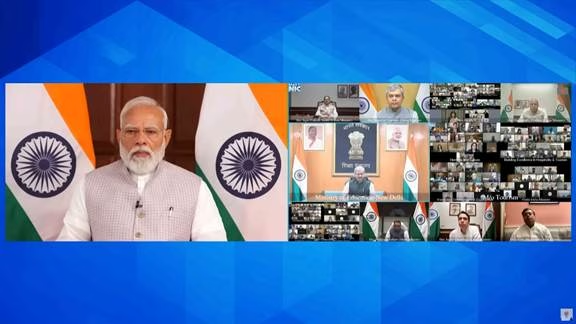
NEW DELHI – In a strategic move to transform India’s healthcare landscape from a model of expansion to one of global excellence, Prime Minister Narendra Modi chaired a high-level post-budget webinar today titled “Sabka Sath, Sabka Vikas – Fulfilling Aspirations of People.” The session, which brought together thousands of policymakers, medical professionals, and industry leaders, outlined a comprehensive roadmap for the implementation of the Union Budget 2026–27. Central to the discussion was the strengthening of a “holistic healthcare” ecosystem that prioritizes preventive care, the rapid digitization of medical access through telemedicine, and the formalization of a robust “care economy” to support an aging population.
The webinar follows the government’s recent budgetary commitment to bridge the urban-rural healthcare divide while positioning India as the global headquarters for traditional medicine. “Strengthening preventive and holistic healthcare is central to fulfilling the aspirations of our citizens,” the Prime Minister stated, emphasizing that the coming decade will be defined by how well the nation cares for its seniors and leverages technology to reach its most remote corners.
The Rise of the Care Economy: Training 150,000 Caregivers
One of the most significant shifts in the 2026 budget is the formal recognition of the care economy. With life expectancy in India rising—projected by the United Nations to see the elderly population reach nearly 20% of the total population by 2050—the demand for professional geriatric and rehabilitative care is surging.
To meet this need, the government announced a strategic blueprint to train 1.5 lakh (150,000) multi-skilled caregivers. These professionals will be trained under the National Skills Qualification Framework (NSQF), ensuring a standardized level of medical proficiency.
“The care economy is no longer a niche sector; it is a public health necessity,” says Dr. Arvinder Singh, a public health policy expert not involved in the webinar. “By formalizing this workforce, the government is not only addressing the needs of senior citizens but also creating a massive employment engine for the youth.”
Ayush: Moving from Expansion to Excellence
A major highlight of the session was the ₹4,408 crore allocation for the Ministry of Ayush. Union Minister of State Prataprao Jadhav noted that the focus has shifted from merely increasing the number of centers to achieving “evidence-based excellence.”
Key developments include:
-
Three New All India Institutes of Ayurveda (AIIA): These tertiary care centers will serve as hubs for advanced research and integrative medicine, where traditional practices are tested against modern clinical standards.
-
Global Leadership: Strengthening the WHO Global Traditional Medicine Centre in Jamnagar, Gujarat, to solidify India’s role as a primary exporter of traditional health knowledge.
-
Quality Control: Massive upgrades to Ayush pharmacies and drug-testing laboratories to ensure that herbal and traditional medicines meet international safety certifications.
“The goal is to move traditional medicine from the realm of ‘alternative’ to ‘integrative,'” explained Vaidya Rajesh Kotecha, Secretary of the Ministry of Ayush. This involves rigorous standardization to ensure that Ayush products are safe, effective, and globally competitive.
Digital Health and the Telemedicine Revolution
The Prime Minister underscored that the Ayushman Bharat Digital Mission (ABDM) and telemedicine are no longer “futuristic” concepts but essential daily tools. While the eSanjeevani platform has already facilitated millions of consultations, the 2026 goal is to deepen penetration into “Tier 3” cities and rural villages.
Telemedicine is viewed as the “great equalizer,” allowing a patient in a remote Himalayan village to consult with a specialist in Mumbai. However, experts at the webinar noted that “digital literacy” remains a hurdle. The government plans to use Ayushman Arogya Mandirs (wellness centers) as physical touchpoints where health workers assist citizens in navigating these digital services.
Regional Medical Hubs: A New Healthcare Architecture
The budget proposes the establishment of five regional medical hubs through public-private partnerships. These will not be mere hospitals but “integrated health complexes” featuring:
-
Advanced multi-specialty medical services.
-
Research facilities for drug discovery.
-
Medical value travel (Medical Tourism) facilities.
By integrating Ayush centers within these hubs, India aims to capture a larger share of the global medical tourism market, which is increasingly leaning toward “wellness” rather than just surgical intervention.
The Statistical Context: A Healthier Outlook?
| Initiative | Budget/Target 2026-27 | Primary Objective |
| Ayush Ministry Allocation | ₹4,408 Crore | Research, Quality Control, and Education |
| Caregiver Training | 150,000 Personnel | Geriatric and Rehabilitative Support |
| New Institutes | 3 All India Institutes of Ayurveda | Tertiary care and evidence-based research |
| Regional Hubs | 5 Integrated Complexes | Medical Tourism and Regional Equity |
Balanced Perspective: Challenges Ahead
While the roadmap is ambitious, independent health analysts suggest some caution. “The success of these initiatives depends heavily on state-level execution,” says Mary Lou-Chetan, a healthcare analyst. “Establishing three new All India Institutes is a great step, but staffing them with qualified researchers and maintaining high clinical standards across all states remains a logistical challenge.”
Furthermore, while the integration of Ayush is popular, the medical community continues to advocate for stricter “bridge protocols” to ensure that patients are not diverted from life-saving conventional treatments when necessary. The government’s emphasis on “evidence-based” Ayush is seen as a vital response to these concerns.
What This Means for You
For the average citizen, these developments signal a shift toward preventive healthcare. Instead of waiting for illness to strike, the expansion of Ayushman Arogya Mandirs means easier access to screenings, yoga, and nutritional counseling. For families with elderly members, the professionalization of the “care economy” may soon provide more reliable, affordable options for home-based care.
As India marches toward its “Viksit Bharat” (Developed India) goal for 2047, the 2026 budget highlights that a nation’s wealth is inextricably linked to the health and “aspirations” of its people.
References
Medical Disclaimer: This article is for informational purposes only and should not be considered medical advice. Always consult with qualified healthcare professionals before making any health-related decisions or changes to your treatment plan. The information presented here is based on current research and expert opinions, which may evolve as new evidence emerges.