 0
0
 0
0
DAVOS, SWITZERLAND — As global leaders gather for the World Economic Forum (WEF) 2026 Annual Meeting, a clear consensus has emerged regarding the future of global healthcare: India is setting the gold standard for high-return health investments. By scaling the Ayushman Bharat Digital Mission (ABDM) and launching the pioneering Future Health Districts program, India is transitioning from a traditional “spending” mindset to one of “growth capital,” viewing health as a cornerstone of national economic stability.
The announcements made this week in Davos highlight a significant shift in how the world’s most populous nation manages the health of its 1.4 billion citizens. With over 850 million citizens now holding Ayushman Bharat Health Account (ABHA) IDs, India has created the world’s largest interoperable digital health ecosystem in just under five years.
The Power of Interoperability: Ending the ‘Paper Trail’
For decades, the Indian healthcare experience was defined by fragmented paper records, duplicate diagnostic tests, and significant out-of-pocket expenses. The ABDM, launched in September 2021, was designed to bridge these gaps.
According to experts speaking at the WEF, the mission’s “sandbox model” is its greatest strength. It allows any health facility—from a rural clinic to a metropolitan surgical center—to integrate with a national network.
“One certified integration replaces multiple bespoke interfaces,” noted Suneeta Reddy, Managing Director of Apollo Hospitals Enterprise. “The system-wide savings generated can instead be used to strengthen clinical care, cybersecurity, and citizen engagement.”
The financial implications are staggering. Traditionally, custom digital integrations between hospitals and insurers can cost at least $2,500 each in vendor fees and manpower. By creating a unified standard, ABDM drastically reduces these IT duplication costs. For large diagnostic chains and integrated care systems, this means more resources for patient care and less for maintenance.
Key Stats at a Glance (as of January 2026):
-
850 Million+: Citizens with ABHA digital IDs.
-
842 Million+: Digital health records linked.
-
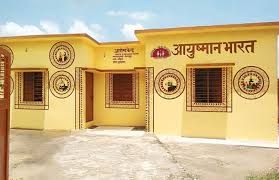
454,000+: Registered health facilities.
-
767,000+: Registered healthcare professionals.
Future Health Districts: The New Testing Ground
While ABDM provides the digital backbone, the newly initiated Future Health Districts program—a collaboration between the WEF and the Government of India—serves as its real-world laboratory. Part of the “India Pathfinder” initiative, this program selects specific districts to test outcome-linked healthcare models.
The goal is to move beyond mere digitization and focus on measurable health improvements over the next three to five years. Success will be measured by:
-
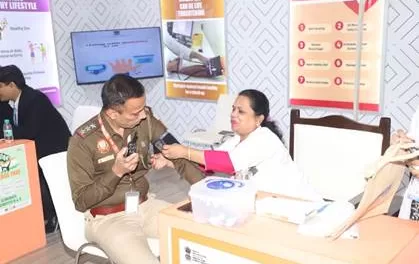
Increased screening rates for non-communicable diseases like hypertension and diabetes.
-
Improved maternal health follow-ups to reduce mortality rates.
-
Reduced insurance claims-processing times through automated digital verification.
“Each district that succeeds becomes proof of what investable digital health can deliver,” stated the report presented at Davos. By proving the model at the district level, India aims to create a blueprint that can be scaled not only across its own states but also in other low- and middle-income countries.
The Economic Argument: Health as ‘Growth Capital’
A recurring theme at this year’s meeting is the reframing of health spending. Experts argue that every dollar (or rupee) invested in digital health foundations today prevents massive waste tomorrow.
Shyam Bishen, Head of the Centre for Health and Healthcare at the WEF, emphasized that nearly 20–40% of global health spending is currently lost to inefficiencies. In India, where out-of-pocket payments have historically pushed millions into poverty, digital infrastructure provides a safety net.
“Investing in health is not a cost; it is growth capital,” Bishen argued. Resilient health systems limit the economic shocks of biological threats and ensure a more productive workforce, which is essential for India’s goal of becoming a $5 trillion economy.
Challenges and the Road Ahead
Despite the optimism, the Davos report did not shy away from India’s persistent challenges. Significant disparities remain in health coverage between urban and rural areas. Financing pressures and system inefficiencies continue to burden the public sector.
Experts at the forum recommended three critical shifts to sustain this momentum:
-
Reframing Health: Governments must view health as a driver of national security and economic prosperity.
-
Strengthening Digital Systems: Continued focus on “interoperability” to ensure that a patient’s data moves with them, regardless of the provider.
-
Philanthropic Alignment: Channelling global health funding toward measurable outcomes and digital infrastructure rather than just short-term aid.
What This Means for You
For the average citizen, these high-level discussions translate to “portability” and “empowerment.” With an ABHA ID, your medical history—from a blood test in Delhi to a surgery in Bengaluru—is available at your fingertips. You own your data, granting consent to doctors only when needed. This reduces the risk of lost records and ensures that, in an emergency, your medical history is immediately accessible.
As India continues to refine its “Future Health Districts,” the ultimate goal is a healthcare system that is proactive rather than reactive—predicting illness before it strikes and ensuring that quality care is a right, not a luxury.
References
Medical Disclaimer: This article is for informational purposes only and should not be considered medical advice. Always consult with qualified healthcare professionals before making any health-related decisions or changes to your treatment plan. The information presented here is based on current research and expert opinions, which may evolve as new evidence emerges.