 0
0
 0
0
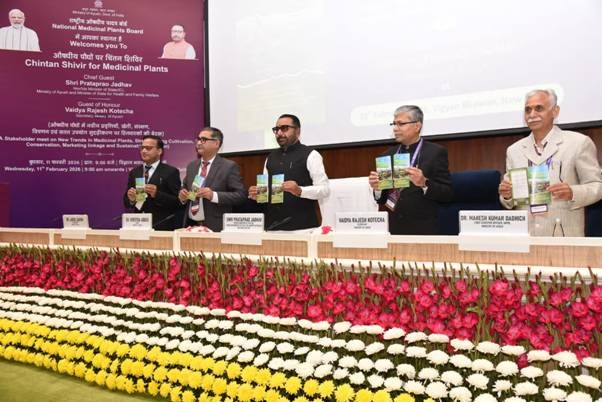
NEW DELHI — In a landmark gathering that signals a shift toward a more sustainable and scientifically validated future for traditional medicine, the Ministry of Ayush hosted a high-level Chintan Shivir (brainstorming session) on February 11, 2026. Marking the 25th anniversary of the National Medicinal Plants Board (NMPB), the event brought together policymakers, scientists, and industry giants to outline a strategy for India to lead the global $200 billion herbal market.
The summit, inaugurated by Union Minister Shri Prataprao Jadhav, focused on a critical realization: the future of global wellness depends on the sustainability of the plants that power it. With the global demand for Ayurveda and herbal supplements surging, India is positioning its medicinal plant sector as a primary engine for both public health and rural economic growth.
From Forest to Pharmacy: A National Priority
Medicinal plants are the backbone of traditional healthcare systems like Ayurveda, Yoga, Unani, Siddha, and Homeopathy (AYUSH). However, as demand grows, the industry faces challenges ranging from over-harvesting in the wild to a lack of standardized quality in the supply chain.
“Medicinal plants are not merely the foundation of India’s traditional knowledge systems but also a vital component of its biological and economic heritage,” stated Minister Jadhav during the inaugural session at Vigyan Bhawan.
The Minister emphasized that the sector is integral to the Viksit Bharat 2047 vision, aiming to empower rural farmers by transitioning them from traditional cereal crops to high-value medicinal herbs. This shift is particularly targeted at rainfed and marginal lands where traditional agriculture often struggles.
Key Developments Announced:
-
New Plant Variety: The launch of a new variety of Anacyclus pyrethrum (Akarkara), developed by CSIR-CIMAP, designed to provide higher yields for farmers.
-
Traceability Initiatives: A new focus on digital “farm-to-shelf” tracking to ensure the authenticity and purity of herbal ingredients.
-
Policy Roadmap: A five-year plan focused on scientific validation and climate resilience for medicinal flora.
Ensuring Quality: The Science of Standardization
For the average consumer, the “natural” label on a supplement isn’t always a guarantee of safety or efficacy. A major theme of the Chintan Shivir was bridging the gap between ancient wisdom and modern rigorous science.
Secretary of the Ministry of Ayush, Vaidya Rajesh Kotecha, noted that the next phase of growth must prioritize scientific validation and international standards. This involves moving away from wild-harvesting—which can be unpredictable and ecologically damaging—toward organized, organic cultivation.
The Challenge of Adulteration
Experts at the technical sessions, including representatives from industry leaders like Himalaya Wellness and Dabur, discussed the “black box” of herbal supply chains. Without proper certification, raw materials can be diluted with look-alike species or contaminated with heavy metals and pesticides.
To combat this, the NMPB is pushing for:
-
Organic Certification: Aligning Indian domestic standards with global requirements to boost exports.
-
Contract Farming: Creating direct links between farmers and large manufacturers to ensure fair pricing and quality control.
-
Insurance Products: Developing specialized insurance for medicinal crops under the Pradhan Mantri Fasal Bima Yojana (PMFBY) to protect farmers against climate-related losses.
What This Means for Your Health
For health-conscious consumers, the outcomes of this summit translate to safer and more effective products. When the government invests in “traceability” and “quality assurance,” it means the Ashwagandha or Turmeric supplement you buy is more likely to contain the active compounds it promises on the label.
“The integration of traditional knowledge with contemporary research is essential,” says Prof. Vd. Rabinarayan Acharya, Director General of the Central Council for Research in Ayurvedic Sciences (CCRAS). “Evidence-based use ensures that these plants remain a safe pillar of public health.”
Practical Tips for Consumers:
-
Look for Certifications: As the NMPB expands its oversight, look for “AYUSH Premium Mark” or organic certifications on labels.
-
Consult Professionals: While medicinal plants are “natural,” they contain potent bioactive compounds. Always discuss herbal supplements with a doctor to avoid interactions with prescription medications.
-
Support Local: The government’s focus on Regional Facilitation Centres (RCFCs) means more high-quality, locally-sourced herbs will be entering the market.
A Global Ambition with Local Roots
The summit didn’t just look inward. With a Memorandum of Understanding (MoU) signed between the NMPB and the Agharkar Research Institute, the focus is clearly on high-end innovation. By 2047, India aims to be the primary global supplier of plant-based wellness products.
However, the path isn’t without hurdles. Shri Hoveyda Abbas, Additional Secretary, stressed the need for fiscal discipline and active state participation. For the roadmap to work, individual states must adopt these innovative financial models to support local growers.
As the NMPB enters its 26th year, the transition from a conservation-focused board to a market-driving powerhouse marks a new era. For the millions who rely on traditional medicine, this “Chintan Shivir” promises a future where the remedies of the past are secured by the technology of the future.
Reference Section
Official Sources:
-
Press Information Bureau (PIB) Delhi. “Chintan Shivir on Medicinal Plants outlines vision for sustainable growth.” Posted 11 Feb 2026.
Medical Disclaimer: This article is for informational purposes only and should not be considered medical advice. Always consult with qualified healthcare professionals before making any health-related decisions or changes to your treatment plan. The information presented here is based on current research and expert opinions, which may evolve as new evidence emerges.