 0
0
 0
0
New Delhi: Emergency care in India is experiencing a dramatic transformation, shifting from a system once reliant on chance and specialist availability to one that is increasingly structured, technology-enabled, and protocol-driven. This evolution, experts say, is ensuring that patients receive timely, consistent, and high-quality care—even in tier 2 and 3 cities—where the critical “golden hour” is finally being prioritized as it should be.
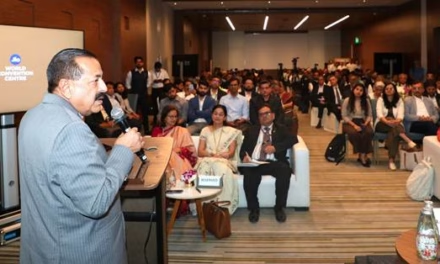
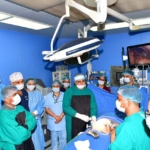
At the inaugural FutureMedX Summit hosted by ETHealthworld, leading figures in emergency medicine discussed these sweeping changes. Dr. Deepak Agrawal, Professor of Neurosurgery at AIIMS New Delhi, highlighted the shift from departments staffed by generalists to those led by dedicated, specially trained emergency medicine professionals. “Today, emergency physicians manage the ABCs—airway, breathing, circulation—and initiate diagnostics like CT scans, with specialists arriving later in the care chain. This has made emergency care more consistent and less dependent on chance,” Dr. Agrawal explained.
Technology is playing a pivotal role. Hospitals are deploying AI-assisted triage systems and using cameras with object detection to monitor and improve the speed and accuracy of life-saving interventions. Ambulance alerts now trigger in-hospital preparations, and the integration of digital health records through the Ayushman Bharat Digital Mission allows instant access to patient histories, reducing delays that can be fatal in emergencies.
Dr. Sushant Chhabra, Cluster Head of Emergency Medicine at Manipal Hospitals North-West Region, described the impact of standardized protocols such as Code Stroke and Code STEMI. These protocols, implemented across the Manipal network, have reduced door-to-balloon times for heart attack patients to well below the international standard of 90 minutes, even in smaller cities. “Our Code STEMI protocol has helped reduce mortality by 30 percent. We have also brought down door-to-balloon time by 20 to 30 minutes,” Dr. Chhabra noted.
Pre-hospital care has also advanced, with services like the Manipal Ambulance Response Service (MARS) enabling paramedics to alert hospitals in advance, expediting triage and treatment upon arrival. AI-based triage systems, already in use in countries like Canada, are being explored in India to further streamline patient assessment and ensure critical cases are prioritized.
Despite these advancements, challenges remain. Dr. Sachin Chaudhry of the Armed Forces Medical Services emphasized the need for better ambulance systems and called attention to the importance of trained emergency staff. He also highlighted the benefits of immediate data access through national digital health initiatives.
However, regulatory hurdles threaten progress. Dr. Chhabra expressed concern over the recent removal of emergency medicine as an essential specialty by the National Medical Commission, calling it a “huge setback” and urging the Ministry of Health to establish national protocols for life-threatening conditions.
The summit concluded with a call to institutionalize emergency medicine, invest in smart technologies, and uphold patient-centered values to ensure India’s emergency care system continues to evolve in both efficiency and humanity.
Disclaimer: This article is based on information reported by ETHealthworld and expert commentary from the FutureMedX Summit. It is intended for informational purposes only and should not be construed as medical advice. For specific health concerns or emergencies, consult a qualified healthcare professional.