 0
0
 0
0
New Delhi — In a significant milestone for India’s digital healthcare infrastructure, the Union Government announced on Tuesday that eSanjeevani, the national telemedicine service, has facilitated over 43 crore (430 million) consultations as of November 23, 2025. The data, presented in the Rajya Sabha by Union Minister of State for Health Prataprao Jadhav, underscores a rapid acceleration in the adoption of remote medical care across the country.
This achievement marks a pivotal shift in how healthcare is delivered in India, particularly for rural populations who have historically faced barriers to accessing specialized medical advice. With digital health becoming a cornerstone of public health policy, the eSanjeevani platform is now serving as a critical parallel stream to the traditional physical healthcare system.
Breaking Down the Numbers
The growth of the platform has been exponential. Government data reveals a sharp upward trajectory:
-
February 2023: 10 crore consultations.
-
February 2025: 34 crore consultations.
-
November 2025: 43 crore consultations.
This surge suggests that nearly 9 crore consultations were conducted in just the last nine months, highlighting increasing trust and reliance on the platform.
Minister Jadhav detailed that the service operates through two primary models:
-
eSanjeevani AB-HWC (Provider-to-Provider): This model connects community health officers at rural Ayushman Arogya Mandirs (formerly Health and Wellness Centres) with doctors and specialists at secondary or tertiary hospitals. It accounts for the vast majority of consultations, effectively bringing specialized care to remote villages.
-
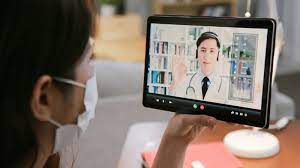
eSanjeevani OPD (Patient-to-Provider): This variant enables citizens to consult doctors directly from their homes using smartphones or laptops, a service that gained immense popularity during the COVID-19 pandemic and continues to serve urban and semi-urban populations.
Bridging the Urban-Rural Divide
One of the platform’s most significant impacts is its ability to democratize healthcare access. While the government noted that it does not explicitly track the socioeconomic status of every patient, the widespread usage in rural districts indicates that the service is reaching underserved communities.
“The platform has been designed to be inclusive,” Minister Jadhav stated, emphasizing that the service is free and operational across all 28 states and 8 Union Territories.
Historical data trends suggest that women are major beneficiaries of this digital shift. Previous reports have indicated that over 57% of eSanjeevani beneficiaries are women, a crucial statistic in a country where women often face social and logistical hurdles in travelling to distant hospitals for care.
Integration with India’s Digital Health Ecosystem
The latest update also highlights the platform’s deep integration with the Ayushman Bharat Digital Mission (ABDM). Patients using eSanjeevani can now create their Ayushman Bharat Health Account (ABHA) IDs, allowing for the seamless digital storage and sharing of health records.
“This integration allows for a continuum of care,” explains Dr. Anjali Mehta, a public health policy analyst not involved in the government program. “When a patient consults a doctor remotely, and their history is digitally available, the quality of diagnosis improves significantly. It moves telemedicine from a ‘quick fix’ to a legitimate component of long-term health management.”
Challenges and Limitations
Despite the impressive headline numbers, independent evaluations paint a picture of a system that is evolving but not without flaws.
Recent studies published in journals such as the International Journal of Community Medicine and Public Health and Oxford Open Digital Health have identified key challenges:
-
Technical Glitches: Users and doctors frequently report connectivity issues, slow platform responses, and audio-video drops, particularly in areas with unstable internet infrastructure.
-
Digital Literacy: While the assisted model (AB-HWC) mitigates this for patients, many elderly users struggle with the direct OPD model. A study from Kerala highlighted that younger, college-educated males were most likely to find the self-service app “easy to use,” pointing to a lingering digital divide.
-
Preference for Physical Touch: A significant portion of the population still views telemedicine as a “stop-gap” rather than a replacement. Research indicates that approximately 20-25% of users remain unaware of the service’s full scope or prefer in-person visits due to the comfort of physical examination.
“Telemedicine is a tool, not a total replacement,” notes Dr. Mehta. “It handles acute minor illnesses and chronic disease follow-ups—like diabetes and hypertension—very well. But for complex diagnostics, the physical infrastructure remains irreplaceable.”
Implications for Public Health
The scaling of eSanjeevani to 43 crore consultations represents a massive savings in terms of out-of-pocket expenditure for patients. By reducing the need to travel to district headquarters for routine consultations, rural families save on transport costs and daily wage loss.
For the healthcare professional, it optimizes time. Specialists in district hospitals can serve patients in dozens of peripheral villages without leaving their cabins, maximizing the utility of India’s limited specialist workforce.
As the government pushes for further integration with AI-assisted diagnostics and expanding the specialist network, the focus must now shift from “quantity of calls” to “quality of care,” ensuring that the digital promise translates into tangible health outcomes for the millions logging in.
Medical Disclaimer: This article is for informational purposes only and should not be considered medical advice. Always consult with qualified healthcare professionals before making any health-related decisions or changes to your treatment plan. The information presented here is based on current research and expert opinions, which may evolve as new evidence emerges.
References
-
Parliamentary Statement: Jadhav, P. (2025). Statement on eSanjeevani Telemedicine Consultations. Rajya Sabha, Parliament of India. December 2, 2025.