 0
0
 0
0
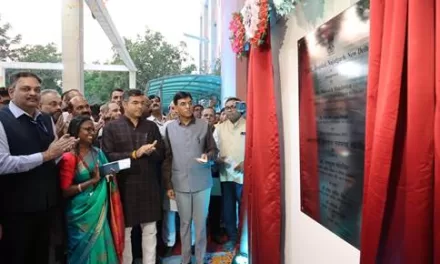
THIRUVANANTHAPURAM, KERALA — In a move signaled to redefine India’s standing in the global biopharmaceutical landscape, Union Minister Dr. Jitendra Singh inaugurated a state-of-the-art Central Facility for Recombinant Cells and Sensors at the BRIC-Rajiv Gandhi Centre for Biotechnology (RGCB) on Sunday.
Developed at a cost of approximately ₹60 crore, the facility represents a critical infrastructure upgrade for the nation’s “BioE3” (Economy, Environment, and Employment) policy. The center is designed to accelerate target-specific drug discovery and advanced genomics, potentially lowering the cost of developing home-grown treatments for cancer and chronic diseases.
A Decade of Exponential Growth
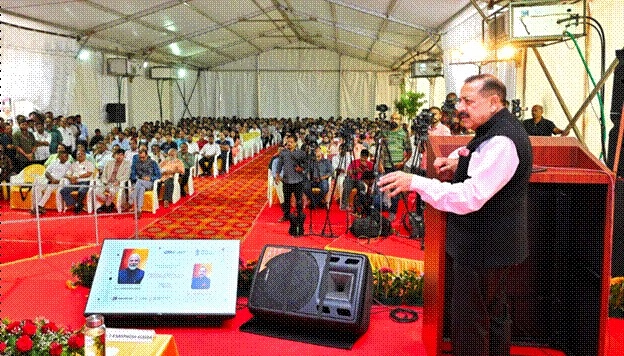
Addressing a gathering of scientists, industry leaders, and startup innovators on National Science Day, Dr. Singh highlighted the seismic shift in India’s biotechnology sector.
“In 2014, India was home to fewer than 70 biotech startups. Today, that number has surged to over 11,000,” Dr. Singh stated. He noted that India’s bioeconomy has expanded sixteen-fold in just over a decade, growing from roughly $10 billion to $166 billion, with a roadmap to reach $300 billion by 2030.
The new facility at RGCB’s Akkulam campus is the centerpiece of this growth. By housing a massive panel of engineered recombinant cells—cells whose DNA has been altered to produce specific proteins or react to certain drugs—researchers can now screen potential life-saving medications with unprecedented precision.
Breaking the Bottleneck: From Lab to Bedside
For healthcare professionals and patients, the most significant announcement was the foundation of a dedicated Good Manufacturing Practice (GMP) facility. With a total planned investment of ₹80 crore, this facility will bridge the “valley of death” between laboratory research and clinical application.
The GMP facility will focus on:
-
CAR-T Cell Therapy: A revolutionary immunotherapy that treats certain blood cancers by “reprogramming” a patient’s own immune cells.
-
Biologics: Complex medicines derived from living organisms, often used to treat autoimmune diseases and rare genetic disorders.
-
Pre-commercial Production: Allowing startups and researchers to produce high-quality medical grade materials on a “pay-and-use” basis.
“The transition from a discovery in a petri dish to a drug in a pharmacy is notoriously difficult,” says Dr. Rajesh S. Gokhale, Secretary of the Department of Biotechnology. “This infrastructure ensures that Indian innovations don’t stall at the prototype stage but move toward human trials and public availability.”
Addressing the Rising Burden of NCDs
The inauguration comes at a pivotal time for public health in India. Non-communicable diseases (NCDs), including diabetes, fatty liver disease, and cancer, are on a steep upward trajectory.
Projections suggest a significant spike in cancer incidence across the subcontinent by 2030. Dr. Singh emphasized that the RGCB’s work in cancer biology—specifically regarding colon, oral, breast, and cervical cancers—is essential for creating preventive and therapeutic solutions tailored to the Indian genetic makeup.
Why Recombinant Cells Matter
To the layperson, “recombinant cells” may sound like science fiction, but they are the workhorses of modern medicine. By using these cells as “sensors,” scientists can:
-
Test Toxicity: Determine if a new chemical is harmful to human cells before it ever reaches a clinical trial.
-
Identify Targets: Pinpoint exactly how a virus or cancer cell interacts with a drug.
-
Agri-Genomics: Develop crops that are more resistant to climate change and pests, ensuring food security in a bio-driven economy.
Expert Perspectives and Challenges
While the scientific community has lauded the investment, some experts urge a balanced view on the timeline of impact.
“Infrastructure is the first step, but the second step is sustained talent retention,” says Dr. Anjali Menon, a senior biotechnologist not involved in the project. “While a ₹60 crore facility is world-class, we must ensure that the regulatory framework for therapies like CAR-T moves as fast as the science. Patients need to know that while these therapies are promising, they are still in the specialized stages of implementation.”
Furthermore, while the “pay-and-use” model for the GMP facility is a boon for startups, critics point out that the high cost of cell-based therapies remains a barrier for the average Indian patient. The government’s challenge will be to translate these high-tech advancements into affordable public health outcomes.
What This Means for You
For the general public, this development signals a shift toward personalized medicine. Instead of a “one-size-fits-all” approach to healthcare, the data generated from the RGCB facility will help doctors understand why certain patients respond differently to treatments based on their genomic profile.
Additionally, the focus on preventive healthcare, such as the HPV vaccination research mentioned by the Minister, suggests that the future of Indian biotech is as much about stopping disease before it starts as it is about treating it in the lab.
A Vision for 2030
The BioE3 policy is not just about medicine; it’s about a “bio-driven economy.” Dr. Singh encouraged young researchers to look toward interdisciplinary frontiers, including marine biotechnology and nuclear medicine.
As India positions itself as a global biotech hub, the inauguration at RGCB marks a definitive move from being a consumer of global medical technology to a primary producer.
Key Statistics at a Glance
| Metric | 2014 | 2025/2026 | 2030 Target |
| Biotech Startups | ~50-70 | 11,000+ | 20,000+ |
| Bioeconomy Value | $10 Billion | $166 Billion | $300 Billion |
| Investment in RGCB Facility | – | ₹60 Crore | – |
| Planned GMP Investment | – | ₹80 Crore | – |
Medical Disclaimer: This article is for informational purposes only and should not be considered medical advice. Always consult with qualified healthcare professionals before making any health-related decisions or changes to your treatment plan. The information presented here is based on current research and expert opinions, which may evolve as new evidence emerges.
References
-
Press Information Bureau (PIB) Delhi. (2026, March 1). Dr Jitendra Singh inaugurates Central Facility for Recombinant Cells and Sensors at BRIC-RGCB Thiruvananthapuram. [Release ID: 20260301].