 0
0
 0
0
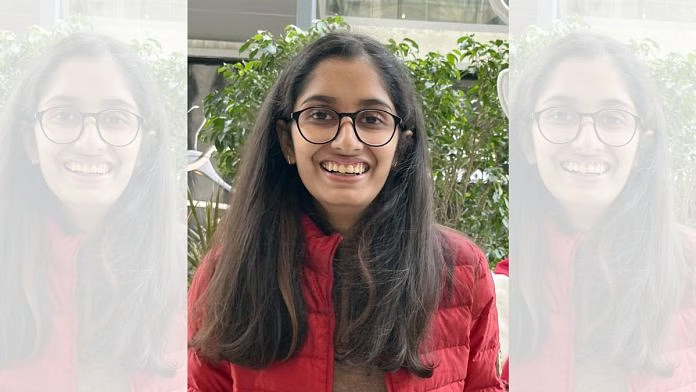
New Delhi, May 21, 2025 — For Sonam and Rajeev Saraf, the recent international headlines about a US baby’s life being saved by a groundbreaking gene-editing therapy were bittersweet. Their daughter, Uditi, who suffered from a rare and fatal neurogenetic disorder, was on the cusp of becoming the world’s first patient to receive a similar personalized treatment. Tragically, time ran out before the experimental therapy could be administered.
A Heartbreaking Near-Miss
Uditi was diagnosed with familial encephalopathy with neuroserpin inclusion bodies (FENIB), an extremely rare neurodegenerative disease caused by mutations in the SERPINI1 gene. The condition, which leads to the aggregation of abnormal proteins in the brain, causes progressive dementia, seizures, and ultimately, death. With no available treatment, the Sarafs embarked on a global quest for a cure, funding cutting-edge research in both the US and India.
Their hopes soared when scientists at the Children’s Hospital of Philadelphia and the University of Pennsylvania announced a medical milestone: they had successfully treated a baby named KJ with a customized gene-editing therapy using CRISPR technology. This therapy, which corrects faulty DNA instructions at their source, has been hailed as a revolution in medicine, offering hope for many previously untreatable genetic diseases.
India’s Scientific Sprint
Back in India, researchers led by Dr. Debjyoti Chakraborty at CSIR-IGIB in Delhi and Dr. Arkasubhra Ghosh at Narayana Nethralaya in Bengaluru were racing to develop a similar therapy for Uditi. The Sarafs pledged over Rs 4.5 crore to support the project, which saw remarkable progress in just 18 months—a process that would typically take years.
The team successfully tested the gene-editing therapy in animal models and was preparing for regulatory approval to begin trials on Uditi. They had even identified the safest viral vector to deliver the treatment directly to her brain. But in October 2023, before the therapy could be administered, Uditi succumbed to complications from aspiration pneumonia, a common risk in advanced FENIB patients.
Scientific Legacy and Hope for Others
While Uditi’s loss brought the project to a halt, the research continues. The Indian team’s work, based on promising results in animal models, is under review for publication in a leading international journal. The Sarafs remain committed to supporting ongoing efforts, hoping their daughter’s legacy will help future FENIB patients.
Dr. Chakraborty, reflecting on the achievement in the US and the near-miss in India, emphasized the need for affordable gene therapies. “This promising medical technology will not be of any use in a country like ours if we cannot make it affordable,” he said, noting that current treatments can cost up to $2-3 million per patient.
The Future of Gene Editing
The story of Uditi and the Saraf family underscores both the promise and the heartbreak of modern medicine’s frontiers. As gene-editing therapies move from science fiction to reality, they bring hope to families affected by rare genetic diseases—but also highlight the urgent need for equitable access and faster development.
Disclaimer:
This article is based on information reported by ThePrint and reflects the current state of research and clinical practice as of May 2025. Gene-editing therapies are still largely experimental, and their safety, efficacy, and accessibility remain under investigation. Readers are advised to consult qualified medical professionals for information regarding specific conditions or treatments.
Citations: