 0
0
 0
0
March 10, 2026
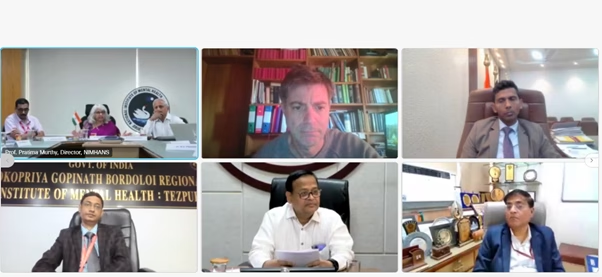
NEW DELHI – In a landmark move to address India’s burgeoning mental health crisis, government officials and leading medical experts convened on Monday to finalize a roadmap for a massive structural overhaul of the nation’s neuro-psychiatric care. The Post-Budget Webinar, titled “Sabka Saath Sabka Vikas – Fulfilling Aspirations of People,” detailed the establishment of NIMHANS-2, a second campus of the prestigious National Institute of Mental Health and Neurosciences, alongside a technologically advanced “National Brain-Mind Cloud” designed to bridge the treatment gap for millions of citizens.
The initiative comes at a critical juncture. Currently, one in seven Indians is affected by mental health disorders, yet many states grapple with a staggering treatment gap of 70% to 90%. By integrating advanced clinical infrastructure with digital health platforms, the government aims to decentralize expert care, moving it from elite urban centers to the country’s most remote corners.
Expanding the Fortress: NIMHANS-2 and Regional Upgrades
The centerpiece of the announcement is the creation of NIMHANS-2. Designed as an Institute of National Importance, this new facility is intended to replicate the success of the original Bengaluru-based NIMHANS while specifically addressing the deficit of tertiary care in North India.
“North India currently lacks adequate tertiary neuro-psychiatric facilities, particularly in high-end sectors like advanced neuroimaging and neurocritical care,” noted participants during the session.
The expansion isn’t limited to a single building. The plan includes the strategic modernization of:
-
Lokopriya Gopinath Bordoloi Regional Institute of Mental Health (LGBRIMH): To be upgraded as an Apex Regional Institute for the Northeast.
-
Central Institute of Psychiatry (CIP), Ranchi: To be strengthened as a premier hub for clinical services and academic research in the East.
The Digital Frontier: The “Brain-Mind Cloud”
Perhaps the most ambitious aspect of the 2026 roadmap is the digital convergence strategy. Experts proposed the creation of a National Brain-Mind Cloud Network. This platform will connect the All India Institute of Medical Sciences (AIIMS), state medical colleges, and primary healthcare centers (PHCs) into a single, unified ecosystem.
Key Features of the Digital Integration:
-
Unified Health Records: Seamless sharing of patient history through the ABHA ID (Ayushman Bharat Health Account) system.
-
AI-Based Screening: Using artificial intelligence to detect early signs of mental distress or neurological decline at the community level.
-
Tele-MANAS Integration: Linking the existing national tele-mental health helpline directly with tertiary hospitals for immediate specialist intervention.
“The goal is a hub-and-spoke model,” explained the panel. “Tertiary institutions act as the ‘hub,’ providing technical guidance and specialist consultations via digital platforms to ‘spokes’—the district hospitals and rural clinics.”
Addressing the “Human Resource” Drought
While infrastructure is vital, experts were quick to point out that buildings do not treat patients—doctors and counselors do. A significant portion of the webinar focused on the National Roadmap for Expanding Mental Health Manpower.
The plan mandates a phased increase in specialized training seats, including DM (Doctorate of Medicine), MCh (Master of Chirugiae), PhDs, and fellowships. By increasing the volume of trained neuro-psychiatrists and clinical psychologists, the government hopes to reduce the wait times that often discourage patients from seeking help.
Public Health Implications: Beyond the Clinic
The shift toward a “Continuum of Care” model marks a departure from traditional, episodic treatment. By establishing structured referral pathways from the District Mental Health Programme (DMHP) to apex institutions, the system ensures that a patient diagnosed in a small village isn’t “lost” after their initial appointment.
“Non-Communicable Diseases (NCDs) now account for over 60% of deaths in India,” stated the panel. “Neurological and mental health conditions are leading contributors to disability-adjusted life years (DALYs). If we don’t treat the mind, we cannot hope to manage the physical health of the nation.”
Critical Perspectives and Limitations
While the announcement has been met with optimism, some public health advocates urge cautious implementation.
Expert Commentary:
Dr. Rajesh Sagar, Professor of Psychiatry at AIIMS, emphasized that while digital tools are revolutionary, they cannot entirely replace face-to-face clinical empathy, especially in severe cases of psychosis or neuro-trauma. Furthermore, the success of the “Brain-Mind Cloud” depends heavily on internet penetration and digital literacy in rural India.
Other experts pointed out that a statutory framework for NIMHANS-2 must be robust to ensure it maintains its autonomy and research-driven culture, avoiding the bureaucratic hurdles that sometimes plague large-scale government projects.
What This Means for You
For the average citizen, these developments signal a future where mental healthcare is treated with the same urgency as cardiac or oncological care.
-
Easier Access: You may soon be able to access a NIMHANS-level specialist via your local district hospital’s tele-health suite.
-
Early Detection: School-based or community-level AI screening could identify issues like depression or anxiety before they become crises.
-
Continuity: Your mental health records will follow you, ensuring that if you move or change doctors, your treatment plan remains consistent.
Statistical Context: The Mental Health Landscape in India
| Metric | Current Status (Estimated) | Goal of 2026 Initiative |
| Prevalence | 1 in 7 Indians | Early detection & reduced DALYs |
| Treatment Gap | 70% – 90% (in several states) | Reduction via Hub-and-Spoke model |
| NCD Contribution | >60% of total deaths | Integrated care to lower mortality |
| Infrastructure | Concentrated in South/West | Expansion to North/Northeast |
References & Sources
-
Press Information Bureau (PIB) Delhi. “Strengthening Mental Health Infrastructure and Expanding Advanced Care.” Posted 09 March 2026.
Medical Disclaimer: This article is for informational purposes only and should not be considered medical advice. Always consult with qualified healthcare professionals before making any health-related decisions or changes to your treatment plan. The information presented here is based on current research and expert opinions, which may evolve as new evidence emerges.