 0
0
 0
0
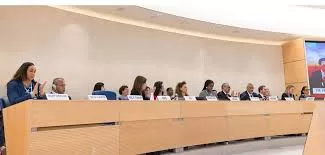
Geneva, June 7, 2025 — The Director-General of the World Health Organization (WHO), Dr. Tedros Adhanom Ghebreyesus, met with Dr. P.K. Mishra, Principal Secretary to the Prime Minister of India, to discuss India’s expanding role in global health partnerships, particularly in traditional medicine. The high-level meeting took place on Thursday in Geneva, on the sidelines of the Global Platform for Disaster Risk Reduction (GPDRR) 2025.
WHO and India Deepen Collaboration on Traditional Medicine
During the meeting, Dr. Tedros expressed gratitude for India’s leadership in the adoption of the Pandemic Accord and its increased financial contributions to WHO’s mission of advancing health for all. A key focus of the discussion was the WHO Global Traditional Medicine Centre, located in Jamnagar, India. Dr. Tedros highlighted how this centre, established in collaboration with India, aims to harness the potential of traditional medicine to complement modern healthcare approaches worldwide.
“Had a good meeting with P.K. Mishra, Principal Secretary to PMO India, on the many areas of close collaboration between WHO and India. We discussed our partnership on the WHO Global Traditional Medicine Centre, outposted in Jamnagar, which will help the world benefit from the potential of traditional medicine and complement modern approaches to health,” Dr. Tedros stated.
He also commended India’s ongoing investments in healthcare infrastructure, including the Ayushman Bharat scheme, which is expanding universal health coverage, and praised the country’s advancements in digital health.
India Expands Disaster Risk Reduction Partnerships
Beyond traditional medicine, Dr. Mishra’s visit to Geneva included a series of bilateral meetings focused on disaster risk reduction. He met with Hara Hiroaki, Vice-Minister for Policy Coordination of Japan, to explore enhanced India-Japan collaboration on disaster resilience and risk reduction strategies. Discussions also took place with Major General Ariunbuyan Gombojav, Chief of Mongolia’s National Emergency Management Agency, and Kamal Kishore, Head of the United Nations Office for Disaster Risk Reduction (UNDRR), to strengthen partnerships and advance global resilience frameworks.
At a high-level UNDRR-BIMSTEC event, Dr. Mishra, as head of India’s delegation, underscored the importance of the BIMSTEC Centre for Disaster Management, a regional initiative announced by Prime Minister Narendra Modi, to accelerate the implementation of the Sendai Framework for Disaster Risk Reduction.
India’s Leadership in Global Health and Resilience
These discussions highlight India’s growing influence in shaping global health and disaster resilience agendas. The country’s commitment to traditional medicine, universal health coverage, and international cooperation in disaster preparedness continues to receive recognition from global partners.
Disclaimer:
This article is based on information reported by The Economic Times HealthWorld. The details provided reflect statements and events as described in the referenced source. For more information, please visit the original article here.