 0
0
 0
0
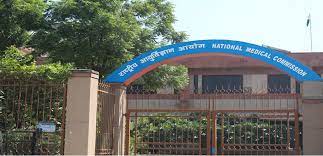
NEW DELHI — In a move aimed at addressing the perennial shortage of medical professionals and strengthening the nation’s healthcare infrastructure, the National Medical Commission (NMC) has officially opened the application window for the establishment of new medical colleges and the expansion of MBBS seats for the 2025-26 academic session.
The announcement, released via a public notice by the NMC’s Medical Assessment and Rating Board (MARB), invites eligible institutions to apply for the commencement of undergraduate medical courses. This initiative is expected to significantly boost the number of available doctor-training slots in India, which currently faces a doctor-to-population ratio that, while improving, still reveals stark regional disparities.
The application portal is scheduled to remain open through late 2024, providing a roadmap for both government and private trusts to scale their educational capacity. For a nation of 1.4 billion people, the move represents a critical step in the “long game” of public health: ensuring that the next generation of physicians is large enough to meet the demands of an aging and increasingly health-conscious population.
The Scale of the Expansion
Over the last decade, India has seen a nearly 100% increase in the number of medical colleges, rising from 387 in 2014 to over 700 in 2024. Total MBBS seats have followed a similar trajectory, surpassing the 100,000 mark last year. The new NMC directive seeks to maintain this momentum.
Under the new guidelines, existing medical colleges can apply to increase their annual intake of students, provided they meet stringent criteria regarding clinical material (patients), faculty strength, and physical infrastructure. For new colleges, the NMC has emphasized the “Maintenance of Standards of Medical Education” regulations, which dictate everything from the size of the lecture halls to the number of beds in the teaching hospital.
“This is not just about numbers; it is about geographic distribution,” says Dr. Arvinth Kumar, a public health policy analyst. “By inviting new applications, the NMC provides an opportunity for underserved regions—particularly in rural belts—to establish local hubs for medical excellence.”
Strict Criteria and Quality Control
While the expansion is welcomed by many, the NMC has signaled that it will not compromise on quality for the sake of quantity. The MARB will conduct rigorous physical and virtual inspections to ensure that institutions are not “ghost teaching”—a term used when colleges hire temporary faculty just to pass inspections.
Key requirements for the 2025-26 applications include:
-
Infrastructure: Robust laboratory facilities and digital libraries.
-
Clinical Load: A consistent flow of outpatients and inpatients to ensure students receive hands-on clinical exposure.
-
Aadhar-Enabled Biometric Attendance: To ensure faculty presence and curb the practice of “migratory” teachers.
“The challenge for the NMC has always been balancing the desperate need for more doctors with the absolute necessity of producing competent doctors,” says Dr. Meenakshi Sharma, a former member of a state medical council. “Increasing seats without proportional increases in senior residency and faculty mentorship can dilute the quality of training.”
Public Health Implications: The “Rural Gap”
The significance of this announcement extends far beyond the classroom. In India, the urban-rural divide in healthcare remains a significant hurdle. Most specialist care is concentrated in Tier-1 cities, leaving rural populations dependent on primary health centers that are often understaffed.
By encouraging the establishment of new colleges, the government hopes to create a “stay-near” effect. Research suggests that medical students are more likely to serve in the regions where they were trained. An increase in colleges in smaller districts could, over the next decade, naturally populate those areas with a steady stream of junior doctors and specialists.
Furthermore, an increase in MBBS seats is a prerequisite for increasing Post-Graduate (PG) seats. With India currently facing a severe shortage of surgeons, cardiologists, and oncologists, the undergraduate expansion acts as the foundation for the entire specialized healthcare pyramid.
The Cost of Education and Accessibility
Despite the increase in seats, concerns remain regarding the affordability of medical education. While government college seats are highly subsidized, private medical seats can cost upwards of several million rupees, often putting them out of reach for meritorious students from lower-income backgrounds.
The NMC has previously proposed capping fees in 50% of private medical college seats to match government rates, a move that has faced various legal challenges. As the new application cycle begins, consumer advocacy groups are calling for clearer transparent fee structures to ensure that the “increase in seats” translates to “increased opportunity” for all segments of society.
Limitations and Challenges
Medical education experts point out that physical buildings do not make a doctor. The primary bottleneck in India’s medical expansion is the shortage of qualified senior faculty (Professors and Associate Professors).
“You can build a hospital and buy the latest MRI machines, but you cannot ‘manufacture’ a professor with 20 years of experience overnight,” warns Dr. Kumar. “If the NMC approves 50 new colleges, we need to ask: where are the 50 new heads of surgery coming from? We must ensure we aren’t just reshuffling the same pool of educators from one college to another.”
Additionally, there is the “100 seats per million” rule—a guideline the NMC previously considered to limit the concentration of colleges in certain states. While this was put on hold after pushback from southern states, the debate over how to distribute seats equitably across the country remains ongoing.
What This Means for Aspiring Students
For the millions of students who sit for the NEET-UG (National Eligibility cum Entrance Test) every year, this news is a glimmer of hope. In 2024, over 2.3 million students competed for roughly 1.1 lakh seats. The competition is famously grueling, with a success rate of less than 5%.
The addition of new colleges for the 2025-26 session could potentially add several thousand more seats to the pool, slightly easing the “cut-off” pressure and providing more students the chance to pursue their dreams within India rather than seeking expensive degrees abroad in countries like Russia, Georgia, or the Philippines.
Conclusion
The NMC’s invitation for new applications marks a pivotal moment in India’s journey toward “Health for All.” By scaling up the production of medical professionals, the country is investing in its most valuable resource: its human capital. However, the success of this expansion will ultimately be judged not by the number of degrees handed out, but by the caliber of care provided to the patient at the end of the line.
Reference Section
-
“Undergraduate Medical Education Board (UGMEB) Guidelines,” National Medical Commission (2023). DOI/Link: nmc.org.in
Medical Disclaimer: This article is for informational purposes only and should not be considered medical advice. Always consult with qualified healthcare professionals before making any health-related decisions or changes to your treatment plan. The information presented here is based on current research and expert opinions, which may evolve as new evidence emerges.