 0
0
 0
0
NEW DELHI – In a significant disclosure to Parliament this week, the Union Ministry of Women and Child Development (WCD) reported a marked improvement in India’s child malnutrition indicators. According to real-time data from the government’s ‘Poshan Tracker’ initiative, stunting and underweight prevalence among children under five have dropped below levels recorded in the last major national survey.
In a written reply to the Rajya Sabha on December 3, Minister of State for Women and Child Development Savitri Thakur stated that approximately 34% of children under five are stunted and 15% are underweight. These figures, derived from the measurement of over 6.44 crore children, suggest a positive shift in the country’s battle against undernutrition, though the divergence from previous National Family Health Survey (NFHS) data has sparked discussions among public health experts regarding data methodology.
Key Findings from the Poshan Tracker
The new data, current as of October 2025, originates from the Poshan Tracker, an ICT-based governance tool deployed across Anganwadi centers to monitor child growth in real time.
-
Stunting (Low height-for-age): Recorded at 33.54% in the Poshan Tracker, compared to 35.5% in the NFHS-5 (2019-21).
-
Underweight (Low weight-for-age): Recorded at 14.41%, a steep drop from 32.1% in NFHS-5.
-
Wasting (Low weight-for-height): Recorded at 5.03%, significantly lower than the 19.3% reported in NFHS-5.
Minister Thakur highlighted that the measurement drive covered children between 0 and 5 years enrolled in Anganwadis. “The findings demonstrate that services delivered through Mission Poshan 2.0—including home visits and community-based events—are associated with improved nutrition behaviors,” she noted, referencing a 2021 World Bank survey in 11 priority states that found over 80% of women were successfully reached with critical nutrition messaging.
Context: The Divergence in Data
While the government’s figures offer a hopeful narrative, the disparity between the administrative data (Poshan Tracker) and traditional survey data (NFHS) is notable, particularly regarding ‘wasting’ and ‘underweight’ statistics.
Public health experts have previously urged caution when comparing these two datasets. The NFHS relies on independently trained survey teams visiting a randomized sample of households, whereas the Poshan Tracker relies on data entered by Anganwadi workers (AWWs).
“Administrative data is vital for real-time monitoring and programmatic course correction,” explains a senior researcher in public health nutrition who requested anonymity. “However, it is subject to different biases than sample surveys. A drop in wasting from 19% to 5% in four years would be an unprecedented public health achievement globally. We must verify if this reflects a true reduction or differences in measurement techniques and equipment at the grassroots level.”
A commentary published in The Lancet Regional Health Southeast Asia earlier this year also flagged discrepancies, noting that Poshan Tracker estimates for underweight and wasting were consistently lower than NFHS estimates. Researchers suggested that while the Tracker is an excellent tool for governance and accountability, it may not yet fully align with the demographic sampling rigor of the NFHS.
Implications for Public Health
Regardless of the data source, the prevalence of stunting—affecting one in three Indian children—remains a critical challenge.
-
Stunting is a measure of chronic undernutrition. It is largely irreversible after the first 1,000 days of life and is linked to poor cognitive development, lower educational performance, and reduced economic productivity in adulthood.
-
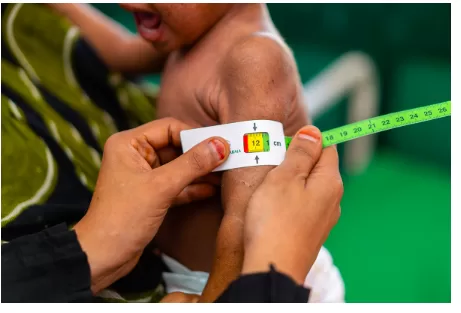
Wasting represents acute malnutrition, often caused by sudden food insecurity or infection. It carries an immediate risk of mortality.
“The persistent rate of stunting indicates that while we may be managing acute hunger better, the quality of diet and absorption of nutrients remains an issue,” said Dr. Anjali Kumar, a pediatrician and public health advocate. “Addressing this requires not just food distribution, but improvements in sanitation, clean water access, and maternal health.”
Government Response and Future Outlook
The Ministry emphasizes that the Poshan Tracker improves transparency and ensures that “ghost beneficiaries” are removed from the system. The platform allows for the dynamic identification of malnourished children, enabling faster intervention than the retrospective data provided by quinquennial surveys.
Under Mission Poshan 2.0, the government has integrated various supplementary nutrition programs to focus on maternal nutrition, infant and young child feeding norms, and the treatment of severe acute malnutrition (SAM). The World Bank survey cited by the Minister indicated that 81% of women in priority states now practice exclusive breastfeeding for the first six months—a critical behavior for preventing early childhood malnutrition.
As India moves forward, the harmonization of these datasets will be crucial. For now, the Poshan Tracker serves as a massive, real-time pulse check on the nation’s children, signaling progress while highlighting the immense scale of the work that remains.
Medical Disclaimer:
This article is for informational purposes only and should not be considered medical advice. Always consult with qualified healthcare professionals before making any health-related decisions or changes to your treatment plan. The information presented here is based on current research and expert opinions, which may evolve as new evidence emerges.
References:
-
Parliamentary Reply: Statement by Minister of State for Women and Child Development Savitri Thakur, Rajya Sabha, December 3, 2025.