 0
0
 0
0
The Indian government has strongly refuted findings from a recent Lancet report that placed India among the countries with the highest number of unvaccinated children worldwide. According to the Lancet, 15.7 million children globally did not receive any doses of the diphtheria-tetanus-pertussis (DTP) vaccine in their first year in 2023, with India accounting for 1.44 million of these “zero dose” children—second only to Nigeria.
The report grouped India with seven other nations—Nigeria, the Democratic Republic of Congo, Ethiopia, Somalia, Sudan, Indonesia, and Brazil—that together account for over half of the world’s unvaccinated child population.
In response, India’s Union Health Ministry emphasized that such comparisons must consider India’s large population and the extensive reach of its Universal Immunisation Programme (UIP). The ministry highlighted that the percentage of zero dose children relative to the total population has dropped from 0.11% in 2023 to 0.06% in 2024, reflecting significant progress.
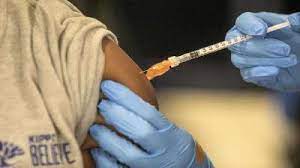
Under the UIP, the government claims to provide free vaccinations annually to 29 million pregnant women and 26 million infants. To further address the issue, targeted campaigns have been launched in 143 districts across 11 states identified as having higher burdens of unvaccinated children. These initiatives focus on urban slums, peri-urban areas, migratory populations, hard-to-reach regions, and communities affected by vaccine hesitancy.
The Health Ministry also cited the WHO and UNICEF Estimates of National Immunisation Coverage (WUENIC) report for 2023, noting that India’s DTP-1 coverage reached 93%, surpassing the global average and significantly higher than Nigeria’s 70% for the same period. Additionally, the dropout rate from the first to the third dose of DTP has decreased from 7% in 2013 to 2% in 2023. Measles vaccine coverage has also improved, rising from 83% in 2013 to 93% in 2023.
Officials stressed that “any interpretation or analysis based on isolated factors does not lend credence to the country’s progress on its immunisation programme,” underscoring the need for a nuanced understanding of India’s public health achievements.
Disclaimer: This article is based on statements from the Indian Health Ministry and data cited in recent reports. Readers are encouraged to consult primary sources and peer-reviewed publications for a comprehensive view. The Lancet report referenced herein reflects global estimates and methodologies that may differ from national data collection and reporting practices.