 0
0
 0
0
New Delhi — In a move that has sparked debate among public health experts and environmentalists, the Indian government has officially stated that global air quality rankings—such as those released by IQAir and the Environmental Performance Index (EPI)—are not recognized by any “official authority” and are non-binding.
The clarification came from Minister of State for Environment Kirti Vardhan Singh in a written reply to the Rajya Sabha on Thursday, just as much of northern India grapples with severe winter pollution. The government emphasized that the World Health Organization’s (WHO) stringent air quality guidelines are merely “advisory,” asserting that India’s own National Ambient Air Quality Standards (NAAQS) are the definitive benchmark for the country’s pollution control efforts.
Sovereignty Over Standards
The Ministry of Environment, Forest and Climate Change (MoEFCC) maintains that air quality standards must be tailored to a nation’s unique geography, climatic conditions, and socio-economic context. According to Minister Singh, the WHO guidelines serve as a reference point but do not account for the specific “background levels and national circumstances” of developing nations like India.
“India has already notified its National Ambient Air Quality Standards (NAAQS) for 12 pollutants to protect public health and environmental quality,” Singh stated.
Currently, India’s permissible limit for PM2.5 (fine particulate matter) is 40 micrograms per cubic meter (µg/m³) annually. In stark contrast, the WHO’s updated 2021 guidelines recommend a limit of just 5 µg/m³—making India’s “safe” limit eight times higher than the global health recommendation.
The Gap Between Local and Global Benchmarks
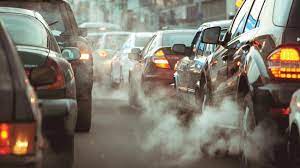
While the government dismisses international rankings, the data from these global monitors paints a concerning picture. The most recent World Air Quality Report by Swiss firm IQAir ranked India as the 5th most polluted country globally in 2024, with New Delhi retaining the title of the world’s most polluted capital.
Instead of these international metrics, the Centre is championing its own internal assessment mechanism, the Swachh Vayu Survekshan (Clean Air Survey). Under the National Clean Air Programme (NCAP), the government ranks 130 cities based on their efforts to reduce pollution. In the latest 2025 rankings, cities like Indore, Surat, and Agra were felicitated for their pollution mitigation measures, offering a narrative of progress that contrasts with the “severe” air quality alerts frequently issued for the National Capital Region (NCR).
The Public Health Reality: “No Conclusive Data”?
The divergence between government policy and scientific consensus is perhaps most visible in the realm of public health. When questioned about the mortality burden of air pollution, the government reiterated its stance that there is “no conclusive national data” to directly link deaths exclusively to toxic air.
However, the medical community and independent researchers tell a different story. A landmark study published in The Lancet Planetary Health estimated that long-term exposure to air pollution contributes to approximately 1.5 million premature deaths in India annually.
“PM2.5 particles are microscopic—less than 2.5 microns in diameter. They don’t just irritate the throat; they bypass the body’s natural defenses, enter the bloodstream, and cause systemic inflammation,” explains Dr. R.K. Gupta, a senior pulmonologist (name changed for illustrative context). “We are seeing a rise in COPD, heart disease, and strokes in patients who have never smoked, which correlates strongly with the pollution levels we measure.”
Recent data analysis suggests that nearly 15% of all deaths in Delhi could be attributed to air pollution, a statistic that underscores the urgency beyond administrative rankings.
Expert Perspectives and Critics
Critics argue that dismissing global rankings acts as a “technical evasion” of the ground reality. Opposition MPs have termed the government’s response a denial of the crisis, while environmental experts warn that lenient standards may create a false sense of security.
“The virus doesn’t check your passport, and neither does pollution,” says an environmental policy researcher based in New Delhi. “While it is true that geography plays a role—such as the thermal inversion in the Indo-Gangetic plain—human physiology is universal. If 5 µg/m³ is unsafe for a European lung, it is unsafe for an Indian lung. Setting our ‘safe’ bar at 40 µg/m³ is an administrative decision, not a biological one.”
Implications for Public Health
For the average citizen, this bureaucratic tug-of-war has practical implications. If official channels categorize air quality as “satisfactory” based on the NAAQS limit of 40 µg/m³ (which is still 800% of the WHO limit), sensitive groups—children, the elderly, and those with asthma—might expose themselves to hazardous air without realizing the risk.
What this means for you:
-
Don’t rely solely on “Satisfactory” labels: Even if local alerts are green, check the actual PM2.5 concentration numbers.
-
WHO Thresholds: Be aware that any PM2.5 level above 15 µg/m³ (24-hour average) is considered unhealthy by the WHO.
-
Protective Measures: Continue to use N95 masks and air purifiers during peak pollution months, regardless of whether the day is classified as “severe” or “poor” by local standards.
The Road Ahead
The government points to the National Clean Air Programme (NCAP) as evidence of its commitment, targeting a 20-30% reduction in particulate matter concentration by 2026. While the rejection of global rankings asserts India’s sovereignty in policymaking, the ultimate judge of success will not be a rank on a list, but the respiratory health of India’s 1.4 billion citizens.
As winter fog continues to wrap the north, the question remains: Can India clear its air without aligning with the strict benchmarks the rest of the world uses to define “clean”?
Medical Disclaimer: This article is for informational purposes only and should not be considered medical advice. Always consult with qualified healthcare professionals before making any health-related decisions or changes to your treatment plan. The information presented here is based on current research and expert opinions, which may evolve as new evidence emerges.
References
-
Parliamentary Statement: “India sets its own air standards; global rankings not official: Govt.” The Economic Times, December 11, 2025.