 0
0
 0
0
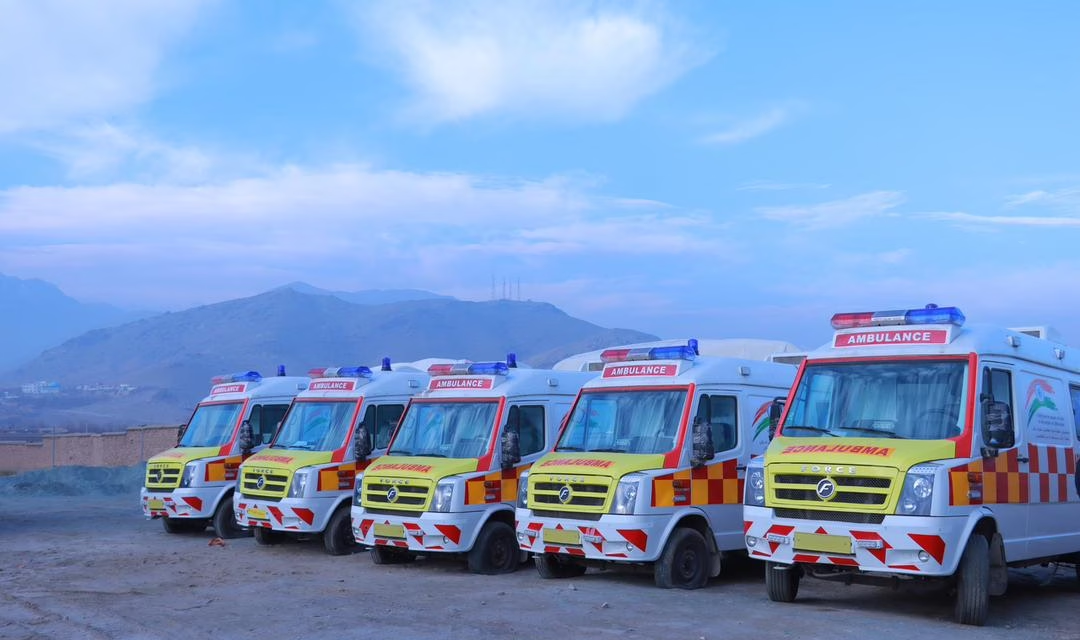
KABUL/NEW DELHI – In a significant expansion of humanitarian ties, India has delivered a consignment of advanced ambulances to Afghanistan, marking a critical step in a growing bilateral healthcare partnership. The delivery, finalized in late December 2025, fulfills a high-level commitment to strengthen emergency medical services and maternal health infrastructure in the crisis-hit nation.
The arrival of the vehicles follows a series of diplomatic engagements in New Delhi between Indian External Affairs Minister S. Jaishankar and Afghan officials. During these talks, India pledged a comprehensive medical aid package—including diagnostic machinery, specialized treatment centers, and a long-term supply of essential medications—as Afghanistan seeks to diversify its healthcare dependencies away from neighboring Pakistan.
A Lifeline on Wheels: Strengthening Emergency Response
The initial delivery of six ambulances, equipped with modern life-support systems, was officially handed over to the Specialized National Police Hospital and the Ministry of Interior Affairs in Kabul on December 29, 2025. These vehicles are part of a larger gift of 20 ambulances described by Minister Jaishankar as a “gesture of goodwill.”
Sharafat Zaman Amarkhel, a spokesperson for the Afghan Health Ministry, emphasized that the aid is vital for improving “emergency responses and transporting critical patients” across a landscape where medical transport is often the difference between life and death.
Beyond mobile units, the cooperation extends to high-tech diagnostics. India has confirmed the upcoming dispatch of a 128-slice CT scanner and MRI machines, intended to modernize the Indira Gandhi Institute of Child Health (IGICH) in Kabul.
Infrastructure and Specialized Care Projects
The collaboration is not limited to equipment; it encompasses several large-scale infrastructure projects aimed at addressing Afghanistan’s most pressing health deficits:
-
Maternal Health: Construction of five Maternity Health Clinics in the underserved provinces of Paktika, Khost, and Paktia.
-
Specialized Centers: Establishment of an Oncology Centre for cancer treatment and a dedicated Thalassemia Centre.
-
Tertiary Care: A planned 30-bed hospital in Kabul’s Bagrami district, featuring a trauma unit.
-
Rehabilitation: The “Jaipur Foot” program has already successfully fitted approximately 75 Afghan nationals with prosthetic limbs.
Strategic Shift: Moving Away from Pakistani Pharmaceuticals
The deepening ties with India come at a time of severe friction between Kabul and Islamabad. In November 2025, the Afghan government announced a complete ban on pharmaceutical imports from Pakistan, citing persistent concerns over “poor quality” and counterfeit drugs.
Historically, Pakistan supplied nearly 40% of Afghanistan’s medicine. The three-month transition period, ending in February 2026, has forced Afghan health authorities to secure alternative supply chains. In late November, Afghan and Indian firms signed a landmark $100 million pharmaceutical supply contract to ensure the steady flow of high-standard medication.
“Afghans have long relied on India for medical treatment,” stated Afghan Public Health Minister Mawlawi Noor Jalal Jalali during his recent visit to New Delhi. “Medical visas remain a vital humanitarian channel for our people.”
The Public Health Context: A System Under Strain
The World Health Organization (WHO) estimates that in 2025, approximately 22.9 million people in Afghanistan—nearly half the population—require humanitarian assistance. The healthcare system faces a “triple threat” of limited funding, a shortage of qualified female medical staff, and rising maternal mortality rates.
According to the WHO, the maternal mortality ratio in Afghanistan has seen a concerning uptick, with recent estimates suggesting 620 deaths per 100,000 live births, compared to 521 in 2023.
| Healthcare Metric | Current Status (2025 Est.) | Target/Standard |
| Population in Need of Aid | 22.9 Million | N/A |
| Maternal Mortality Ratio | 620 per 100k births | < 70 (SDG Target) |
| Health Workers per 10k | 10.3 | 44.5 (WHO Standard) |
“The influx of medical equipment and the establishment of provincial clinics are essential,” says Dr. Rajesh Kumar, a global health policy analyst (not involved in the projects). “However, the long-term success of these initiatives will depend on capacity building—specifically training Afghan doctors and nurses to operate this new technology.”
Challenges and Limitations
While India’s “soft power” approach is welcomed by many, logistical and political hurdles remain. International observers note that while infrastructure is being built, the ban on female education in Afghanistan continues to threaten the future pipeline of female midwives and doctors—crucial for the very maternity clinics India is constructing. Furthermore, the reliance on e-visas, while streamlined to a three-week processing time, still poses barriers for rural populations with limited internet access.
Looking Ahead
Discussions are currently underway to form a Joint Working Group on Health. This body would oversee the deployment of Indian medical teams to Kabul for capacity-building programs and explore the integration of traditional medicine, such as Ayurveda, into the Afghan healthcare curriculum.
For the average Afghan citizen, these developments mean more than just diplomacy; they represent a potential end to the grueling journeys across borders for basic cancer care or emergency surgery.
Medical Disclaimer: This article is for informational purposes only and should not be considered medical advice. Always consult with qualified healthcare professionals before making any health-related decisions or changes to your treatment plan. The information presented here is based on current research and expert opinions, which may evolve as new evidence emerges.
References
- https://moph.gov.af/en/government-india-has-officially-handed-over-six-fully-equipped-ambulances-ministry-public-health