 0
0
 0
0
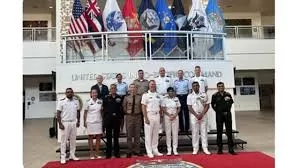
In September 2025, senior medical officials from the Indian Armed Forces, led by Director General Surgeon Vice Admiral Arti Sarin, traveled to Honolulu, Hawaii for study tours and high-level talks with United States Army counterparts from the Indo-Pacific Command (INDOPACOM). This initiative marks a new chapter in defence medical collaboration and strategic partnerships, aiming to share best practices and improve interoperability between military healthcare systems in support of joint operations and disaster relief efforts.
Key Developments
-
Indian and U.S. military medical teams engaged in staff-level exchanges focused on combat medicine, marine and aviation healthcare, infectious disease management, high-altitude physiology, and cold weather injury prevention.
-
The collaboration included hands-on demonstrations at the Fort Wainwright Medical Simulation Training Center and facility visits in Hawaii, providing opportunities for cross-training and knowledge sharing in austere environments.
-
Recent joint exercises, such as Exercise Yudh Abhyas 2025 in Alaska (Sept 1–14, 2025) and Tiger Triumph 2025 in April, reinforced tactical coordination, humanitarian assistance readiness, and operational preparedness.
Context and Background Information
The United States and India have steadily built defence ties over recent decades, with medical readiness now playing a pivotal role. Exercises like Yudh Abhyas (now in its 21st edition), Tiger Triumph, and Malabar have evolved from small platoon drills to complex multi-domain operations involving thousands of personnel across multiple services.
Medical collaboration within these exercises focuses on:
-
Casualty evacuation protocols
-
Infection control in field hospitals
-
Response strategies for high-altitude deployments
-
Harmonizing humanitarian aid during natural disasters
The logistical exchange between the two nations under the Logistics Exchange Memorandum of Agreement (LEMOA) further enhances their ability to deploy quickly in emergencies and integrate emerging medical technologies.
-
Yudh Abhyas 2025 involved hundreds of Indian and U.S. troops at Fort Wainwright, Alaska, with a spectrum of training modules including health service support and casualty care.
-
The Tiger Triumph 2025 exercise provided intensive cross-training in humanitarian assistance and disaster relief (HADR), involving air and naval assets from both countries.
-
India’s Armed Forces Medical Services (AFMS) comprise over 10,000 medical officers, serving millions of personnel and civilians during crises (Indian Ministry of Defence statistics).
Practical Implications for Readers
-
For healthcare professionals: New protocols and knowledge sharing may accelerate medical innovation and improve trauma and infectious disease response during multi-national operations.
-
For civilians: Enhanced readiness and bilateral cooperation can improve disaster relief response, with faster deployment of integrated medical teams during crises like earthquakes, floods, or pandemics.
-
For policy-makers: These developments may inform future international agreements on health security and cooperation.
Balanced Reporting: Limitations and Counterarguments
While joint exercises provide invaluable training and operational knowledge, experts caution that differences in infrastructure, resource availability, and cultural approaches to medicine may slow the integration of some practices. Not all protocols or technologies are transferrable without adaptation. Additionally, periodic turnover in leadership and shifts in geopolitical priorities may challenge the longevity of these cooperative efforts.
Some critics question whether increased defence medical spending diverts resources from civilian health needs. However, proponents argue that innovations developed in military settings often flow into public health sectors, improving capabilities such as infection control and emergency medicine.
Implications for Public Health
India-U.S. military medical partnerships set a global example in preparing for multi-domain health threats, from battlefield injuries to pandemics and natural disasters. Interoperability in health service support and crisis response paves the way for multinational humanitarian missions and strengthens the international safety net, benefiting both military personnel and broader civilian populations.
Study and Exercise Citations