 0
0
 0
0
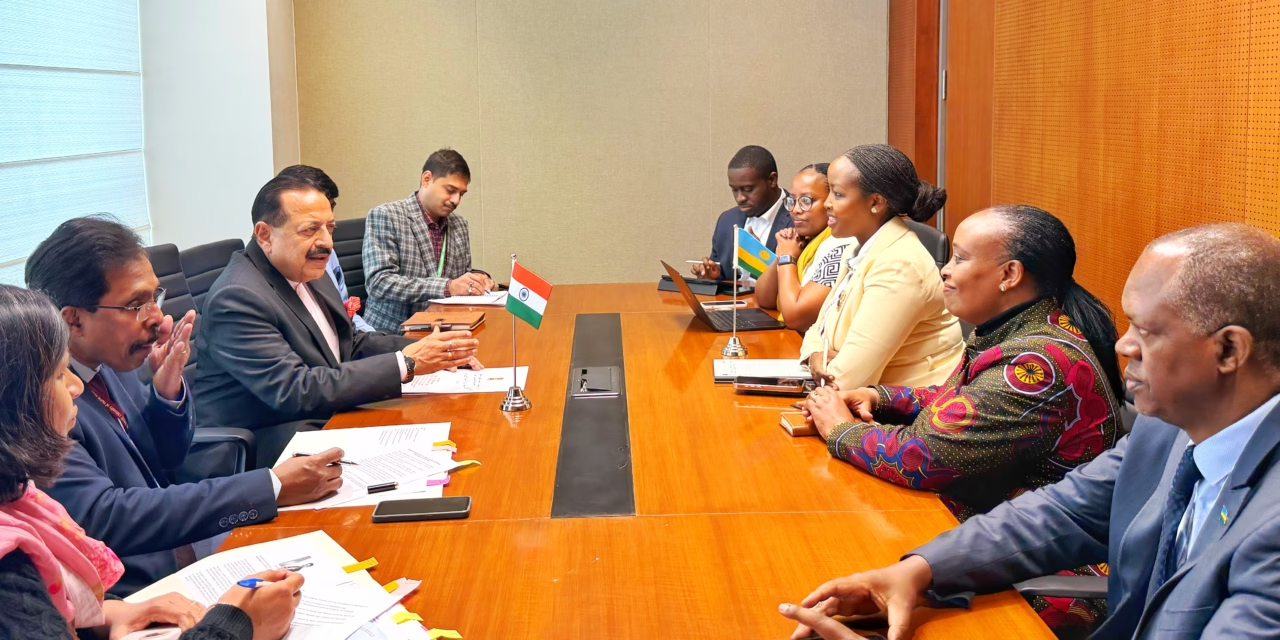
NEW DELHI – In a move that signals a shifting landscape for global health equity and medical innovation, Union Minister Dr. Jitendra Singh met with Rwanda’s ICT Minister, Paula Ingabire, on February 21, 2026, to solidify a strategic partnership centered on biotechnology, artificial intelligence (AI), and advanced healthcare solutions. The high-level bilateral talks at Seva Teerth aim to bridge the gap between India’s massive “Bio-Manufacturing Shakti” mission and Rwanda’s ambition to become Africa’s premier technology hub.
This collaboration marks a significant step in “South-South” cooperation, focusing on making high-tech medical interventions—from gene therapy to precision diagnostics—more accessible and affordable for populations in both the Global South and emerging African economies.
A Billion-Dollar Bet on Bio-Manufacturing
At the heart of the discussions was India’s recently launched Bio-Manufacturing Shakti Mission. With an initial government allocation of ₹10,000 crore (approximately $1.2 billion USD), the initiative is designed to transform how medical devices, implants, and pharmaceutical ingredients are produced.
Dr. Jitendra Singh emphasized that India is no longer just the “pharmacy of the world” for generic drugs but is pivoting toward high-value life sciences. “India now follows an open and collaborative approach,” Dr. Singh stated, noting that the country’s startup ecosystem—now the third-largest globally—is a primary driver for these healthcare breakthroughs.
For the average consumer, this mission aims to lower the cost of complex medical treatments. By fostering local manufacturing of high-quality medical implants and diagnostic tools, the partnership seeks to reduce the heavy reliance on expensive Western imports that often price out patients in developing nations.
AI and Genomics: The New Pulse of Healthcare
The talks highlighted a shared interest in Genomics and AI-driven diagnostics. Genomics involves the study of an individual’s entire genetic makeup (DNA) to identify predispositions to diseases or to tailor specific treatments—a field known as precision medicine.
-
Precision Medicine: By sharing genomic data and research frameworks, India and Rwanda hope to develop treatments that are specifically effective for diverse genetic backgrounds.
-
AI Scaling Hubs: Minister Paula Ingabire detailed Rwanda’s “AI Scaling Hub,” supported by the Centre for the Fourth Industrial Revolution (C4IR). AI can analyze medical imaging (like X-rays or MRIs) faster than human doctors, providing a critical safety net in regions with a shortage of specialized radiologists.
“Rwanda is investing heavily in digital adoption,” Minister Ingabire noted, pointing out that 70% of Rwanda’s population is under the age of 25. This “digital-native” demographic is seen as the ideal workforce to pilot AI-integrated health services that could eventually serve the broader African continent.
The Public Health Perspective: Why It Matters
Public health experts view this partnership as a proactive response to future pandemics and the rising burden of non-communicable diseases (NCDs) like cancer and diabetes.
“The integration of AI and genomics into primary healthcare is the ‘holy grail’ of modern medicine,” says Dr. Arvinder Singh, a global health policy consultant not involved in the bilateral talks. “If India and Rwanda can successfully decentralize these technologies, we move away from ‘sick-care’ and toward ‘preventive care’ on a massive scale.”
Key Areas of Focus:
-
Small Modular Reactors (SMRs): While primarily an energy solution, SMRs are crucial for the consistent power supply required by high-tech hospitals and cold-chain vaccine storage.
-
Medical Devices: Development of cost-effective, durable implants (like heart valves or orthopedic joints) designed for the specific needs of patients in emerging markets.
-
Skill Transfer: Establishing a pipeline where Indian innovators mentor Rwandan startups, creating a self-sustaining medical technology ecosystem in East Africa.
Balancing Innovation with Caution
Despite the optimism, experts urge a balanced view of these emerging technologies. Genomic research, while revolutionary, carries significant privacy concerns. The “draft Memorandum of Understanding (MoU)” discussed in the meeting reflects this caution; the Indian Department of Science and Technology (DST) indicated a preference for identifying specific, outcome-oriented programs before finalizing the broad framework.
Potential Challenges Include:
-
Data Privacy: Protecting the sensitive genetic information of citizens across international borders.
-
Infrastructure: Ensuring that AI tools have the robust internet connectivity required to function in rural areas.
-
Regulatory Alignment: Synchronizing the medical standards of two different nations to ensure safety and efficacy.
What This Means for You
For the health-conscious consumer, this bilateral shift suggests that the next decade of healthcare will be defined by personalization and localization.
If these initiatives succeed, patients can expect:
-
Faster Diagnostics: AI tools that provide preliminary health screenings via smartphones.
-
Affordable Implants: High-quality medical hardware produced closer to home, reducing wait times and costs.
-
Targeted Therapies: Treatments for chronic conditions that are adjusted based on your specific genetic profile, potentially reducing side effects.
As the meeting concluded, both nations agreed to maintain close coordination to finalize priority areas. With Rwanda positioned as a “Pan-African technology hub” and India as a “Deep-Tech” powerhouse, the partnership may well set the blueprint for how technology serves humanity in the 21st century.
Medical Disclaimer
Medical Disclaimer: This article is for informational purposes only and should not be considered medical advice. Always consult with qualified healthcare professionals before making any health-related decisions or changes to your treatment plan. The information presented here is based on current research and expert opinions, which may evolve as new evidence emerges.
References and Statistical Sources
- https://www.pib.gov.in/PressReleasePage.aspx?PRID=2231202®=3&lang=1