 0
0
 0
0
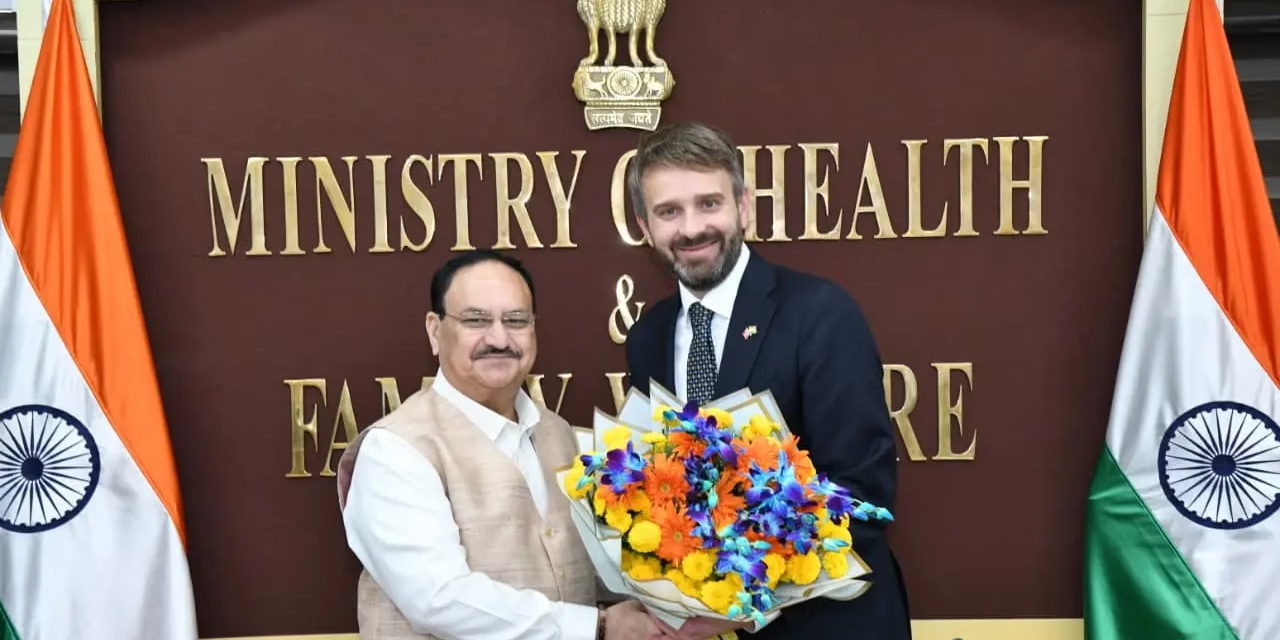
In a significant step toward enhancing bilateral cooperation in healthcare, India’s Union Health Minister Jagat Prakash Nadda met with Norway’s Health Minister Jan Christian Vestre in New Delhi on November 17, 2025, to discuss expanding collaboration across digital health, human resource development, maternal and child nutrition, and joint disease research. The meeting included proposals for signing Memoranda of Understanding (MoUs) aimed at strengthening cooperation in health, medicine, and drug regulation, marking a milestone in the enduring partnership between the two nations.
Key Developments and Proposals
At the heart of the discussions was a proposal by Minister Nadda to formalize cooperation through MoUs that would deepen India-Norway collaboration in critical areas including health system innovation, drug regulatory frameworks, and public health research. The ministers emphasized the potential for harnessing digital health technologies to improve healthcare delivery and outcomes, particularly in maternal and child nutrition—a priority in India’s public health agenda. This meeting also underscored commitment to collaborative research on diseases impacting both nations and beyond, focusing on evidence-based interventions.
Norway’s Minister Vestre expressed enthusiasm about returning to India in his new capacity and highlighted Norway’s focus on innovation and partnership-building in health, referencing his participation in the upcoming Bengaluru Tech Summit as an opportunity to connect with healthcare innovators.
Background on the India-Norway Health Partnership
The meeting builds on a long-standing cooperative framework formalized under the Norway India Partnership Initiative (NIPI), which is currently in its fourth phase. Initiated nearly two decades ago, NIPI supports India’s National Health Mission (NHM) goals and Sustainable Development Goals (SDGs) in states including Bihar, Odisha, Madhya Pradesh, Rajasthan, and the Union Territory of Jammu and Kashmir. The partnership has driven innovative health interventions and capacity-building efforts. Reflecting its success, the Indian government has invested substantially—reportedly 26 times the Norwegian funding—to scale innovations and best practices nationwide.
Expert Commentary
Health policy experts underscore the significance of such international partnerships for strengthening health systems. Dr. Asha Singh, a public health specialist not involved in the talks, notes, “Collaborations like India-Norway’s provide a valuable platform for knowledge exchange and resource sharing, especially in integrating digital tools to overcome healthcare access challenges in diverse populations.” She adds that ensuring robust drug regulation cooperation can also accelerate access to safe and effective medicines for both countries’ populations.
Meanwhile, Dr. Ramesh Kumar, a nutritionist familiar with India’s maternal and child health programs, highlighted, “Focusing on maternal and child nutrition is crucial given the persistent malnutrition burden in many Indian states. International collaboration can bring new insights and technical expertise to improve nutrition outcomes and reduce child mortality”.
Public Health Implications
This bilateral boost is timely considering India’s ongoing efforts to digitize its healthcare infrastructure under the National Digital Health Mission and the government’s intensified focus on human resource development in the health sector. Enhanced collaboration on digital health can improve disease surveillance, data-driven decision-making, and patient care continuity. Similarly, leveraging combined research efforts on diseases may accelerate innovations in prevention, diagnostics, and treatment of communicable and non-communicable diseases.
The emphasis on drug regulation indicates an intent to harmonize standards and expedite the availability of quality medications, which is paramount in ensuring patient safety and combating antimicrobial resistance, a growing global health threat.
Potential Limitations and Outlook
While the partnership framework is promising, the actual impact will depend on the effective implementation of MoUs, sustained political will, and investment in infrastructure and workforce training. Cross-national collaborations also face challenges such as aligning regulatory standards and ensuring equitable distribution of benefits across populations.
Experts caution against overestimating immediate outcomes, urging continuous monitoring and evaluation of these initiatives to ensure they translate into tangible health improvements. Nonetheless, the engagement signals an important step toward leveraging global cooperation for sustainable health development.
Conclusion
The meeting between Health Ministers Nadda and Vestre marks a renewed commitment to a vibrant India-Norway partnership in healthcare, emphasizing innovation, digital transformation, and nutrition enhancement. If realized through effective MoUs and resource mobilization, this alliance could serve as a model for international health cooperation supporting the health and well-being of millions.
Medical Disclaimer:
This article is for informational purposes only and should not be considered medical advice. Always consult with qualified healthcare professionals before making any health-related decisions or changes to your treatment plan. The information presented here is based on current research and expert opinions, which may evolve as new evidence emerges.
References: