 0
0
 0
0
NEW DELHI – In a move that could reshape regional health security and medical diplomacy in South Asia, senior officials from India and Afghanistan met this week to discuss a robust expansion of healthcare cooperation. The dialogue, centered on infrastructure development, pharmaceutical supply chains, and medical education, marks a significant step in addressing the pressing public health challenges facing the Afghan population.
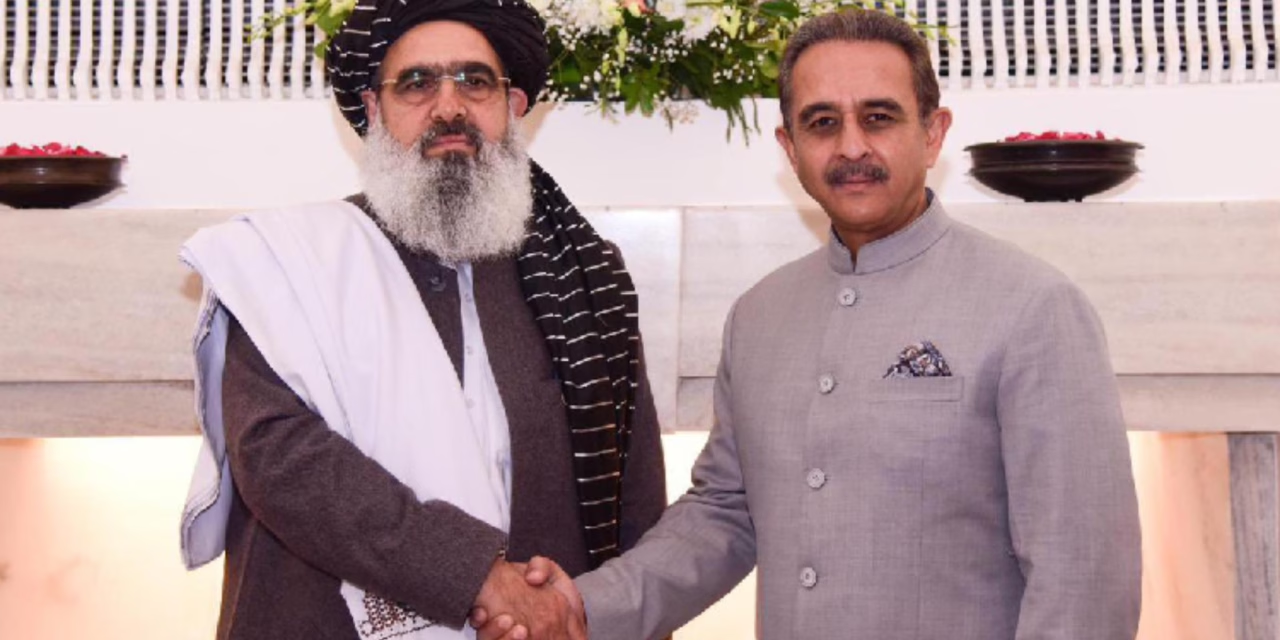
Kirti Vardhan Singh, India’s Minister of State for External Affairs and Environment, hosted a high-level delegation led by Afghanistan’s acting Health Minister, Noor Jalal Jalali. The meeting focused on revitalizing long-standing health partnerships and establishing new pathways for India to support Afghanistan’s fragile healthcare ecosystem.
Rebuilding a Fragile Foundation
The primary objective of the talks was to address the acute shortage of medical resources and specialized care in Afghanistan. According to the World Health Organization (WHO), Afghanistan’s healthcare system remains under extreme pressure due to decades of instability, with nearly 18 million people requiring urgent health assistance in 2024.
During the discussions, Minister Singh emphasized India’s historical role as a first responder to regional humanitarian needs. “India has always stood by the people of Afghanistan, particularly in the social sectors of health and education,” Singh noted during the session.
Key areas of the proposed cooperation include:
-
Capacity Building: Training programs for Afghan doctors, nurses, and laboratory technicians in Indian medical institutes.
-
Pharmaceutical Supply: Streamlining the export of high-quality, affordable Indian generic medicines to combat shortages in Afghan clinics.
-
Infrastructure Support: Technical assistance for the maintenance and operation of major hospitals previously funded by India, such as the Indira Gandhi Children’s Hospital in Kabul.
The Pharmaceutical Pipeline
A central pillar of the discussion involved India’s “Pharmacy of the World” status. For Afghanistan, where the local pharmaceutical industry is nascent, reliance on imported medication is a matter of life and death.
“Access to essential medicines is the bedrock of any functioning health system,” says Dr. Aranya Sen, a global health policy analyst not involved in the talks. “By formalizing a pharmaceutical corridor, India isn’t just sending supplies; they are providing a lifeline for chronic disease management—such as diabetes and hypertension—which often goes neglected in crisis zones.”
The Indian delegation reportedly offered to facilitate easier procurement processes for life-saving drugs, including vaccines and oncology treatments, which have become increasingly difficult for Afghan authorities to source through international commercial channels.
Medical Tourism and Specialized Care
For years, India has been the preferred destination for Afghan “medical tourists” seeking complex surgeries and tertiary care unavailable at home. However, travel restrictions and economic shifts have hindered this flow recently.
Minister Jalali expressed a keen interest in streamlining medical visas and establishing “tele-medicine” links between top-tier Indian hospitals and rural Afghan clinics. This digital bridge would allow Afghan practitioners to consult with Indian specialists on complex cases without requiring the patient to travel.
“Tele-medicine is a force multiplier,” explains Dr. Rajesh Kumar, a specialist in infectious diseases. “In regions with limited specialist density, the ability to get a second opinion from a world-class oncologist or cardiologist in New Delhi can fundamentally change patient outcomes in Kabul or Kandahar.”
Challenges and the Path Forward
While the talks signal a positive shift, significant hurdles remain. International observers point to the logistical difficulties of operating in Afghanistan, including banking restrictions and the need for transparent distribution networks to ensure that medical aid reaches the most vulnerable populations.
Furthermore, public health experts emphasize that while external aid is vital, sustainability is the ultimate goal. “The focus must eventually shift from donation to duration,” says Dr. Sen. “Training Afghan healthcare workers to be self-sufficient is more impactful in the long run than simply shipping crates of medicine.”
The meeting also touched upon the eradication of Polio. Afghanistan and Pakistan remain the only two countries where wild poliovirus remains endemic. India, having been declared polio-free in 2014, offers a blueprint for success. Collaborative surveillance and vaccination drives were discussed as essential components of regional health security.
Implications for Public Health
For the average citizen in the region, this cooperation could mean shorter wait times for surgery, more reliable access to pediatric vaccines, and a decrease in the cost of essential medications. For the global community, a stable and healthy Afghanistan reduces the risk of transboundary disease outbreaks and humanitarian migration.
As the two nations move toward formalizing these agreements into actionable protocols, the emphasis remains on humanitarian outcomes over political complexities. The “Health for All” mantra appears to be the guiding light for this renewed partnership.
Medical Disclaimer
Medical Disclaimer: This article is for informational purposes only and should not be considered medical advice. Always consult with qualified healthcare professionals before making any health-related decisions or changes to your treatment plan. The information presented here is based on current research and expert opinions, which may evolve as new evidence emerges.
References
-
Ommcom News: “MoS Kirti Vardhan Singh and Afghan Health Minister Discuss Healthcare Cooperation,” December 2024.