 0
0
 0
0
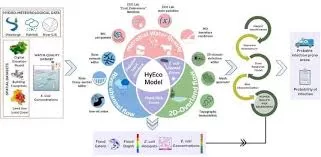
In a critical advancement for public health and disaster management, IIT Roorkee has unveiled HyEco, a novel tool designed to track the spread of flood-borne diseases by mapping how disease-causing microbes such as Escherichia coli move through floodwaters. Tested during the devastating 2023 floods in Delhi, the tool identified “health danger hotspots” where microbial contamination—and thus risk of disease outbreaks—was exceptionally high, offering authorities a timely warning system to prevent epidemics.
The HyEco model revealed alarming findings during its pilot deployment: over 60 percent of flooded zones in Delhi fell into high or very high danger categories due to microbial presence in water. E. coli bacterial levels in these areas were found to be hundreds of thousands of times above safe limits established for drinking and recreational water safety. Particularly vulnerable were children exposed while playing in floodwaters, facing risks more than double the accepted international safety levels.
Floodwaters in dense urban Indian settings often mix rainfall with untreated sewage and industrial pollutants, creating an environment ripe for rapid spread of waterborne diseases such as cholera and diarrhoea. According to Professor Mohit P. Mohanty from IIT Roorkee, who spearheaded the development, HyEco provides a crucial early-warning capability that can enable civic agencies to intervene proactively before outbreaks arise.
“This tool visualizes the invisible threat of microbial contamination following floods,” Prof. Mohanty explained. “It empowers city officials to identify the most at-risk areas and take protective actions—like issuing alerts, improving sewage treatment, cleaning drains, and deploying emergency water purification—thereby preventing silent health crises triggered by floods.”
IIT Roorkee Director Prof. Kamal Kishore Pant emphasized the practical societal impact: “HyEco is more than an academic exercise; it is science serving society. By tackling both the visible and hidden dangers of floods, this innovation can help build safer and healthier urban communities.”
The HyEco system complements several existing governmental programs addressing environmental health and disaster management including the National Mission for Clean Ganga, Swachh Bharat Mission, National Disaster Management Plan, and the National Health Mission. It also aligns with international agendas such as the United Nations Sustainable Development Goals focusing on clean water, good health, sustainable cities, and climate action.
Importantly, the model’s design allows adaptability beyond India. It can be deployed in flood-prone metropolitan areas worldwide—from Mumbai and Manila to Jakarta and New Orleans—offering a scalable solution to mitigate the increasing health risks associated with urban flooding, which is exacerbated by the climate crisis and intensified rainfall events.
Expert commentary underscores the significance of such tools: Dr. Anita Verma, an infectious disease specialist not associated with the study, notes, “Flood-related disease outbreaks have long been a challenge due to delayed detection and response. Technologies like HyEco that predict hotspots of contamination before people fall ill can be a game-changer for public health.”
However, while HyEco shows promise, it is vital to consider potential limitations. Accurate microbial risk mapping depends on timely and comprehensive environmental monitoring data, which may not always be available. Moreover, interventions prompted by the tool require coordinated multisectoral action and adequate resources on the ground. Public education is also critical, as residents must be informed to avoid contact with contaminated waters during high-risk periods.
For the health-conscious public and policymakers alike, this development signals new hope in flood disaster management. With floods increasing globally and urban populations rising, understanding and managing the hidden microbial threats in floodwaters is essential. HyEco offers a path toward smarter, evidence-based preventive actions that reduce the burden of waterborne diseases and protect vulnerable populations—especially children in flood-affected communities.
Medical Disclaimer: This article is for informational purposes only and should not be considered medical advice. Always consult with qualified healthcare professionals before making any health-related decisions or changes to your treatment plan. The information presented here is based on current research and expert opinions, which may evolve as new evidence emerges.
References:
-
IIT Roorkee develops tool to track flood-borne diseases, tested in Delhi floods. India Today, August 20, 2025.
-
Interview with Prof. Mohit P. Mohanty, Department of Civil Engineering, IIT Roorkee, August 2025.
-
Interview with Prof. Kamal Kishore Pant, Director, IIT Roorkee, August 2025.
-
United Nations Sustainable Development Goals (SDGs): Clean Water and Sanitation; Good Health and Well-being; Sustainable Cities and Communities; Climate Action.
-
Commentary by Dr. Anita Verma, Infectious Disease Specialist, August 2025.