 0
0
 0
0
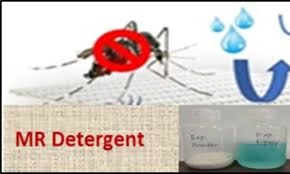
New Delhi, November 28, 2025 – Researchers at the Indian Institute of Technology (IIT) Delhi have unveiled smart detergents in powder and liquid forms that transform everyday clothing into a barrier against mosquitoes, targeting deadly diseases like malaria and dengue amid rising cases across India. Led by Prof. Javed Nabibaksha Sheikh from the Department of Textile and Fibre Engineering, the innovation addresses limitations of traditional repellents such as creams and coils, which often wear off quickly . A patent has been filed, with commercialization expected soon, potentially reshaping household protection strategies.
The Innovation: How Smart Detergents Work
The detergents infuse fabrics with active components during washing that deter mosquitoes by targeting their smell and taste sensors, making treated textiles less appealing for landing. Unlike topical repellents, the properties regenerate with each wash, ensuring sustained effectiveness without altering standard cleaning performance. Testing via the “hand-in-cage” method—where volunteers placed fabric-covered hands in chambers with starved mosquitoes—showed a significant drop in landings compared to regular detergents.
Prof. Sheikh explained, “We have developed smart detergents to protect people from dangerous mosquito-borne diseases. The products have been tested in a commercial laboratory and have proven effective at repelling mosquitoes”. Since a mosquito’s proboscis can pierce most fabrics, preventing initial landing proves crucial for bite prevention. This builds on prior research into mosquito-repellent textiles (MRTs), where treatments like essential oils or polymers have shown promise but often faded after washes.
Escalating Threat: India’s Mosquito-Borne Disease Burden
India grapples with persistent vector-borne illnesses, with malaria cases reaching 97,995 and just 5 deaths by June 2025, per Ministry of Health data—though full-year figures may climb higher. Dengue surged to over 16,000 cases by March 2025, with projections nearing 270,000 annually if unchecked, driven by urban flooding and climate shifts. In 2024, dengue tallied 233,519 cases and 297 deaths, following a peak of 289,235 cases and 485 fatalities in 2023.
States like Kerala and Tamil Nadu lead dengue hotspots, while tribal regions in Jharkhand report elevated malaria. The National Centre for Vector Borne Diseases Control (NCVBDC) notes monsoon spikes, prompting fogging, nets, and surveillance. Yet, resistance to insecticides and inconsistent personal protection hinder progress, making innovations like IIT Delhi’s timely.
Expert Insights: Promise and Cautions
Dr. Sanjay Mehrotra, an entomologist at the National Institute of Malaria Research (not involved in the study), views the detergents as a “convenient adjunct to existing tools like bed nets.” He notes, “Fabric-based repellency aligns with global MRT trends, potentially reducing reliance on skin-applied chemicals that cause irritation”. Prof. Maria Tawiah, lead author of a 2025 systematic review on MRTs covering 127 studies, highlights sustainability gains from bio-based agents but stresses, “Durability post-multiple washes remains key, as seen in deltamethrin or essential oil trials”.
Limitations persist: Lab tests like hand-in-cage may not fully mimic field conditions, where sweat or humidity could dilute effects. No data yet on human safety for prolonged skin contact or environmental impact of active ingredients. Experts urge large-scale trials before widespread use, especially for children or allergy-prone individuals.
Public Health Impact: Everyday Protection Boost
For India’s 1.4 billion people, where mosquitoes claim thousands yearly, these detergents could layer defense atop nets and elimination drives, which cut malaria cases 80% since 2015. Households might see fewer bites during chores or sleep, curbing transmission—vital as Aedes and Anopheles thrive in urban water pools. Cost-effective integration into routine laundry appeals to low-income families, unlike pricier sprays.
Challenges Ahead: From Lab to Market
While promising, scalability questions loom: Manufacturing active components affordably and ensuring regulatory nods from bodies like CDSCO. Counterarguments include over-reliance on personal tools versus source reduction like draining stagnant water. Ongoing NCVBDC efforts emphasize integrated vector management, positioning detergents as one tool, not a cure-all. Diverse trials across climates and mosquito species will affirm real-world efficacy.
This development underscores India’s innovation in public health, blending engineering with epidemiology to combat ancient foes.
Medical Disclaimer: This article is for informational purposes only and should not be considered medical advice. Always consult with qualified healthcare professionals before making any health-related decisions or changes to your treatment plan. The information presented here is based on current research and expert opinions, which may evolve as new evidence emerges.
References
-
Sheikh, J. N., et al. (2025). Mosquito-repellent Detergents. IIT Delhi Research Announcement. https://home.iitd.ac.in/show.php?id=72&in_sections=Researchiitd
-
NDTV. (2025, Nov 27). IIT Delhi Develops Smart Mosquito-Repellent Detergents. https://www.ndtv.com/india-news/iit-delhi-s-smart-mosquito-repellent-detergents-to-protect-against-malaria-dengue-9709809