 0
0
 0
0
The Indian Council of Medical Research (ICMR) has announced plans to procure two more Mobile Biosafety Level 3 (MBSL-3) laboratories, aiming to strengthen India’s capacity for rapid diagnosis during outbreaks of both known and emerging high-risk pathogens. This move follows the successful deployment of the country’s first rapid-action mobile BSL-3 laboratory, known as RAMBAAN, which has played a pivotal role in containing recent outbreaks.
Expanding Mobile Lab Fleet for Early Detection
Currently, India has two operational MBSL-3 labs stationed at ICMR-NIV Pune and ICMR-RMRC Gorakhpur. The addition of two more units is intended to enhance the nation’s ability to quickly detect and contain infectious diseases such as Nipah, Zika, Avian influenza, and Covid-19. Early detection is considered critical for effective outbreak management and preventing widespread transmission.
RAMBAAN: India’s First-of-its-Kind Mobile BSL-3 Lab
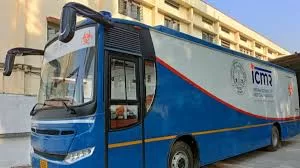
Launched in February 2022 in Nashik, Maharashtra, at a cost of ₹25 crore, the RAMBAAN laboratory was developed in collaboration with Klenzaids Contamination Controls, Mumbai, under the Pradhan Mantri-Ayushman Bharat Health Infrastructure Mission (PM-ABHIM). The lab is built on a heavy-duty Bharat Benz vehicle chassis and is designed to operate in extreme conditions, including high temperatures and altitudes, with a maximum load capacity of 17 tonnes.
The mobile lab is equipped with advanced features such as:
-
Negative air pressure environment
-
Sophisticated HVAC system with HEPA filters
-
Double-door autoclave
-
Biological liquid effluent decontamination (BLED) system
-
Hydrogen peroxide (H₂O₂) fogger for waste management
Its interior is divided into four zones, including change rooms, a main laboratory, and a decontamination area, ensuring strict biosafety protocols are maintained during operations.
Proven Success in Recent Outbreaks
RAMBAAN was first deployed during the Nipah virus outbreak in Kozhikode, Kerala, in September 2023 and again in Malappuram District, Kerala, in July 2024. The ICMR highlighted the lab’s success in Kerala as evidence of the strategic advantage offered by rapidly deployable, sophisticated infrastructure in tackling epidemiological challenges.
Enhanced Public Health Delivery
The mobile labs are fully indigenous and compliant with BS-VI norms. They are designed to provide critical onsite laboratory services, especially in remote or hard-to-reach areas, thereby strengthening India’s public health response and delivery system1. The labs are powered by direct electricity or diesel generators, with backup systems in place, and are equipped with walkie-talkies and real-time CCTV surveillance for communication and monitoring.
Strict Biosafety and Operational Protocols
During outbreaks, the labs operate under rigorous biosafety protocols, including the use of personal protective equipment and adherence to BSL-3 practices and standard operating procedures for specimen handling. The ICMR also oversees personnel health, logistics, equipment checks, and supply management to ensure safe and effective operation.
Disclaimer:
This article is based on information sourced from SocialNews.XYZ as of June 25, 2025. Details are subject to change as new updates emerge. For the latest developments, refer to official ICMR communications and government releases.