 0
0
 0
0
KOLKATA – Dr. Rajiv Bahl, Director General of the Indian Council of Medical Research (ICMR), has lauded the West Bengal government for its “swift and effective” containment of a recent Nipah virus (NiV) cluster. Speaking on Saturday during a visit to the ICMR-National Institute of Biomedical Genomics (NIBMG) in Kalyani, Dr. Bahl emphasized that while the virus remains a serious public health threat, the state’s proactive surveillance has successfully prevented a wider outbreak.
The commendation comes in the wake of a localized cluster in the Barasat area of North 24 Parganas, which involved two healthcare workers. While the state’s health department has confirmed that no new cases have emerged, the incident serves as a stark reminder of the zoonotic virus’s persistence in the region.
A Swift Response to a Deadly Pathogen
The recent cases involved two nurses—a 25-year-old woman and a 27-year-old man—employed at a private hospital in Barasat. Both developed severe symptoms, including high fever and neurological complications, in late December 2025. Laboratory confirmation was received from the National Institute of Virology (NIV) in Pune on January 13, 2026.
Tragically, the female nurse succumbed to multi-organ failure earlier this week after a prolonged battle on life support. Her male colleague, however, has shown significant clinical improvement and has since been discharged.
“West Bengal has worked very well in coordination with the Centre to prevent the spread of the infection,” Dr. Bahl stated. He noted that the state’s history with the virus—having managed outbreaks in 2001 (Siliguri) and 2007 (Nadia)—provided a foundation for the current rapid response.
Surveillance and the “One Health” Approach
A critical component of the containment effort was the identification and monitoring of 196 individuals who had come into contact with the infected nurses. According to the National Centre for Disease Control (NCDC), all 196 contacts tested negative for the virus and remained asymptomatic throughout the monitoring period.
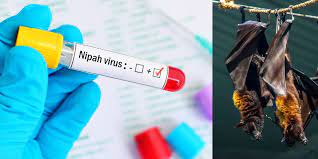
“Early caution and surveillance can effectively prevent the spread,” Dr. Bahl told reporters. He further revealed that ICMR research has identified the presence of the Nipah virus in fruit bat populations (Pteropus genus) across several states, including Uttar Pradesh, Bihar, Chhattisgarh, and Kerala, in addition to West Bengal.
This widespread presence of the virus in its natural reservoir underscores the need for a “One Health” strategy—an integrated approach that monitors health at the human-animal-environment interface.
Understanding the Risk: Transmission and Symptoms
Nipah virus is a zoonotic pathogen, meaning it jumps from animals to humans. In India, the primary source of infection is the fruit bat, often referred to as a “flying fox.”
Humans can become infected through:
-
Contaminated Food: Consuming fruits or raw date palm sap (tadi/toddy) contaminated with bat saliva or urine.
-
Animal Contact: Direct contact with infected bats or intermediate hosts like pigs.
-
Human-to-Human Spread: Close contact with the bodily fluids of an infected person, which is how the two nurses in Barasat likely contracted the illness.
The World Health Organization (WHO) notes that the incubation period typically ranges from 4 to 14 days, though it can be longer. Symptoms often start as flu-like—fever, headache, and muscle pain—but can rapidly progress to severe respiratory illness and fatal encephalitis (brain inflammation).
Public Health Implications and Expert Insights
Despite the high Case Fatality Rate (CFR), which ranges from 40% to 75% depending on the outbreak, experts urge the public to remain calm.
“It is incorrect to term the disease as highly contagious in the way we think of COVID-19,” Dr. Bahl clarified. “Human-to-human transmission typically requires very close, unprotected contact, often in a healthcare or household setting.”
Independent experts echo this sentiment. Dr. S.P. Kalantri, a professor of medicine not involved in the current ICMR report, noted that the key to managing Nipah is not mass vaccination—since no licensed vaccine yet exists—but rigorous infection control. “The success in Barasat shows that when you isolate cases early and trace contacts aggressively, you break the chain of transmission. The challenge remains in the ‘spillover’ events where the first human gets infected from a bat,” he said.
Practical Advice for Citizens
While the current risk is low, health authorities advise residents in at-risk regions to follow these preventive measures:
-
Wash and Peel: Thoroughly wash all fruits and peel them before eating.
-
Avoid ‘Bat-Bitten’ Fruit: Discard any fruit that shows signs of being pecked or bitten by animals.
-
Boil Sap: Avoid raw date palm sap; ensure it is boiled before consumption.
-
Hand Hygiene: Regular handwashing with soap and water is essential, especially after visiting hospitals or caring for the sick.
References
- https://sambadenglish.com/miscellany/health/icmr-chief-commends-bengals-response-to-nipah-virus-case-11107449/amp
Medical Disclaimer: This article is for informational purposes only and should not be considered medical advice. Always consult with qualified healthcare professionals before making any health-related decisions or changes to your treatment plan. The information presented here is based on current research and expert opinions, which may evolve as new evidence emerges.