 0
0
 0
0
The 1998–99 Malaysian outbreak that revealed Nipah virus reshaped how the world understands zoonotic threats. With recent cases reported in eastern India and renewed airport screening across Asia, the lessons from that first crisis feel urgently relevant once again.
In late 1998, pig farmers in Malaysia began falling ill with a mysterious disease marked by fever, headaches, and rapidly progressive brain inflammation. At first, doctors believed they were dealing with Japanese encephalitis, a mosquito-borne infection known in the region. But as cases mounted, control measures failed, and deaths climbed, it became clear something new—and far more dangerous—was unfolding.
By early 1999, scientists identified a previously unknown virus at the heart of the outbreak. Named Nipah virus after the village of Sungai Nipah where it was first isolated, the pathogen would soon be recognised as one of the world’s deadliest zoonotic viruses. The Malaysian pig farm outbreak not only killed more than 100 people and led to the destruction of over a million pigs, but also fundamentally changed global thinking about how viruses spill over from animals to humans.
Today, with fresh Nipah cases reported in West Bengal and heightened surveillance measures at airports across parts of Asia, the story of how Nipah was first discovered offers crucial insights into why this virus remains a serious public health concern.
What Is Nipah Virus?
Nipah virus belongs to the Paramyxoviridae family, genus Henipavirus, which also includes the closely related Hendra virus identified in Australia in 1994. Nipah is known for causing severe disease in humans, including acute encephalitis (brain inflammation) and, in some cases, serious respiratory illness. Fatality rates in outbreaks have ranged from 40% to over 70%, depending on the setting and access to medical care.
Crucially, there is no specific antiviral treatment or licensed vaccine for Nipah virus infection. Care remains largely supportive, making prevention and early detection the most effective tools for reducing deaths.
The Malaysian Outbreak: From Bats to Pigs to Humans
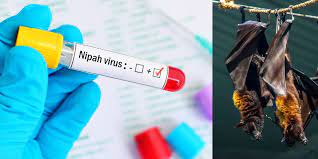
Investigations later revealed that the Malaysian outbreak began not in humans, but in fruit bats of the genus Pteropus—also known as flying foxes. These bats are the natural reservoirs of Nipah virus and typically do not show signs of illness.
In the 1990s, rapid agricultural expansion and deforestation in parts of Malaysia brought fruit bats into closer contact with pig farms. Bats foraging in orchards near pig enclosures likely shed the virus in their saliva, urine, or partially eaten fruit. Pigs, which are highly susceptible to Nipah virus, became infected after consuming contaminated material.
Once inside pig populations, the virus spread efficiently through respiratory secretions and close contact, often causing only mild or nonspecific symptoms in the animals. This made early detection difficult and allowed the virus to circulate widely before authorities recognised the threat.
“Pigs acted as an amplifier host,” explains Dr. Jonathan Epstein, an epidemiologist at EcoHealth Alliance who has studied Nipah virus ecology but was not involved in the original outbreak response. “They increased the amount of virus in the environment and brought humans into intense contact with it.”
Human Infections and a Delayed Diagnosis
The first human cases were reported in September 1998, primarily among pig farmers, farm workers, and veterinarians. Patients developed fever and headache, followed by confusion, seizures, and coma—classic signs of viral encephalitis.
Because Japanese encephalitis was endemic in the region, initial control efforts focused on mosquito control and vaccination campaigns. Yet cases continued to rise, and unusually, many adults were affected—unlike Japanese encephalitis, which predominantly affects children.
By March 1999, researchers from the University of Malaya, working with international partners including the U.S. Centers for Disease Control and Prevention (CDC), isolated a novel virus from patients’ cerebrospinal fluid. Genetic analysis showed it was closely related to Hendra virus but distinct enough to constitute a new pathogen: Nipah virus.
The Human and Economic Toll
Between 1998 and 1999, Malaysia recorded approximately 283 confirmed human cases, with 109 deaths, giving a case fatality rate of nearly 39%. Many survivors were left with long-term neurological problems, including personality changes and recurrent seizures.
The outbreak also spilled across borders. In Singapore, slaughterhouse workers handling pigs imported from Malaysia developed Nipah infections, resulting in additional cases and at least one death.
To halt transmission, Malaysian authorities ordered the culling of more than one million pigs, devastating the country’s pork industry and affecting tens of thousands of livelihoods. The economic losses ran into hundreds of millions of dollars but were widely regarded as necessary to stop further human deaths.
A Turning Point for Zoonotic Disease Surveillance
The discovery of Nipah virus marked a watershed moment in public health. It highlighted how environmental change, intensive farming, and wildlife–livestock–human interfaces can create ideal conditions for deadly pathogens to emerge.
“This outbreak forced the global health community to rethink how we monitor diseases,” says Dr. Keiji Fukuda, former Assistant Director-General for Health Security at the World Health Organization (WHO), in prior public statements. “It showed that new threats can emerge outside traditional surveillance systems.”
In the years that followed, Nipah virus outbreaks were identified in Bangladesh and India, where transmission patterns differed. In these settings, many infections were linked directly to consumption of raw date palm sap contaminated by fruit bats, and limited human-to-human transmission was also documented—raising further alarm.
Why Nipah Virus Still Matters Today
Recent confirmed cases in eastern India and renewed airport screening measures underscore why Nipah virus remains on the WHO’s list of priority pathogens with epidemic potential.
For the public, the Malaysian experience offers several key lessons:
- Zoonotic spillover is not rare when humans, livestock, and wildlife interact closely.
- Early misdiagnosis can delay effective control, allowing outbreaks to worsen.
- Preventive measures, such as safe farming practices, wildlife surveillance, and rapid laboratory investigation, save lives.
However, experts caution against panic. Nipah virus does not spread easily through casual contact, and sustained community transmission remains uncommon.
“The risk to the general public is still low,” notes Dr. Soumya Swaminathan, former Chief Scientist at the WHO, in previous commentary on Nipah outbreaks. “But vigilance is essential because of the virus’s high fatality rate.”
Limitations and Ongoing Questions
Despite decades of research, many questions remain. Scientists are still working to understand why some outbreaks show higher fatality rates than others, and how best to interrupt transmission in resource-limited settings. Vaccine candidates are under development but remain in experimental stages.
What is clear is that the first Malaysian pig farm outbreak transformed a local mystery illness into a global warning.
As the world continues to grapple with emerging infections—from Nipah to novel coronaviruses—the events of 1998–99 remain a stark reminder: the next major health threat may already be circulating quietly at the edges of human activity.
Medical Disclaimer
Medical Disclaimer: This article is for informational purposes only and should not be considered medical advice. Always consult with qualified healthcare professionals before making any health-related decisions or changes to your treatment plan. The information presented here is based on current research and expert opinions, which may evolve as new evidence emerges.
References
https://www.ndtv.com/health/how-a-malaysian-pig-farm-outbreak-first-exposed-the-deadly-nipah-virus-10904790