 0
0
 0
0
Dengue Status in India 2025: What Is Happening?
India has reported 49,573 dengue cases and 42 related deaths till August 31, 2025, reflecting a significant burden of this mosquito-borne viral disease across the nation. Despite the high numbers, this year’s data show a decline compared to 2024, when 233,519 cases and 297 deaths were reported nationwide. The southern states of Kerala and Tamil Nadu remain hotspots, with Kerala reporting the maximum cases (3,871) and deaths (16) during the first half of the year. Other affected regions include Delhi and the National Capital Region (NCR), where proactive measures are underway to prevent any surge as the monsoon season extends longer than usual.
Key Developments and Government Response
Union Health Minister J.P. Nadda convened multiple high-level meetings in September 2025 to assess and direct the national response to dengue. The meetings involved state health ministers, Union Health Ministry officials, and representatives from municipal bodies. Nadda emphasized three priorities: hospital readiness, robust vector control, and community engagement. He urged states to intensify preventive actions, including fogging, eliminating mosquito breeding sites, and raising public awareness through IEC (Information, Education, Communication) campaigns.
Importantly, Nadda advised State Health Ministers to personally review dengue preparedness and develop action plans within 20 days. Hospitals are mandated to ensure adequate drugs, diagnostics, beds, and mosquito-free environments to handle the patient load effectively. Special attention is being given to the Delhi-NCR region due to concerns about waterlogging and prolonged rains creating breeding grounds for mosquitoes.
Delhi Health Minister and city officials reassured the public that dengue remains under control there, supported by continuous municipal efforts like fogging and hospital preparedness.
Context and Background
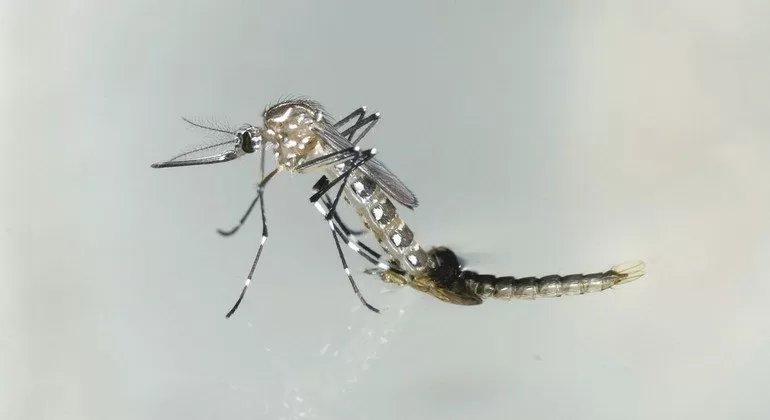
Dengue fever is caused by the dengue virus, transmitted primarily by the Aedes aegypti mosquito. It is prevalent in tropical and subtropical regions, and India’s climate favors seasonal outbreaks, especially during and after monsoons when standing water accumulates. The disease manifests with high fever, severe headache, joint and muscle pain, rash, and in severe cases can lead to hemorrhagic fever, which may be fatal.
The disease’s burden has been on an upward trend over recent years due to climatic changes, urbanization, and increased mosquito breeding. India witnessed a record high of 280,000 dengue cases in 2023, with 485 deaths, followed by a slight reduction in 2024.
Expert Perspectives
Dr. Sashikanta Tripathy from the All India Institute of Medical Sciences (AIIMS), Raipur, notes the severity of dengue’s public health impact, underscoring the increasing trend in cases due to environmental factors. His time series analysis projects about 278,500 dengue cases and approximately 308 deaths in India for the year 2025, emphasizing the need for enhanced preventive measures and policy attention.
Public health expert Dr. Ananya Roy (not involved with the study) stresses that “community participation and behavior change are critical. Preventing mosquito breeding through household and community-level measures can reduce dengue incidence substantially.” She also highlights the importance of early case detection and hospital readiness to reduce mortality.
Public Health Implications
The ongoing fight against dengue requires a multifaceted approach combining government-led vector control, public engagement, clinical preparedness, and surveillance. The Ministry of Health’s eight-pillar strategy includes improving diagnostics, strengthening case management, environmental management for vector control, promoting personal protective measures, and enhancing community awareness.
For individuals, simple actions—such as draining standing water in pots, buckets, old tires, and roof gutters, using mosquito repellents, and ensuring screens on windows—are practical ways to reduce risk. Healthcare facilities are advised to maintain vigilance to manage potential case surges, particularly during the monsoon and post-monsoon seasons when mosquito activity peaks.
Limitations and Balanced View
While the current data shows a decline in cases compared to previous years, public health officials caution against complacency. The variability in reporting and surveillance quality across states and rural areas may hide underreported cases. Additionally, climate unpredictability, such as prolonged rains or flooding, may trigger sudden spikes. Therefore, continuous monitoring, speedy outbreak response, and sustained community cooperation remain essential to prevent larger epidemics.
Conclusion
India faces ongoing challenges from dengue, with nearly 50,000 cases and several dozen deaths reported in just eight months of 2025. Government and health authorities led by Union Health Minister J.P. Nadda are actively strengthening preparedness and response initiatives, emphasizing hospital readiness and public engagement. Although dengue incidence appears lower than last year, vigilance is crucial as climatic conditions remain favorable for transmission. Effective community participation in mosquito control and timely clinical care can collectively reduce dengue’s burden on public health.
Medical Disclaimer
This article is for informational purposes only and should not be considered medical advice. Always consult with qualified healthcare professionals before making any health-related decisions or changes to your treatment plan. The information presented here is based on current research and expert opinions, which may evolve as new evidence emerges.
References
- https://www.newindianexpress.com/nation/2025/Jul/27/over-19-dengue-deaths-13k-cases-reported-in-india
- https://ianslive.in/dengue-india-reports-49573-cases-42-deaths-till-aug-govt-rolls-out-8-pillar-strategy-to-curb–20250915224504
- https://www.newsonair.gov.in/union-health-minister-jp-nadda-reviews-dengue-preparedness-in-delhi-ncr-amid-rain-concerns/
- https://www.theweek.in/wire-updates/national/2025/09/15/des105-health-dengue-ld-nadda.html