 0
0
 0
0
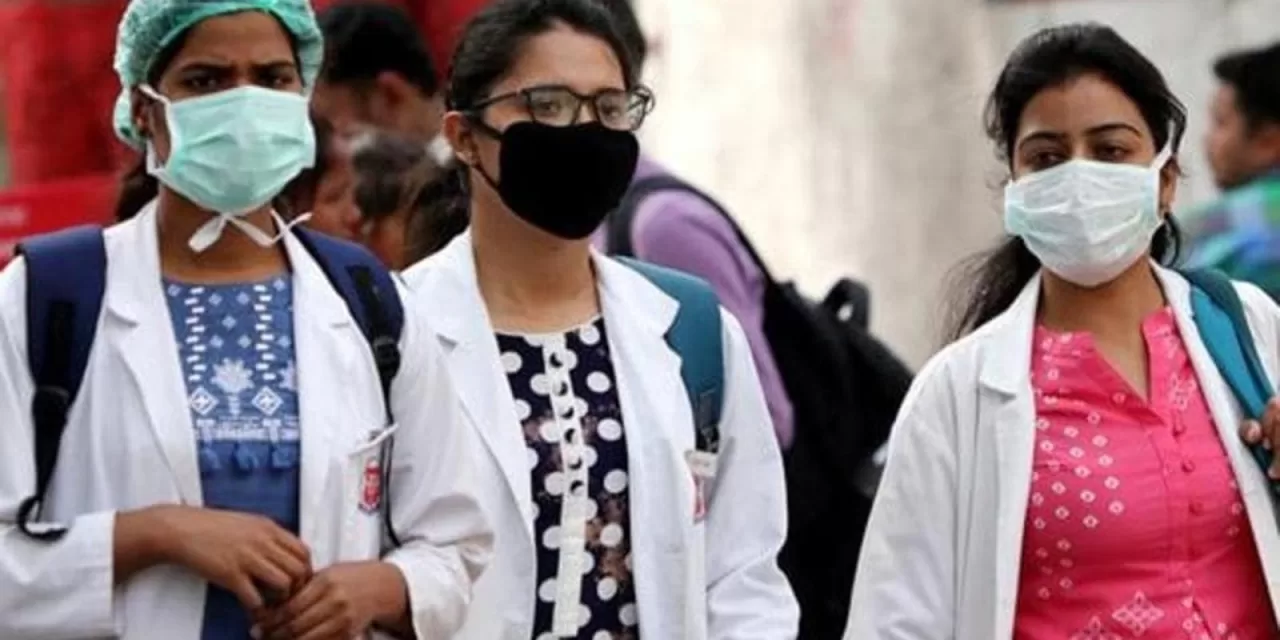
New Delhi — In a significant development for India’s medical education landscape, the Union Health Ministry has announced a record-breaking surge in medical seats for the academic year 2025-26. According to data presented in Parliament this week, the country now offers a total of 1,28,875 MBBS seats and 80,291 Postgraduate (PG) medical seats, marking a massive expansion aimed at addressing the chronic shortage of healthcare professionals in the nation.
Union Minister of State for Health, Smt. Anupriya Patel, shared these figures in the Lok Sabha, highlighting the government’s aggressive push to democratize medical education. The data reveals that the academic session, which commenced on September 22, 2025, has seen near-total utilization of undergraduate capacities, with only 72 MBBS seats remaining vacant after four rounds of counseling—a stark contrast to previous years where thousands of seats often went unfilled.
The Numbers: A Deep Dive
The breakdown of the 2025-26 seat matrix offers a revealing look at the structure of Indian medical education. Of the 1,28,875 undergraduate (MBBS) seats, the split between government and private sectors is nearly even, though government institutions hold a slight edge:
-
Government MBBS Seats: 65,193
-
Private MBBS Seats: 63,682
For Postgraduate aspirants, the opportunities have also widened significantly. The 80,291 PG seats include 37,282 in government colleges and over 25,000 in private institutions, with the remainder comprising DNB (Diplomate of National Board) and diploma seats.
Geographically, the distribution remains heavily skewed toward a few key states. Tamil Nadu, Karnataka, Maharashtra, and Uttar Pradesh continue to be the powerhouses of medical education. For instance, Karnataka alone offers over 13,900 MBBS seats (combining government and private), while Uttar Pradesh has surged to offer over 13,400 seats, reflecting a massive infrastructural upgrade in the populous northern state.
A Decade of Exponential Growth
To understand the scale of this achievement, one must look at the trajectory over the last decade. In 2014, India had approximately 51,000 MBBS seats. The jump to nearly 1.29 lakh represents an increase of over 150% in just 11 years. Similarly, PG seats have more than doubled from around 31,000 in 2014 to over 80,000 today.
“This is not just a statistical increase; it is a paradigm shift in how we approach healthcare human resources,” says Dr. Rajiv Mehta, a health policy analyst and former dean of a government medical college. “For decades, the bottleneck was at the entry level. By widening the funnel, we are ensuring that the doctor-patient ratio will see tangible improvements in the coming decade.”
The Doctor-Patient Ratio Debate
The surge in seats comes amidst ongoing debates about India’s doctor-population ratio. The Health Ministry recently informed Parliament that the country has achieved a ratio of 1:811, surpassing the World Health Organization’s (WHO) widely cited benchmark of 1:1,000.
However, this figure comes with a caveat: it includes the 7.5 lakh registered AYUSH (Ayurveda, Yoga, Unani, Siddha, and Homeopathy) practitioners alongside 13.88 lakh modern medicine (allopathic) doctors.
“While the 1:811 figure is encouraging, we must be careful about how we interpret it,” cautions Dr. Aruna Roy, a public health researcher. “Integrating AYUSH practitioners into the calculation helps numerically, but for critical care, surgery, and modern pharmacological interventions, the reliance remains on allopathic doctors. The pure allopathic ratio is likely still hovering near the 1:1,000 mark, though rapidly improving.”
Quality vs. Quantity: The Expert View
While the numbers are celebrated, the rapid expansion has triggered concerns regarding the quality of education. With dozens of new medical colleges opening in converted district hospitals, experts worry about faculty shortages and clinical exposure.
“The brick-and-mortar infrastructure is the easy part,” notes Dr. K.S. Reddy, a senior medical educator. “The real challenge is finding qualified faculty. You cannot mass-produce professors the way you build lecture halls. There is a risk that students in newer, peripheral colleges may not get the same depth of clinical mentorship as those in established institutions.”
Furthermore, the high number of private seats (nearly 50% of the total) raises questions about affordability. With private medical education costs often exceeding ₹1 crore for a full course, there is a concern that medical education remains accessible primarily to the wealthy, potentially skewing the socioeconomic profile of future doctors.
Implications for Public Health
For the average citizen, this seat increase holds promising long-term implications:
-
Improved Access: More graduates mean more doctors available for primary health centers (PHCs) and community health centers (CHCs), especially as many states enforce rural service bonds.
-
Specialist Availability: The massive jump in PG seats aims to plug the critical gap of specialists (surgeons, pediatricians, gynecologists) in tier-2 and tier-3 cities.
-
Reduced Brain Drain: With more opportunities available domestically, fewer students may feel compelled to pursue medical education in countries like Russia, China, or Ukraine, keeping talent within the country.
Challenges Ahead
Despite the success, the system faces hurdles. The fact that 72 MBBS seats remained vacant in the “stray vacancy” round—albeit a small number—indicates that even with high demand, certain colleges (likely with high fees or poor locations) are finding no takers. Additionally, the disparity in seat distribution means students from states like Bihar or Jharkhand still face stiffer competition relative to their population size compared to peers in the South.
As India moves into 2026, the focus must shift from “expansion” to “consolidation”—ensuring that the 1.28 lakh students entering the system this year graduate as competent, skilled, and ethical professionals ready to serve the nation’s diverse healthcare needs.
Medical Disclaimer:
This article is for informational purposes only and should not be considered medical advice. Always consult with qualified healthcare professionals before making any health-related decisions or changes to your treatment plan. The information presented here is based on current research and expert opinions, which may evolve as new evidence emerges.
References:
-
Primary Data Source:
-
Medical Dialogues Bureau. (2025, December 13). “Altogether 1,28,875 MBBS, 80,291 PG medical seats in India for 2025-26: Health Minister tells Parliament.” Medical Dialogues. Retrieved from https://medicaldialogues.in
-