 0
0
 0
0
Shimla, Himachal Pradesh – Chief Minister Sukhvinder Singh Sukhu announced on January 1, 2026, that the state government plans to equip every medical college with robotic surgery capabilities by early 2026, building on initial implementations at key institutions. This expansion marks a pivotal step in elevating public healthcare in the hilly state, where terrain often complicates access to specialized treatment. The initiative aims to position Himachal Pradesh as a hub for medical excellence, reducing patient referrals to distant private or out-of-state facilities.
Key Developments and Timeline
Robotic surgery facilities are already operational at the Atal Institute of Medical Super Specialities (AIMSS) in Chamiana and Dr. Rajendra Prasad Government Medical College in Tanda, representing the first such deployment in the state’s public sector. Since their introduction, these sites have completed over 100 procedures in the initial months, including 78 at Chamiana/Shimla sites and 38 at Tanda. The rollout will extend to major colleges like Indira Gandhi Medical College (IGMC) Shimla, Dr. Radhakrishnan Government Medical College Hamirpur, and Lal Bahadur Shastri Government Medical College Ner Chowk by January 2026.
This push aligns with broader investments, including Rs 5 crore per institution for bone marrow transplant units at five colleges and Rs 75 crore for AI-equipped smart labs at IGMC and Tanda to speed diagnostics. Chief Minister Sukhu emphasized, “These updates are part of a broader strategy to make Himachal Pradesh a medical excellence hub,” highlighting a commitment to vulnerable populations like seniors and children through dedicated OPDs and a new Advanced Pediatric Centre at AIMSS Chamiana.
Benefits of Robotic-Assisted Surgery
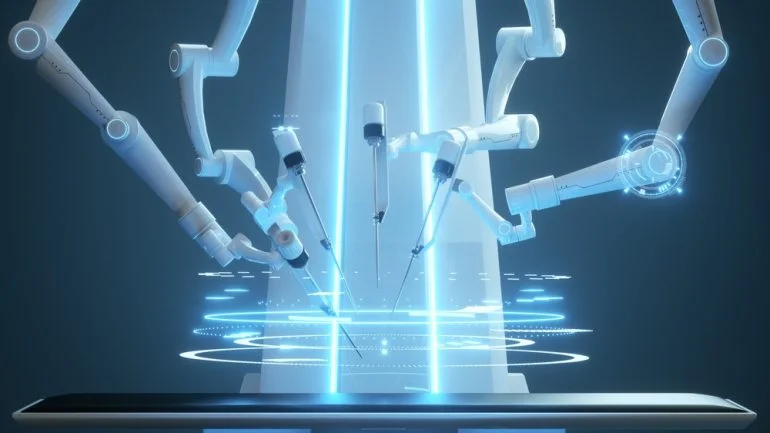
Robotic systems enhance surgical precision through 3D high-definition visualization and articulated instruments that mimic human wrist movements, allowing access to tight spaces with minimal incisions. Patients typically experience less blood loss, reduced pain, shorter hospital stays (often 1-2 days), and faster recovery, lowering complication risks like infections.
In India, where the robotic surgical systems market is projected to grow at 10% CAGR through 2036, these benefits are particularly vital for complex procedures in urology, gynecology, oncology, and general surgery. Public sector adoption, as seen at AIIMS Delhi, promises equitable access, with early data showing improved outcomes in minimally invasive techniques.
Himachal’s initiative could prevent costly out-of-state travel for its 7 million residents, especially in remote areas, by enabling local handling of intricate cases that once required evacuation.
National Context in India
India boasts over 100 robotic installations as of 2023, with more than 800 trained surgeons performing over 12,800 procedures in the prior decade, mainly in private hospitals in metros like Delhi and Mumbai. Public facilities lag, but recent moves—like AIIMS Delhi’s robot in its General Surgery Department and JJ Hospital Mumbai’s 101 surgeries in three months—signal momentum.
Government support is key, as noted by GlobalData analyst Divya Soni: “Robotic-assisted surgeries not only enhance precision and minimise errors but also signify a fundamental transformation in healthcare delivery… Governmental support can be instrumental in overcoming barriers such as high cost and lack of enough specialized training.” Himachal’s plan builds on this, mirroring national efforts to bridge public-private gaps.
Expert Perspectives
Dr. Mahesh Desai, a pioneer in Indian robotic urology, affirms that systems are “ready for prime time” with lower complication rates in procedures like radical cystectomy compared to open surgery, provided high-volume use justifies costs. “Robotic surgery offers equivalent or better results in select cases, but success hinges on trained teams and patient selection,” he states in prior analyses.
Independent oncologist Dr. Sonal Kumar Jha from Moolchand Healthcare adds, “Robotic surgery transforms patient care with unmatched precision, faster recovery, and minimal scarring—ideal for India’s diverse surgical needs.” Pediatric specialists welcome Himachal’s pediatric focus, noting reduced trauma benefits children most.
Public Health Implications
For Himachal’s residents, this means timely interventions for cancers, cardiac issues, and urological conditions without urban migration, potentially cutting treatment costs by 20-30% through shorter stays and fewer readmissions. It supports Ayushman Bharat goals by democratizing high-tech care in government hospitals serving low-income families.
Nationally, scaling could alleviate overburdened tertiary centers, with projections of 30% minimally invasive surgeries rising via robotics. Rural patients gain most, as precision suits complex anatomies affected by nutrition or comorbidities prevalent in India.
Challenges and Limitations
High upfront costs for robots (often crores), maintenance, and specialized training pose hurdles; experts warn low-volume centers risk underutilization, inflating per-procedure expenses. Anesthetic access issues and bulky equipment can complicate emergencies, while not all surgeries benefit—laparoscopic alternatives suffice for many.
Skeptics like early critics note, “Robotics offers no real patient benefits in most surgeries across specialties and greatly increases costs,” urging evidence-based adoption. Himachal must invest in surgeon certification (requiring 20-50 proctored cases) to mitigate learning curves.
Ongoing trials address telesurgery for remote areas, but infrastructure lags in hills. Success depends on sustained funding amid Rs 3,000 crore statewide health investments.
Medical Disclaimer: This article is for informational purposes only and should not be considered medical advice. Always consult with qualified healthcare professionals before making any health-related decisions or changes to your treatment plan. The information presented here is based on current research and expert opinions, which may evolve as new evidence emerges.
References
-
Medical Dialogues. (2026, Jan 3). Himachal Govt plans to expand robotic surgery across Medical Colleges by 2026. https://medicaldialogues.in/news/health/hospital-diagnostics/himachal-govt-plans-to-expand-robotic-surgery-across-medical-colleges-by-2026-161895medicaldialogues