 0
0
 0
0
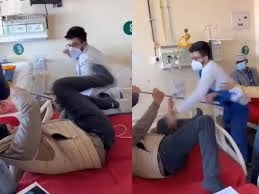
SHIMLA, HP — A disturbing incident at one of North India’s premier medical institutions has ignited a national conversation regarding physician burnout, patient rights, and the sanctity of the doctor-patient relationship. On Tuesday, the Himachal Pradesh health department issued an immediate suspension for a senior resident doctor at the Indira Gandhi Medical College and Hospital (IGMC) after a video surfaced on social media appearing to show the physician punching a patient during an examination.
The incident, which reportedly took place in the Department of Pulmonary Medicine, has sent shockwaves through the medical community and prompted an urgent high-level inquiry by the state government.
The Incident: A Breach of Professional Ethics
The controversy erupted late Monday evening when a 45-second video clip went viral across X (formerly Twitter) and WhatsApp. The footage appears to depict a heated verbal exchange between a senior resident doctor and a patient admitted to the respiratory ward. Within seconds, the confrontation escalated, with the physician seen striking the patient in the chest and shoulder area.
Witnesses and family members present at the scene alleged that the dispute began over a disagreement regarding the patient’s treatment protocol and a perceived delay in attending to the patient’s discomfort.
Responding to the public outcry, IGMC Principal Dr. Sita Thakur confirmed that the administration took swift action. “We have placed the concerned doctor under immediate suspension pending a full investigation,” Dr. Thakur stated. “The conduct displayed in the video is entirely unacceptable and deviates from the ethical standards we uphold at this institution. A five-member internal committee has been constituted to submit a report within 48 hours.”
The Pressure Cooker: Understanding the Context
While the medical community has largely condemned the physical violence, the incident has highlighted the “pressure cooker” environment of India’s public healthcare system. IGMC Shimla serves as a tertiary care referral center for the entire state, often operating at 150% capacity.
Medical professionals not involved in the case suggest that while violence is never a solution, the incident may be a symptom of a deeper crisis.
“We are seeing an alarming rise in friction within hospital wards,” says Dr. Rajesh Kumar, a healthcare administrator and public health advocate (not affiliated with IGMC). “Resident doctors frequently work 24- to 36-hour shifts with minimal sleep. When you combine extreme fatigue with overcrowded wards and high-stress clinical environments, the emotional regulation of even the most dedicated professional can fracture. However, the patient’s safety and dignity must always remain the absolute priority.”
Public Health Implications and Patient Safety
The implications of such incidents extend beyond a single hospital ward. When the trust between a patient and a provider is broken, it can lead to “medical mistrust,” which has been shown to result in poorer health outcomes.
According to a 2022 study published in The Lancet Regional Health – Southeast Asia, trust in healthcare providers is a primary determinant of treatment adherence. When patients fear physical or verbal aggression, they are less likely to seek timely care or provide accurate medical histories, which are essential for diagnosis.
Furthermore, this incident complicates the ongoing national dialogue regarding the Protection of Medicare Service Persons and Medicare Service Institutions Act. For years, doctors have protested for better protection against violence from patients’ relatives. This role-reversal incident has now led many to call for equally stringent protections for patients against institutional or professional misconduct.
Professional Standards and Accountability
The Medical Council of India (now the National Medical Commission – NMC) outlines clear guidelines on professional conduct. Article 1.2.1 of the Professional Conduct, Etiquette and Ethics Regulations states that a physician shall uphold the “dignity and honor of the profession” and maintain “the utmost respect for human life.”
“The doctor-patient relationship is built on an inherent power imbalance,” explains Sarita Verma, a patient advocacy specialist. “The patient is often in a vulnerable, weakened state. The onus of maintaining professional boundaries and de-escalating tension lies squarely with the healthcare provider.”
Moving Forward: Prevention and Reform
In response to the incident, the Himachal Pradesh Health Department has signaled that it will look into implementing “De-escalation Training” and “Soft Skills Workshops” for resident doctors.
Experts suggest several steps to prevent such occurrences:
-
Workforce Management: Implementing strictly enforced shift limits to reduce physician fatigue.
-
Ombudsman Systems: Creating accessible, real-time grievance redressal mechanisms for patients and their families within hospitals.
-
Mental Health Support: Providing mandatory counseling and stress-management resources for frontline healthcare workers.
For the patients and families at IGMC Shimla, the immediate focus remains on justice and the restoration of a safe healing environment. The suspended doctor will face a departmental inquiry, and the local police have also taken cognizance of the video to determine if criminal charges are warranted.
What This Means for You
For health-conscious consumers, this incident serves as a reminder of the importance of clear communication. If you or a loved one feels a clinical situation is escalating:
-
Request a Patient Liaison: Most major hospitals have a patient relations officer.
-
Document Concerns: Keep a written record of treatment delays or communication lapses.
-
Seek Second Opinions: If the relationship with a specific provider has soured, request a transfer of care through the department head.
Medical Disclaimer: This article is for informational purposes only and should not be considered medical advice. Always consult with qualified healthcare professionals before making any health-related decisions or changes to your treatment plan. The information presented here is based on current research and expert opinions, which may evolve as new evidence emerges.
References
-
Medical Dialogues News Bureau: “IGMC Shimla: Pulmonary Medicine doctor suspended after viral video shows him punching a patient” (December 2025).